Boston Biomedical Research Institute, Watertown, MA 02472, USA.
Proteomics. 2012 Feb;12(4-5):587-96. doi: 10.1002/pmic.201100399. Epub 2012 Jan 23.
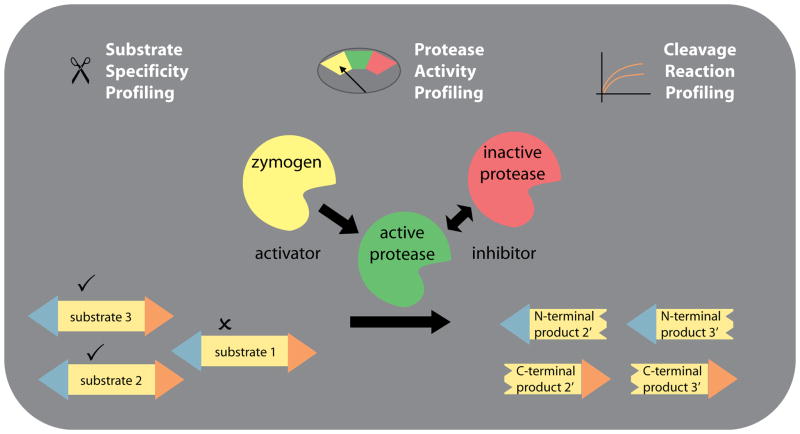
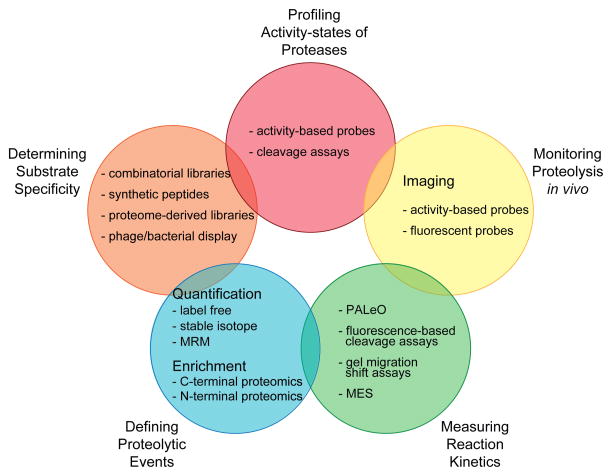
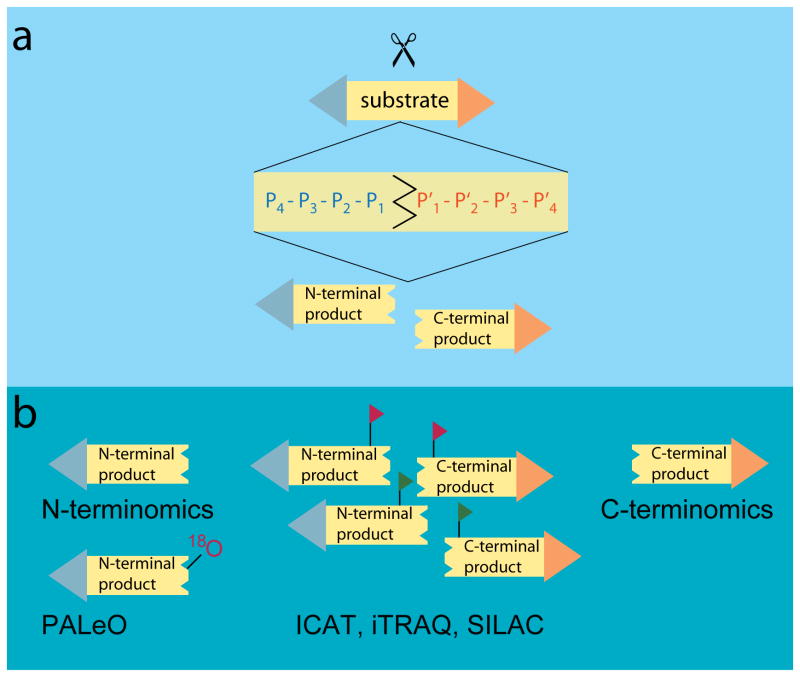
Proteases play prominent roles in many physiological processes and the pathogenesis of various diseases, which makes them interesting drug targets. To fully understand the functional role of proteases in these processes, it is necessary to characterize the target specificity of the enzymes, identify endogenous substrates and cleavage products as well as protease activators and inhibitors. The complexity of these proteolytic networks presents a considerable analytic challenge. To comprehensively characterize these systems, quantitative methods that capture the spatial and temporal distributions of the network members are needed. Recently, activity-based workflows have come to the forefront to tackle the dynamic aspects of proteolytic processing networks in vitro, ex vivo and in vivo. In this review, we will discuss how mass spectrometry-based approaches can be used to gain new insights into protease biology by determining substrate specificities, profiling the activity-states of proteases, monitoring proteolysis in vivo, measuring reaction kinetics and defining in vitro and in vivo proteolytic events. In addition, examples of future aspects of protease research that go beyond mass spectrometry-based applications are given.
蛋白酶在许多生理过程和各种疾病的发病机制中起着重要作用,这使得它们成为有趣的药物靶点。为了充分了解蛋白酶在这些过程中的功能作用,有必要对酶的靶标特异性进行表征,确定内源性底物和切割产物以及蛋白酶激活剂和抑制剂。这些蛋白水解网络的复杂性带来了相当大的分析挑战。为了全面描述这些系统,需要定量方法来捕获网络成员的时空分布。最近,基于活性的工作流程已经成为解决体外、离体和体内蛋白水解处理网络动态方面的前沿方法。在这篇综述中,我们将讨论如何通过确定底物特异性、分析蛋白酶的活性状态、监测体内蛋白水解、测量反应动力学以及定义体外和体内蛋白水解事件,利用基于质谱的方法来深入了解蛋白酶生物学。此外,还给出了超越基于质谱应用的蛋白酶研究未来方面的例子。