Mancuso Matthew, Goddard Julie M, Erickson David
Department of Biomedical Engineering, Cornell University, Ithaca, NY 14850, USA.
Opt Express. 2012 Jan 2;20(1):245-55. doi: 10.1364/OE.20.000245.
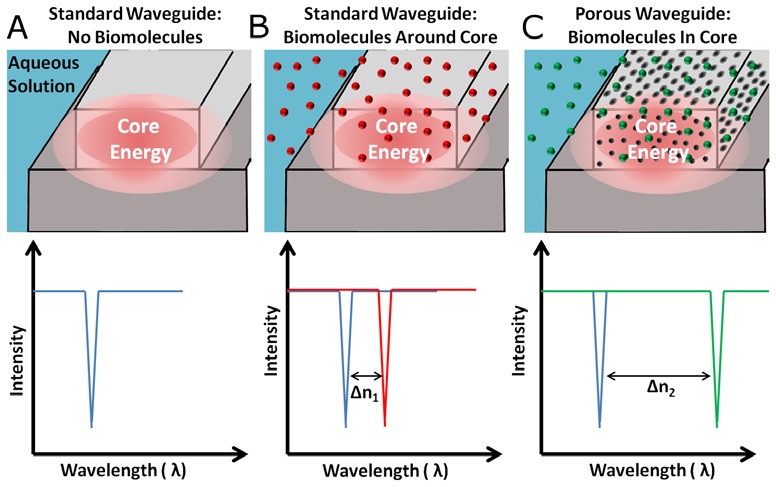
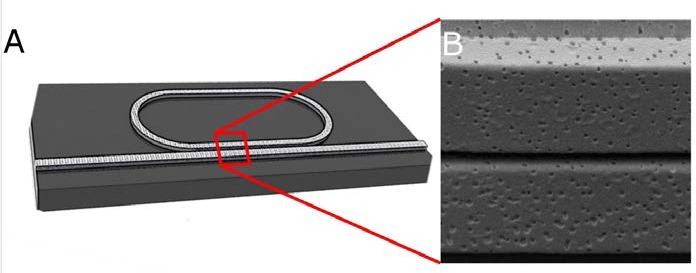
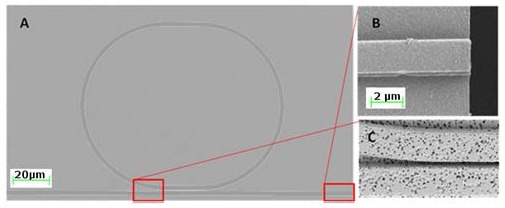
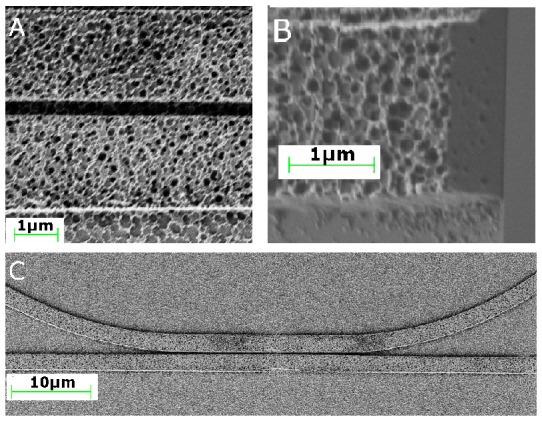
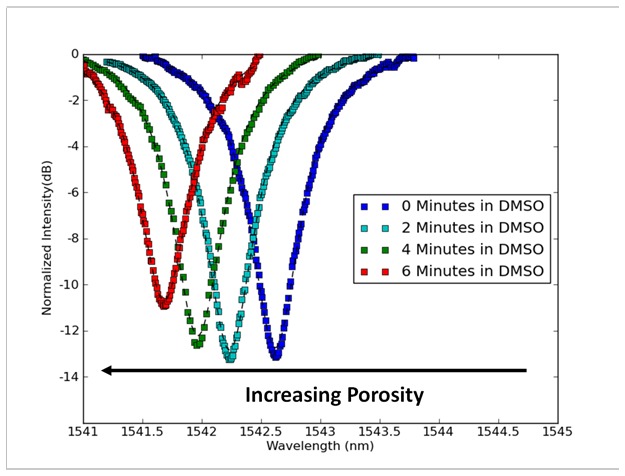
Optically resonant devices are promising as label-free biomolecular sensors due to their ability to concentrate electromagnetic energy into small mode volumes and their capacity for multiplexed detection. A fundamental limitation of current optical biosensor technology is that the biomolecular interactions are limited to the surface of the resonant device, while the highest intensity of electromagnetic energy is trapped within the core. In this paper, we present nanoporous polymer optofluidic devices consisting of ring resonators coupled to bus waveguides. We report a 40% increase in polymer device sensitivity attributed to the addition of core energy- bioanalyte interactions.
光学谐振器件有望成为无标记生物分子传感器,因为它们能够将电磁能量集中到小的模式体积中,并且具有多重检测的能力。当前光学生物传感器技术的一个基本限制是生物分子相互作用仅限于谐振器件的表面,而电磁能量的最高强度被困在核心内。在本文中,我们展示了由耦合到总线波导的环形谐振器组成的纳米多孔聚合物光流体器件。我们报告说,由于增加了核心能量与生物分析物的相互作用,聚合物器件的灵敏度提高了40%。