Institut Cavanilles de Biodiversitat i Biologia Evolutiva, Universitat de València, València, Spain.
PLoS One. 2012;7(1):e30652. doi: 10.1371/journal.pone.0030652. Epub 2012 Jan 24.
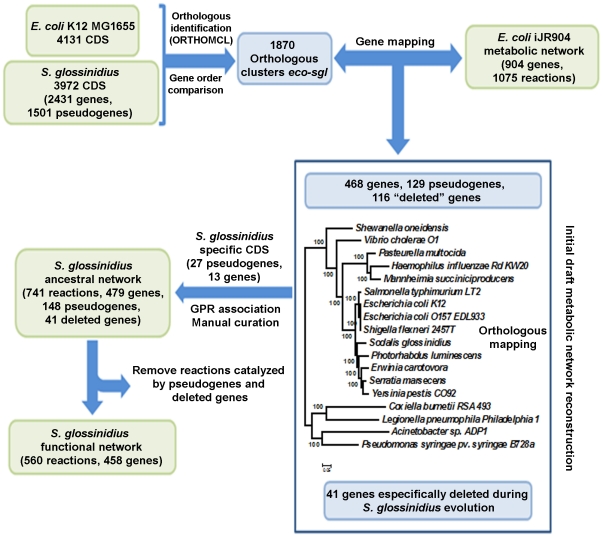
Genome reduction is a common evolutionary process affecting bacterial lineages that establish symbiotic or pathogenic associations with eukaryotic hosts. Such associations yield highly reduced genomes with greatly streamlined metabolic abilities shaped by the type of ecological association with the host. Sodalis glossinidius, the secondary endosymbiont of tsetse flies, represents one of the few complete genomes available of a bacterium at the initial stages of this process. In the present study, genome reduction is studied from a systems biology perspective through the reconstruction and functional analysis of genome-scale metabolic networks of S. glossinidius.
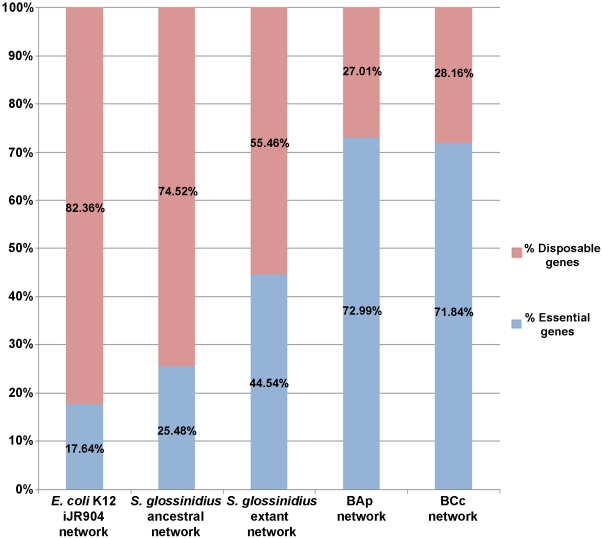
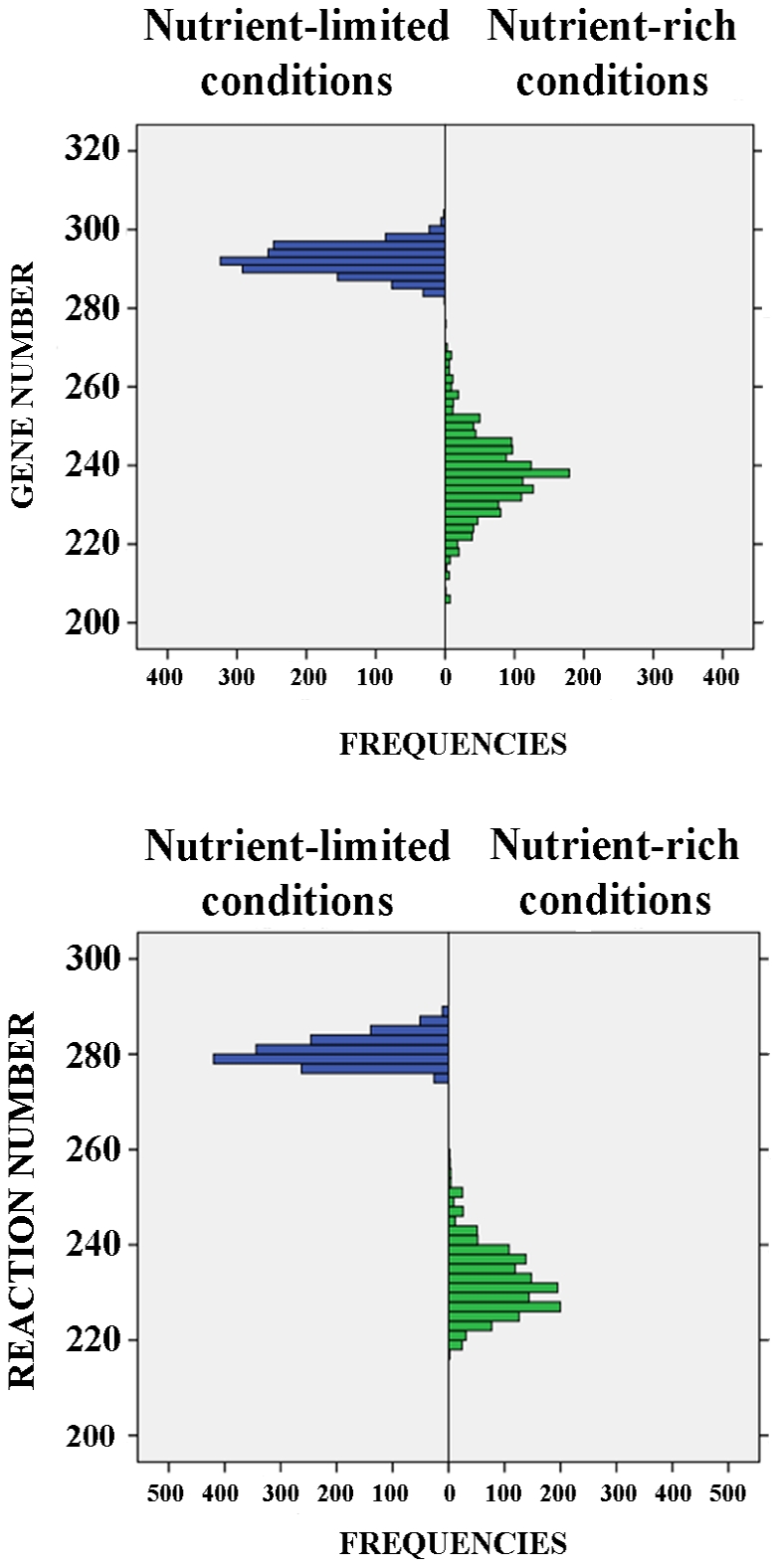
The functional profile of ancestral and extant metabolic networks sheds light on the evolutionary events underlying transition to a host-dependent lifestyle. Meanwhile, reductive evolution simulations on the extant metabolic network can predict possible future evolution of S. glossinidius in the context of genome reduction. Finally, knockout simulations in different metabolic systems reveal a gradual decrease in network robustness to different mutational events for bacterial endosymbionts at different stages of the symbiotic association.
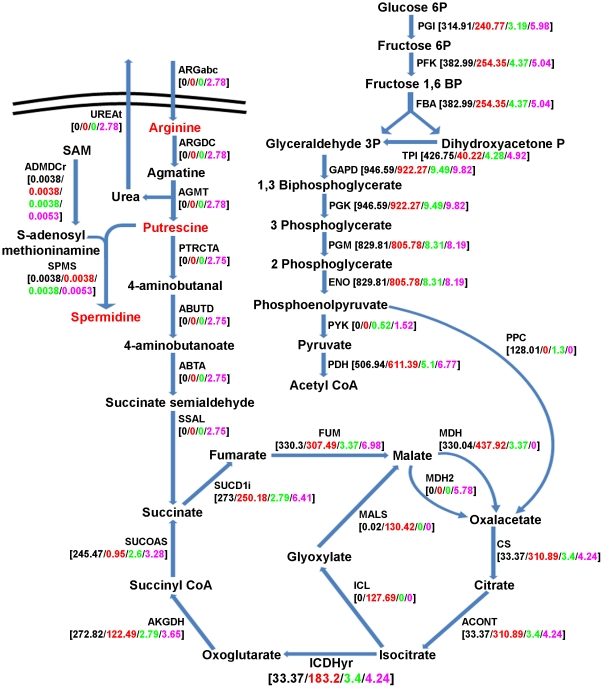
Stoichiometric analysis reveals few gene inactivation events whose effects on the functionality of S. glossinidius metabolic systems are drastic enough to account for the ecological transition from a free-living to host-dependent lifestyle. The decrease in network robustness across different metabolic systems may be associated with the progressive integration in the more stable environment provided by the insect host. Finally, reductive evolution simulations reveal the strong influence that external conditions exert on the evolvability of metabolic systems.
基因组缩减是影响与真核宿主建立共生或致病关系的细菌谱系的常见进化过程。这种共生关系产生了高度简化的基因组,其代谢能力大大简化,这是由与宿主的生态关联类型所决定的。舌蝇的次级内共生菌 S. glossinidius 是该过程初始阶段少数完整细菌基因组之一。在本研究中,通过重建和功能分析 S. glossinidius 的基因组规模代谢网络,从系统生物学的角度研究了基因组缩减。
祖先和现存代谢网络的功能特征揭示了向依赖宿主的生活方式转变的进化事件。同时,对现存代谢网络的简化进化模拟可以预测 S. glossinidius 在基因组缩减背景下的可能未来进化。最后,在不同代谢系统中的敲除模拟揭示了细菌内共生体在共生关联的不同阶段,其网络稳健性对不同突变事件的逐渐降低。
化学计量分析揭示了少数基因失活事件,这些事件对 S. glossinidius 代谢系统的功能影响非常大,足以说明从自由生活到依赖宿主的生活方式的生态转变。不同代谢系统的网络稳健性下降可能与昆虫宿主提供的更稳定环境中的逐渐整合有关。最后,简化进化模拟揭示了外部条件对代谢系统可进化性的强烈影响。