TAGC UMR_S 928, Inserm, Parc Scientifique de Luminy, Marseille, France.
BMC Bioinformatics. 2012 Jan 31;13:19. doi: 10.1186/1471-2105-13-19.
Deciphering gene regulatory networks by in silico approaches is a crucial step in the study of the molecular perturbations that occur in diseases. The development of regulatory maps is a tedious process requiring the comprehensive integration of various evidences scattered over biological databases. Thus, the research community would greatly benefit from having a unified database storing known and predicted molecular interactions. Furthermore, given the intrinsic complexity of the data, the development of new tools offering integrated and meaningful visualizations of molecular interactions is necessary to help users drawing new hypotheses without being overwhelmed by the density of the subsequent graph.
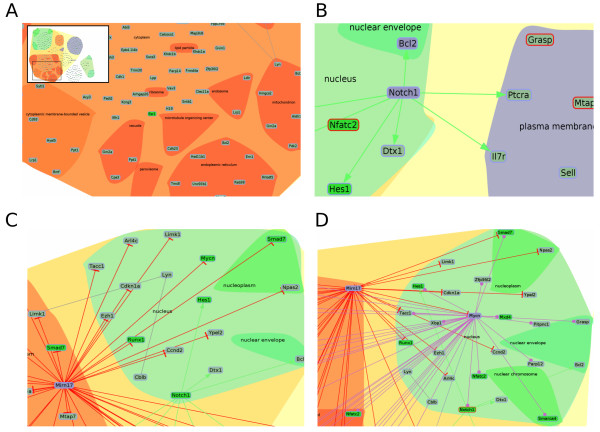
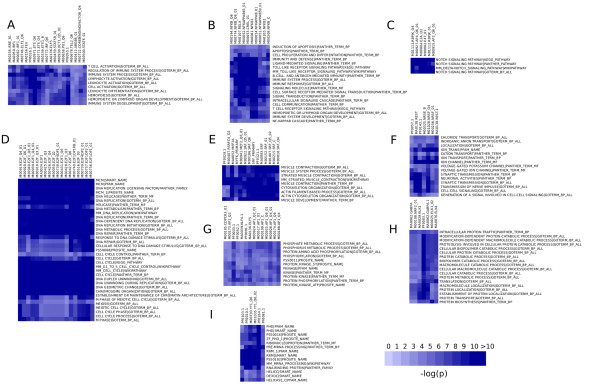
We extend the previously developed TranscriptomeBrowser database with a set of tables containing 1,594,978 human and mouse molecular interactions. The database includes: (i) predicted regulatory interactions (computed by scanning vertebrate alignments with a set of 1,213 position weight matrices), (ii) potential regulatory interactions inferred from systematic analysis of ChIP-seq experiments, (iii) regulatory interactions curated from the literature, (iv) predicted post-transcriptional regulation by micro-RNA, (v) protein kinase-substrate interactions and (vi) physical protein-protein interactions. In order to easily retrieve and efficiently analyze these interactions, we developed In-teractomeBrowser, a graph-based knowledge browser that comes as a plug-in for Transcriptome-Browser. The first objective of InteractomeBrowser is to provide a user-friendly tool to get new insight into any gene list by providing a context-specific display of putative regulatory and physical interactions. To achieve this, InteractomeBrowser relies on a "cell compartments-based layout" that makes use of a subset of the Gene Ontology to map gene products onto relevant cell compartments. This layout is particularly powerful for visual integration of heterogeneous biological information and is a productive avenue in generating new hypotheses. The second objective of InteractomeBrowser is to fill the gap between interaction databases and dynamic modeling. It is thus compatible with the network analysis software Cytoscape and with the Gene Interaction Network simulation software (GINsim). We provide examples underlying the benefits of this visualization tool for large gene set analysis related to thymocyte differentiation.
The InteractomeBrowser plugin is a powerful tool to get quick access to a knowledge database that includes both predicted and validated molecular interactions. InteractomeBrowser is available through the TranscriptomeBrowser framework and can be found at: http://tagc.univ-mrs.fr/tbrowser/. Our database is updated on a regular basis.
通过计算机方法来解析基因调控网络是研究疾病中分子扰动的关键步骤。调控图谱的开发是一个繁琐的过程,需要综合整合分散在生物数据库中的各种证据。因此,研究界将非常受益于拥有一个存储已知和预测分子相互作用的统一数据库。此外,鉴于数据的内在复杂性,开发新的工具来提供分子相互作用的集成和有意义的可视化,对于帮助用户在不被后续图形密度淹没的情况下提出新的假设是必要的。
我们使用一组包含 1,594,978 个人类和小鼠分子相互作用的表扩展了之前开发的 TranscriptomeBrowser 数据库。该数据库包括:(i)通过扫描脊椎动物比对,使用一组 1,213 个位置权重矩阵计算的预测调控相互作用,(ii)从系统分析 ChIP-seq 实验中推断出的潜在调控相互作用,(iii)从文献中整理的调控相互作用,(iv)通过 micro-RNA 预测的转录后调控,(v)蛋白激酶-底物相互作用,(vi)物理蛋白-蛋白相互作用。为了方便检索和有效地分析这些相互作用,我们开发了 InteractomeBrowser,这是一种基于图形的知识浏览器,作为 TranscriptomeBrowser 的插件。InteractomeBrowser 的第一个目标是提供一个用户友好的工具,通过提供特定于上下文的潜在调控和物理相互作用的显示,为任何基因列表提供新的见解。为此,InteractomeBrowser 依赖于一种“基于细胞区室的布局”,该布局利用基因本体论的一个子集将基因产物映射到相关的细胞区室上。这种布局对于异质生物信息的可视化集成特别有效,并且是生成新假设的有效途径。InteractomeBrowser 的第二个目标是填补交互数据库和动态建模之间的空白。因此,它与网络分析软件 Cytoscape 和基因交互网络模拟软件(GINsim)兼容。我们提供了与胸腺细胞分化相关的大型基因集分析的示例,说明了这种可视化工具的好处。
InteractomeBrowser 插件是一种快速访问包括预测和验证分子相互作用的知识库的强大工具。InteractomeBrowser 可通过 TranscriptomeBrowser 框架获得,并可在以下网址找到:http://tagc.univ-mrs.fr/tbrowser/。我们的数据库定期更新。