University Hospital North Norway, Tromso, Norway.
Scand J Trauma Resusc Emerg Med. 2012 Feb 3;20:13. doi: 10.1186/1757-7241-20-13.
Blunt implementation of Western trauma system models is not feasible in low-resource communities with long prehospital transit times. The aims of the study were to evaluate to which extent a low-cost prehospital trauma system reduces trauma deaths where prehospital transit times are long, and to identify specific life support interventions that contributed to survival.
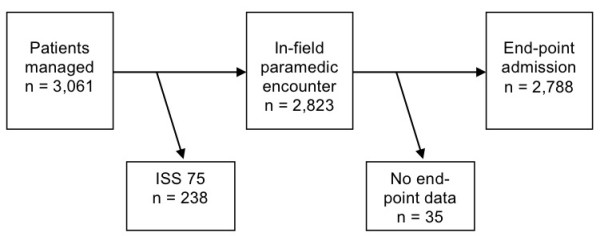
In the study period from 1997 to 2006, 2,788 patients injured by land mines, war, and traffic accidents were managed by a chain-of-survival trauma system where non-graduate paramedics were the key care providers. The study was conducted with a time-period cohort design.
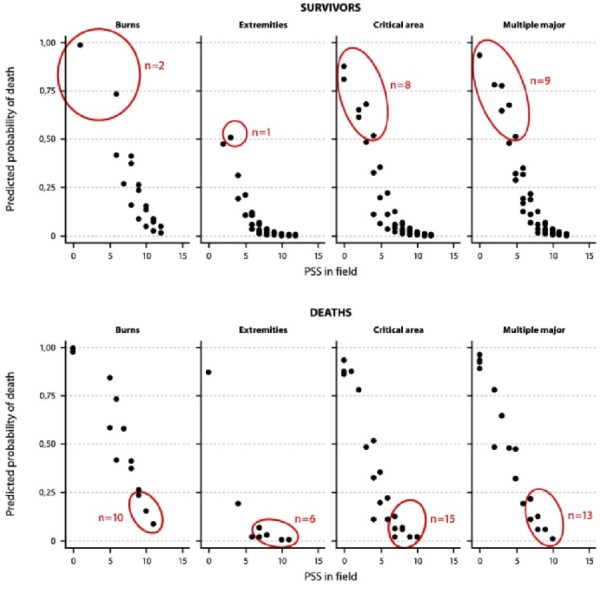
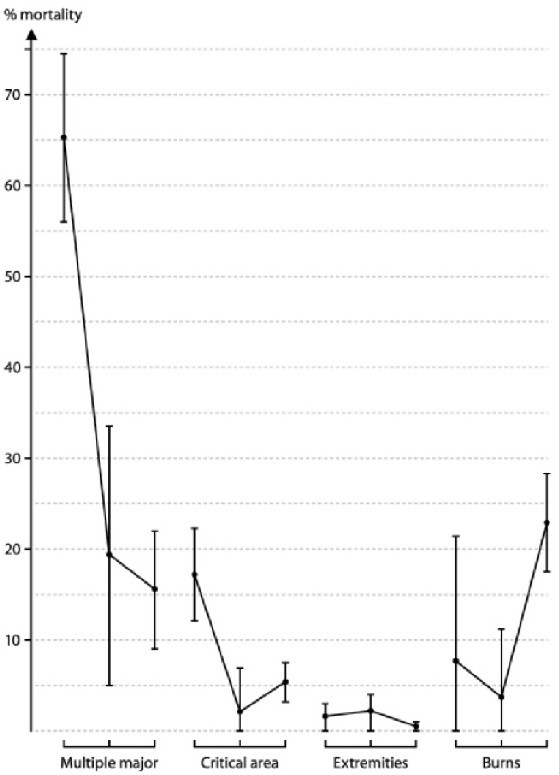
37% of the study patients had serious injuries with Injury Severity Score ≥ 9. The mean prehospital transport time was 2.5 hours (95% CI 1.9 - 3.2). During the ten-year study period trauma mortality was reduced from 17% (95% CI 15 -19) to 4% (95% CI 3.5 - 5), survival especially improving in major trauma victims. In most patients with airway problems, in chest injured, and in patients with external hemorrhage, simple life support measures were sufficient to improve physiological severity indicators.
In case of long prehospital transit times simple life support measures by paramedics and lay first responders reduce trauma mortality in major injuries. Delegating life-saving skills to paramedics and lay people is a key factor for efficient prehospital trauma systems in low-resource communities.
在具有较长院前转运时间的资源匮乏社区中,直接实施西方创伤体系模式是不可行的。本研究旨在评估低成本的院前创伤体系在多大程度上降低了院前转运时间长的创伤死亡率,并确定有助于生存的具体生命支持干预措施。
在 1997 年至 2006 年的研究期间,2788 名因地雷、战争和交通事故受伤的患者通过一个链式生存创伤系统得到救治,其中非毕业的护理人员是主要的护理提供者。本研究采用时间序列队列设计。
37%的研究患者有严重损伤,损伤严重程度评分≥9。平均院前转运时间为 2.5 小时(95%可信区间 1.9-3.2)。在十年的研究期间,创伤死亡率从 17%(95%可信区间 15-19)降至 4%(95%可信区间 3.5-5),尤其是严重创伤患者的生存率有所提高。在大多数气道问题、胸部受伤和有外部出血的患者中,简单的生命支持措施足以改善生理严重程度指标。
在院前转运时间较长的情况下,护理人员和非专业急救人员实施的简单生命支持措施可降低严重创伤患者的死亡率。将救生技能委托给护理人员和非专业人员是资源匮乏社区高效院前创伤体系的关键因素。