University of Eastern Finland, Department of Public Health and Clinical Nutrition, P.O. Box 1627, 70211 Kuopio, Finland.
Scand J Trauma Resusc Emerg Med. 2010 Nov 23;18:62. doi: 10.1186/1757-7241-18-62.
Prehospital care is classified into ALS- (advanced life support) and BLS- (basic life support) levels according to the methods used. ALS-level prehospital care uses invasive methods, such as intravenous fluids, medications and intubation. However, the effectiveness of ALS care compared to BLS has been questionable.
The aim of this systematic review is to compare the effectiveness of ALS- and BLS-level prehospital care.
In a systematic review, articles where ALS-level prehospital care was compared to BLS-level or any other treatment were included. The outcome variables were mortality or patient's health-related quality of life or patient's capacity to perform daily activities.
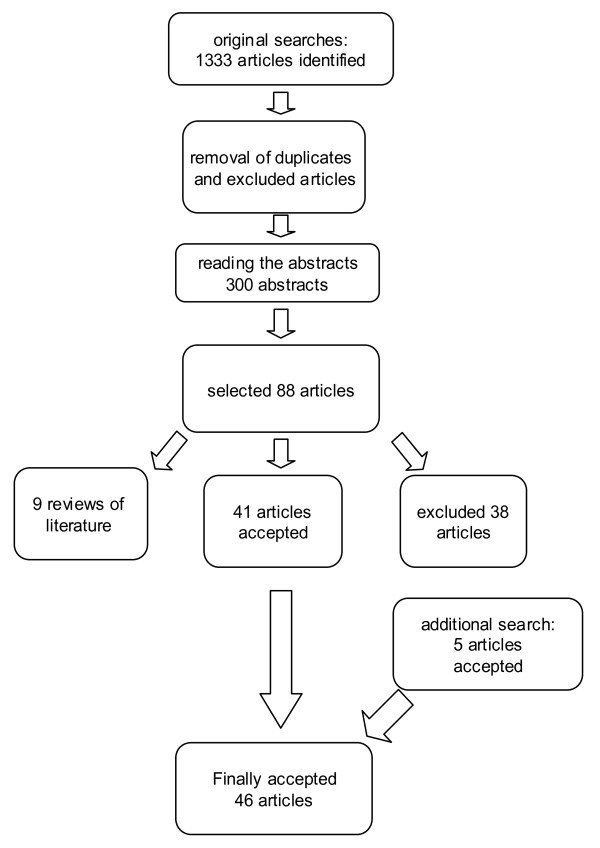
We identified 46 articles, mostly retrospective observational studies. The results on the effectiveness of ALS in unselected patient cohorts are contradictory. In cardiac arrest, early cardiopulmonary resuscitation and defibrillation are essential for survival, but prehospital ALS interventions have not improved survival. Prehospital thrombolytic treatment reduces mortality in patients having a myocardial infarction. The majority of research into trauma favours BLS in the case of penetrating trauma and also in cases of short distance to a hospital. In patients with severe head injuries, ALS provided by paramedics and intubation without anaesthesia can even be harmful. If the prehospital care is provided by an experienced physician and by a HEMS organisation (Helicopter Emergency Medical Service), ALS interventions may be beneficial for patients with multiple injuries and severe brain injuries. However, the results are contradictory.
ALS seems to improve survival in patients with myocardial infarction and BLS seems to be the proper level of care for patients with penetrating injuries. Some studies indicate a beneficial effect of ALS among patients with blunt head injuries or multiple injuries. There is also some evidence in favour of ALS among patients with epileptic seizures as well as those with a respiratory distress.
根据使用的方法,院前急救可分为高级生命支持(ALS)和基础生命支持(BLS)水平。ALS 级院前急救采用静脉输液、药物和插管等有创方法。然而,ALS 护理与 BLS 相比的有效性一直存在争议。
本系统评价旨在比较 ALS 和 BLS 级院前急救的效果。
在系统评价中,纳入了将 ALS 级院前急救与 BLS 级或任何其他治疗进行比较的文章。结局变量为死亡率或患者健康相关的生活质量或患者进行日常活动的能力。
我们确定了 46 篇文章,主要是回顾性观察性研究。关于 ALS 在未选择患者人群中的有效性的结果相互矛盾。在心脏骤停中,早期心肺复苏和除颤对于生存至关重要,但院前 ALS 干预并未提高生存率。院前溶栓治疗可降低心肌梗死患者的死亡率。大多数创伤研究都倾向于在穿透性创伤和距离医院较近的情况下使用 BLS。在严重颅脑损伤患者中,由护理人员提供的 ALS 以及在没有麻醉的情况下进行插管可能是有害的。如果院前护理由经验丰富的医生和 HEMS 组织(直升机紧急医疗服务)提供,则 ALS 干预可能对多发伤和严重脑损伤患者有益。然而,结果存在矛盾。
ALS 似乎可提高心肌梗死患者的生存率,BLS 似乎是穿透性损伤患者的适当护理水平。一些研究表明 ALS 对钝性颅脑损伤或多发伤患者有益。ALS 对癫痫发作以及呼吸窘迫患者也有一些有利的证据。