Case Western Reserve University, Wolstein Research Building, 2103 Cornell Rd, Cleveland, OH 44106, USA.
Malar J. 2012 Feb 15;11:47. doi: 10.1186/1475-2875-11-47.
In malaria endemic areas, host genetics influence whether a Plasmodium falciparum-infected child develops uncomplicated or severe malaria. TLR2 has been identified as a receptor for P. falciparum-derived glycosylphosphatidylinositol (GPI), and polymorphisms within the TLR2 gene may affect disease pathogenesis. There are two common polymorphisms in the 5' un-translated region (UTR) of TLR2, a 22 base pair deletion in the first unstranslated exon (Δ22), and a GT dinucleotide repeat in the second intron (GTn).
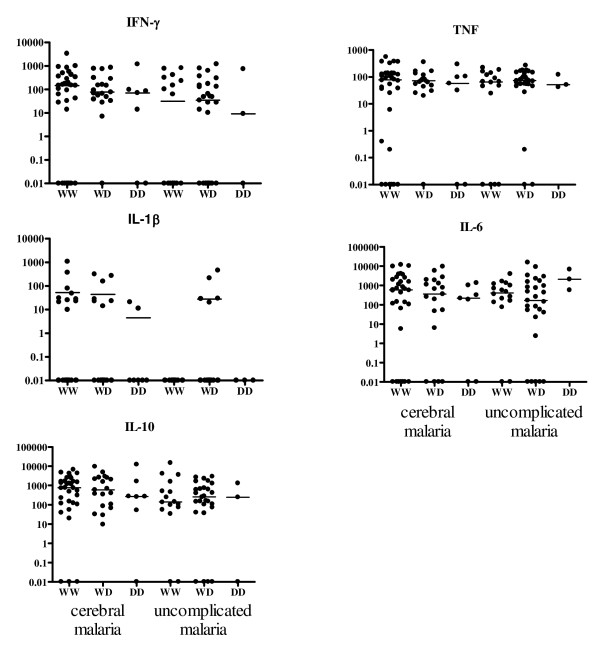
These polymorphisms were examined in a Ugandan case control study on children with either cerebral malaria or uncomplicated malaria. Serum cytokine levels were analysed by ELISA, according to genotype and disease status. In vitro TLR2 expression was measured according to genotype.
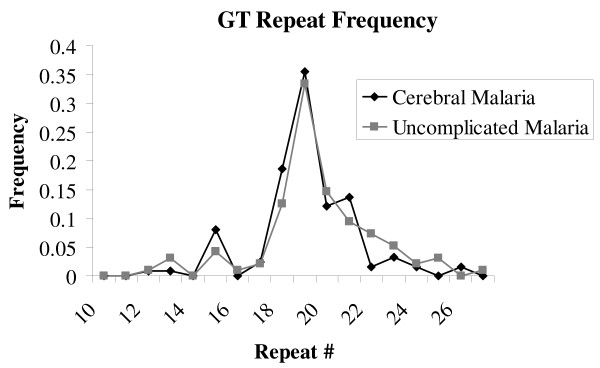
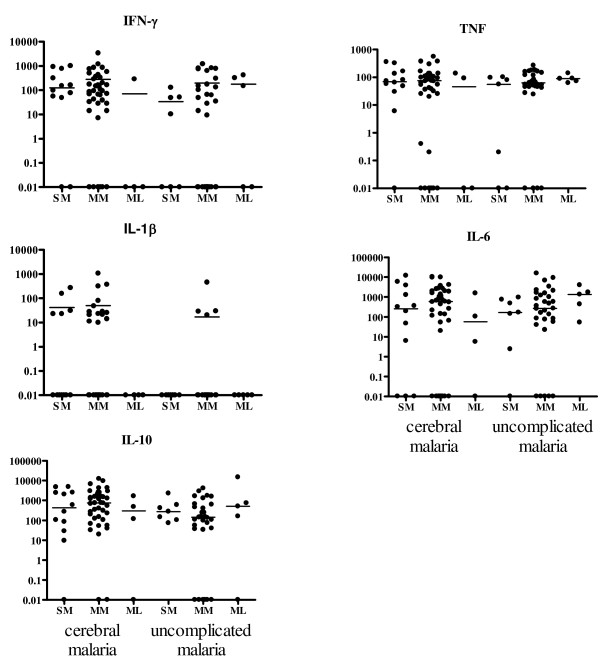
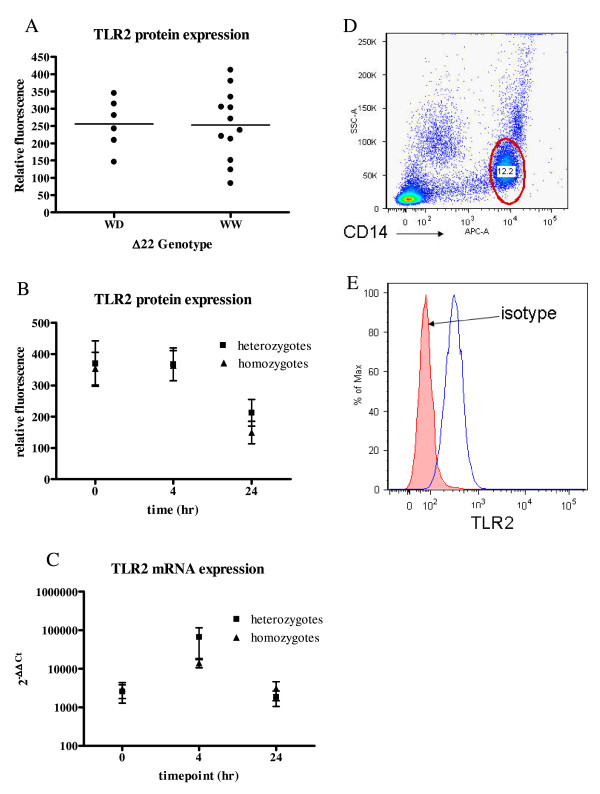
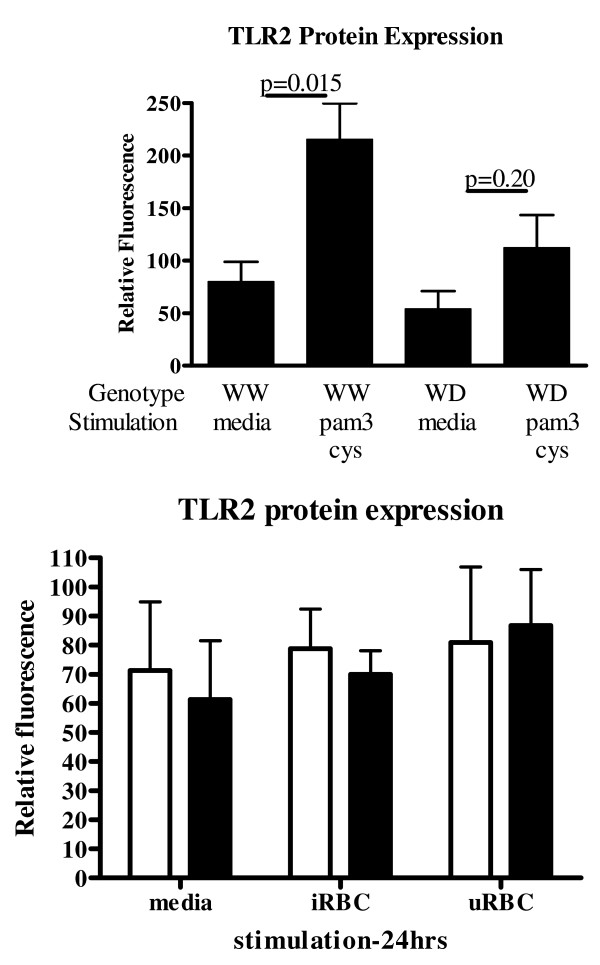
Both Δ22 and GTn polymorphisms were highly frequent, but only Δ22 heterozygosity was associated with protection from cerebral malaria (OR 0.34, 95% confidence intervals 0.16, 0.73). In vitro, heterozygosity for Δ22 was associated with reduced pam3cys inducible TLR2 expression in human monocyte derived macrophages. In uncomplicated malaria patients, Δ22 homozygosity was associated with elevated serum IL-6 (p = 0.04), and long GT repeat alleles were associated with elevated TNF (p = 0.007).
Reduced inducible TLR2 expression may lead to attenuated pro-inflammatory responses, a potential mechanism of protection from cerebral malaria present in individuals heterozygous for the TLR2 Δ22 polymorphism.
在疟疾流行地区,宿主遗传学影响疟原虫感染儿童是发生无并发症疟疾还是严重疟疾。TLR2 已被确定为疟原虫衍生糖基磷脂酰肌醇(GPI)的受体,TLR2 基因内的多态性可能影响疾病的发病机制。TLR2 5'非翻译区(UTR)存在两种常见的多态性,第一个非翻译外显子中的 22 个碱基缺失(Δ22)和第二个内含子中的 GT 二核苷酸重复(GTn)。
在乌干达的一项儿童脑型疟疾与无并发症疟疾的病例对照研究中,检测了这些多态性。根据基因型和疾病状态,用 ELISA 法分析血清细胞因子水平。根据基因型测定体外 TLR2 表达。
Δ22 和 GTn 多态性均高度频繁,但只有 Δ22 杂合性与脑型疟疾的保护作用相关(OR0.34,95%置信区间 0.16,0.73)。在体外,Δ22 杂合性与人单核细胞衍生巨噬细胞中 pam3cys 诱导的 TLR2 表达减少有关。在无并发症疟疾患者中,Δ22 纯合性与血清 IL-6 升高相关(p = 0.04),长 GT 重复等位基因与 TNF 升高相关(p = 0.007)。
诱导性 TLR2 表达减少可能导致促炎反应减弱,这是 TLR2 Δ22 多态性杂合子个体对脑型疟疾产生保护作用的潜在机制。