The Wistar Institute, Philadelphia, PA, USA.
Ups J Med Sci. 2012 May;117(2):237-43. doi: 10.3109/03009734.2012.658977. Epub 2012 Feb 16.
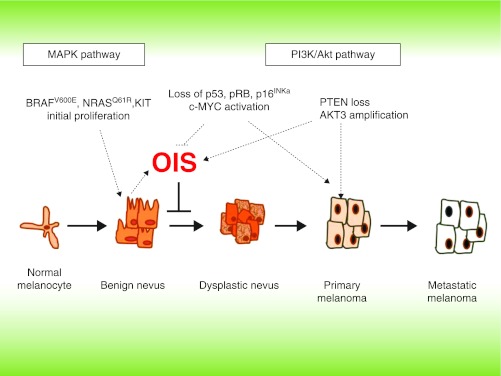
Cutaneous melanoma originates from pigment producing melanocytes or their precursors and is considered the deadliest form of skin cancer. For the last 40 years, few treatment options were available for patients with late-stage melanoma. However, remarkable advances in the therapy field were made recently, leading to the approval of two new drugs, the mutant BRAF inhibitor vemurafenib and the immunostimulant ipilimumab. Although these drugs prolong patients' lives, neither drug cures the disease completely, emphasizing the need for improvements of current therapies. Our knowledge about the complex genetic and biological mechanisms leading to melanoma development has increased, but there are still gaps in our understanding of the early events of melanocyte transformation and disease progression. In this review, we present a summary of the main contributing factors leading to melanocyte transformation and discuss recent novel findings and technologies that will help answer some of the key biological melanoma questions and lay the groundwork for novel therapies.
皮肤黑色素瘤源于产生色素的黑素细胞或其前体,被认为是皮肤癌中最致命的形式。在过去的 40 年中,晚期黑色素瘤患者的治疗选择很少。然而,最近在治疗领域取得了显著进展,批准了两种新的药物,即突变型 BRAF 抑制剂 vemurafenib 和免疫刺激剂 ipilimumab。尽管这些药物延长了患者的生命,但没有一种药物能完全治愈这种疾病,这强调了需要改进当前的治疗方法。我们对导致黑色素瘤发展的复杂遗传和生物学机制的了解有所增加,但我们对黑素细胞转化和疾病进展的早期事件的理解仍存在差距。在这篇综述中,我们总结了导致黑素细胞转化的主要因素,并讨论了最近的新发现和技术,这些发现和技术将有助于回答一些关键的生物学黑色素瘤问题,并为新的治疗方法奠定基础。