Yang Fan, Lei Pengzhen, Zeng Weihui, Gao Jianwu, Wu Na
Department of Dermatology, Shaanxi Provincial People's Hospital, Xi'an, Shaanxi 710068, People's Republic of China.
Department of Orthopedics, Shaanxi Provincial People's Hospital, Xi'an, Shaanxi 710068, People's Republic of China.
Cancer Manag Res. 2020 May 5;12:3131-3144. doi: 10.2147/CMAR.S243869. eCollection 2020.
Long intergenic non-protein-coding RNA 173 () plays crucial roles in lung cancer. However, the expression and biological functions of in melanoma have not yet been investigated. In this study, we aimed to characterize the involvement of in melanoma and elucidate its mechanisms of action.
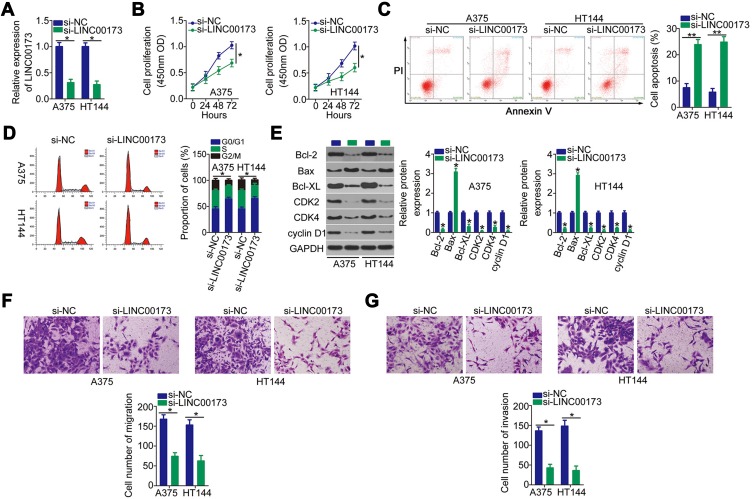
Reverse-transcription quantitative PCR was performed to measure expression in melanoma. A CCK-8 assay, flow cytometry, and migration and invasion assays were applied to examine melanoma cell proliferation, apoptosis, migration, and invasion, respectively. A xenograft tumor experiment was performed to determine the tumorous growth of melanoma cells in vivo.
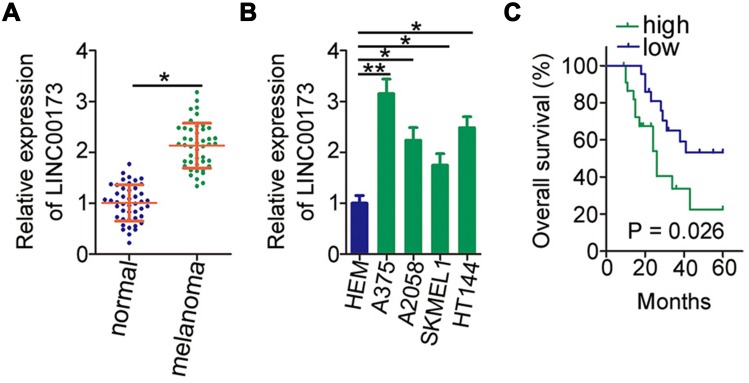
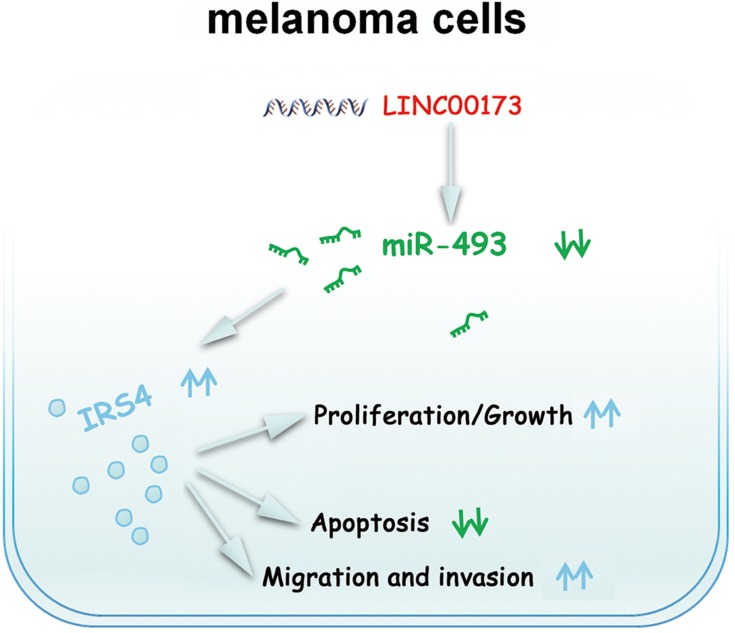
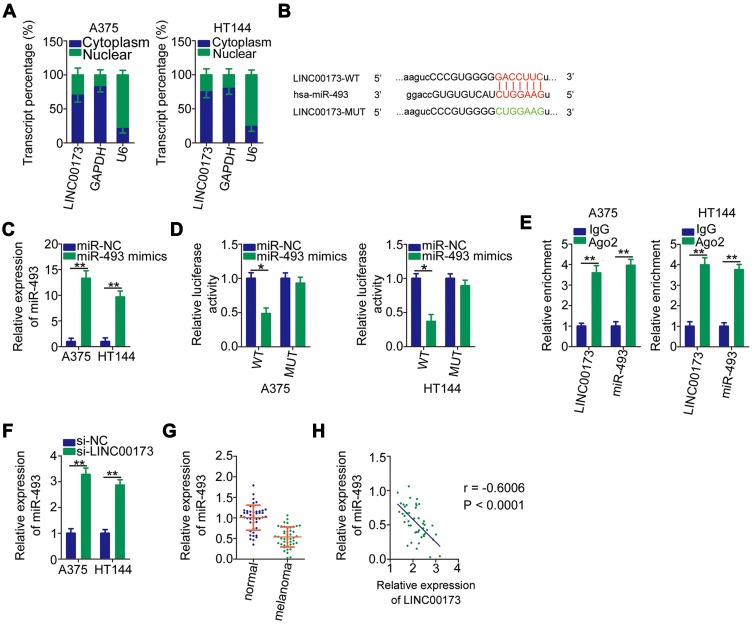
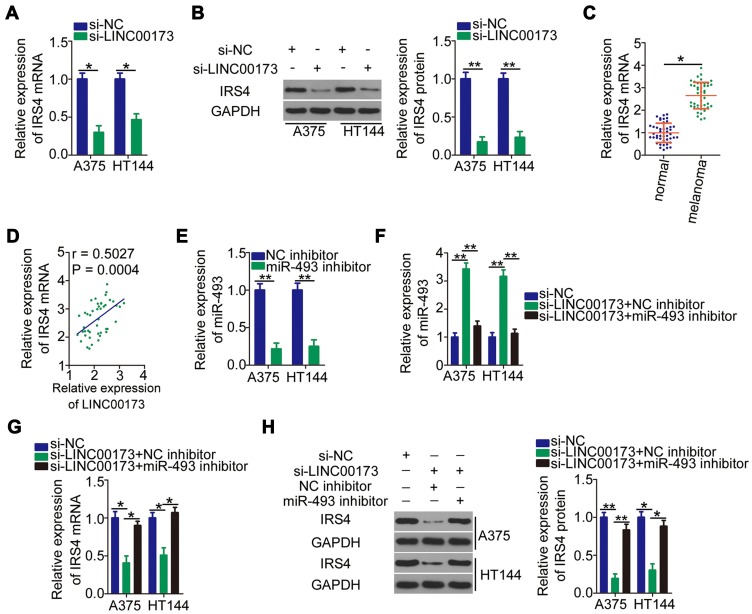
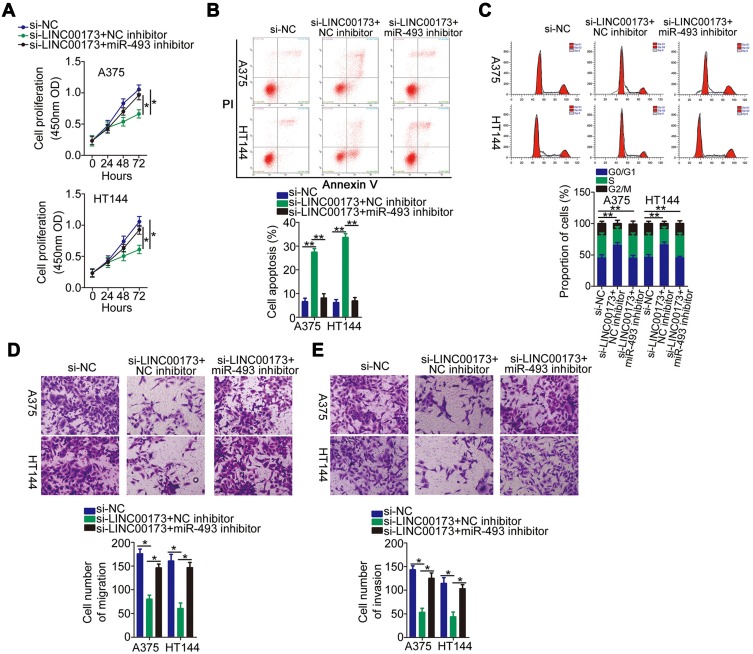
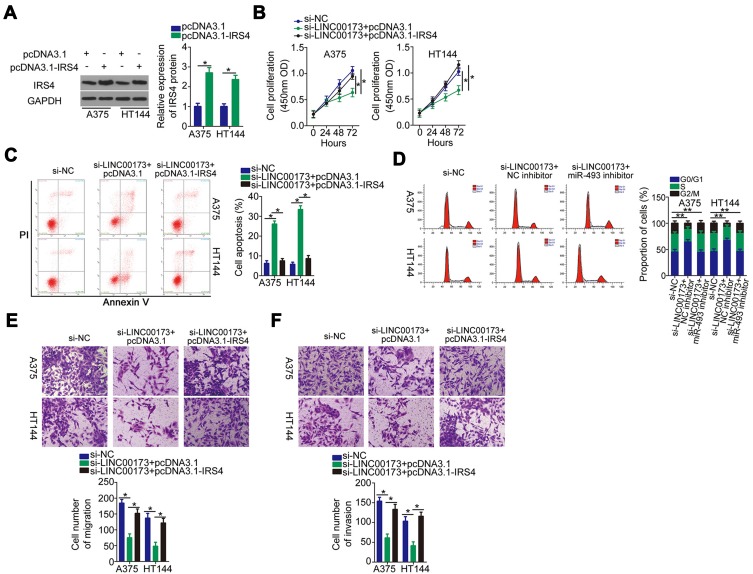
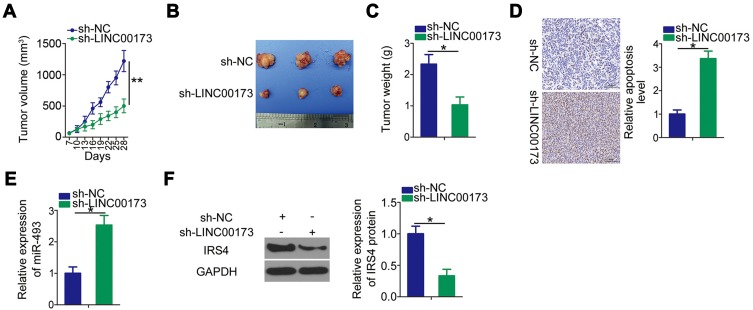
We found that was upregulated in melanoma tissues and cell lines. High expression was closely associated with TNM stage, lymph node metastasis, and shorter overall survival of patients with melanoma. Functional assays revealed that downregulation inhibited melanoma cell proliferation, migration, and invasion and induced apoptosis, suggesting that acts as an oncogenic RNA. knockdown retarded the tumorous growth of melanoma cells in vivo. Mechanistically, increased insulin receptor substrate 4 (IRS4) expression by sponging microRNA-493 (miR-493), thereby acting as a competing endogenous RNA. The effects of knockdown on the malignant phenotype of melanoma cells were reversed by overexpression of IRS4 or knockdown of miR-493.
The -miR-493-IRS4 pathway regulates melanoma characteristics by increasing the expression of IRS4 via competitive binding of to miR-493, suggesting that this pathway is a potential target for the diagnosis, prognosis, and/or treatment of melanoma.
长链基因间非编码RNA 173()在肺癌中发挥关键作用。然而,其在黑色素瘤中的表达及生物学功能尚未得到研究。在本研究中,我们旨在明确在黑色素瘤中的作用并阐明其作用机制。
采用逆转录定量PCR检测黑色素瘤中的表达。分别应用CCK-8法、流式细胞术以及迁移和侵袭实验检测黑色素瘤细胞的增殖、凋亡、迁移和侵袭能力。进行异种移植瘤实验以确定黑色素瘤细胞在体内的肿瘤生长情况。
我们发现,在黑色素瘤组织和细胞系中上调。高表达与黑色素瘤患者的TNM分期、淋巴结转移及较短的总生存期密切相关。功能实验表明,下调抑制黑色素瘤细胞的增殖、迁移和侵袭并诱导凋亡,提示作为一种致癌RNA发挥作用。敲低可抑制黑色素瘤细胞在体内的肿瘤生长。机制上,通过结合微小RNA-493(miR-493)增加胰岛素受体底物4(IRS4)的表达,从而作为竞争性内源RNA发挥作用。过表达IRS4或敲低miR-493可逆转敲低对黑色素瘤细胞恶性表型的影响。
-miR-493-IRS4通路通过与miR-493竞争性结合增加IRS4的表达来调节黑色素瘤的特性,提示该通路是黑色素瘤诊断、预后和/或治疗的潜在靶点。