Department of Molecular Biology and Genetics, Cornell University, Ithaca, New York 14853, USA.
Genetics. 2012 Feb;190(2):317-49. doi: 10.1534/genetics.111.130286.
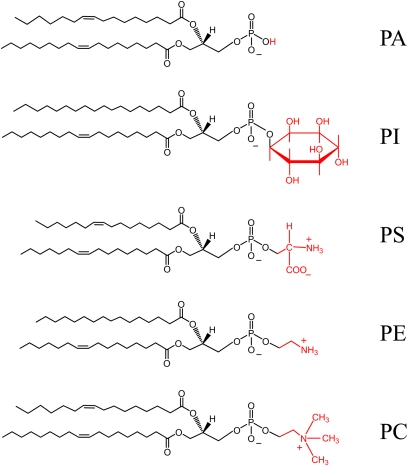
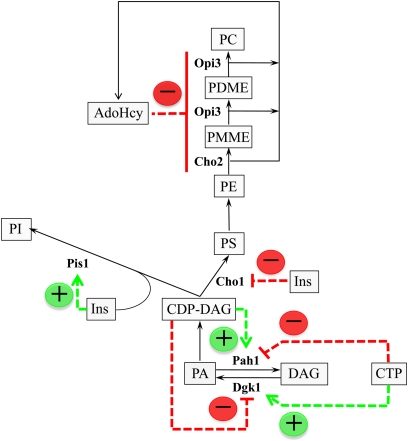
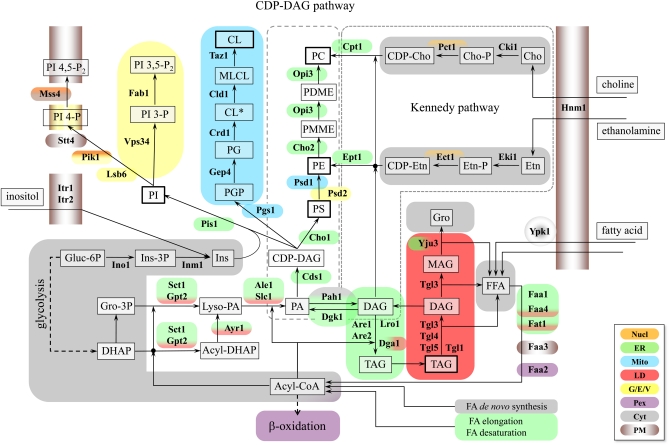
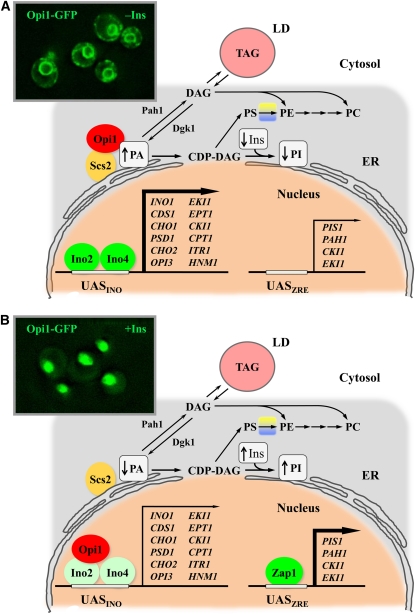
Due to its genetic tractability and increasing wealth of accessible data, the yeast Saccharomyces cerevisiae is a model system of choice for the study of the genetics, biochemistry, and cell biology of eukaryotic lipid metabolism. Glycerolipids (e.g., phospholipids and triacylglycerol) and their precursors are synthesized and metabolized by enzymes associated with the cytosol and membranous organelles, including endoplasmic reticulum, mitochondria, and lipid droplets. Genetic and biochemical analyses have revealed that glycerolipids play important roles in cell signaling, membrane trafficking, and anchoring of membrane proteins in addition to membrane structure. The expression of glycerolipid enzymes is controlled by a variety of conditions including growth stage and nutrient availability. Much of this regulation occurs at the transcriptional level and involves the Ino2-Ino4 activation complex and the Opi1 repressor, which interacts with Ino2 to attenuate transcriptional activation of UAS(INO)-containing glycerolipid biosynthetic genes. Cellular levels of phosphatidic acid, precursor to all membrane phospholipids and the storage lipid triacylglycerol, regulates transcription of UAS(INO)-containing genes by tethering Opi1 to the nuclear/endoplasmic reticulum membrane and controlling its translocation into the nucleus, a mechanism largely controlled by inositol availability. The transcriptional activator Zap1 controls the expression of some phospholipid synthesis genes in response to zinc availability. Regulatory mechanisms also include control of catalytic activity of glycerolipid enzymes by water-soluble precursors, products and lipids, and covalent modification of phosphorylation, while in vivo function of some enzymes is governed by their subcellular location. Genome-wide genetic analysis indicates coordinate regulation between glycerolipid metabolism and a broad spectrum of metabolic pathways.
由于其遗传可操作性和越来越多的可用数据,酵母酿酒酵母是研究真核脂质代谢的遗传学、生物化学和细胞生物学的首选模式系统。甘油磷脂(例如,磷脂和三酰基甘油)及其前体由与细胞质和膜细胞器(包括内质网、线粒体和脂滴)相关的酶合成和代谢。遗传和生化分析表明,甘油磷脂除了膜结构外,还在细胞信号转导、膜运输和膜蛋白锚定中发挥重要作用。甘油磷脂酶的表达受多种条件的控制,包括生长阶段和营养物质的可用性。这种调节主要发生在转录水平,涉及 Ino2-Ino4 激活复合物和 Opi1 抑制剂,Opi1 与 Ino2 相互作用,减弱包含 UAS(INO)的甘油磷脂生物合成基因的转录激活。所有膜磷脂和储存脂质三酰基甘油的前体磷脂酸的细胞水平通过将 Opi1 连接到核/内质网膜并控制其易位到核内,从而调节包含 UAS(INO)的基因的转录,这一机制在很大程度上受肌醇可用性的控制。转录激活子 Zap1 控制一些磷脂合成基因的表达,以响应锌的可用性。调节机制还包括通过水溶性前体、产物和脂质控制甘油磷脂酶的催化活性,以及磷酸化的共价修饰,而一些酶的体内功能受其亚细胞位置的控制。全基因组遗传分析表明甘油脂代谢与广泛的代谢途径之间存在协调调节。