Dept. of Poultry Science, University of Arkansas, Fayetteville, AR 72704, USA; E-Mail:
Sensors (Basel). 2009;9(7):5308-23. doi: 10.3390/s90705308. Epub 2009 Jul 6.
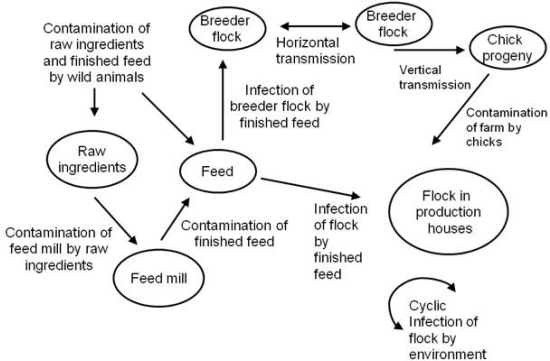
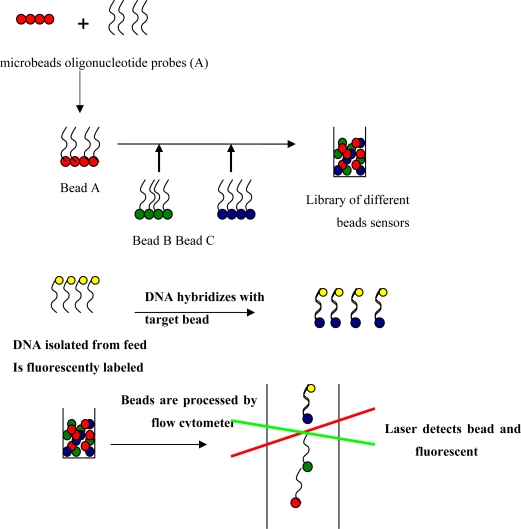
Salmonella is a leading cause of foodborne illness in the United States, with poultry and poultry products being a primary source of infection to humans. Poultry may carry some Salmonella serovars without any signs or symptoms of disease and without causing any adverse effects to the health of the bird. Salmonella may be introduced to a flock by multiple environmental sources, but poultry feed is suspected to be a leading source. Detecting Salmonella in feed can be challenging because low levels of the bacteria may not be recovered using traditional culturing techniques. Numerous detection methodologies have been examined over the years for quantifying Salmonella in feeds and many have proven to be effective for Salmonella isolation and detection in a variety of feeds. However, given the potential need for increased detection sensitivity, molecular detection technologies may the best candidate for developing rapid sensitive methods for identifying small numbers of Salmonella in the background of large volumes of feed. Several studies have been done using polymerase chain reaction (PCR) assays and commercial kits to detect Salmonella spp. in a wide variety of feed sources. In addition, DNA array technology has recently been utilized to track the dissemination of a specific Salmonella serotype in feed mills. This review will discuss the processing of feeds and potential points in the process that may introduce Salmonella contamination to the feed. Detection methods currently used and the need for advances in these methods also will be discussed. Finally, implementation of rapid detection for optimizing control methods to prevent and remove any Salmonella contamination of feeds will be considered.
沙门氏菌是美国食源性疾病的主要原因,家禽及其产品是人感染的主要来源。家禽可能携带某些沙门氏菌血清型而没有任何疾病迹象或症状,也不会对鸟类健康造成任何不良影响。沙门氏菌可能通过多种环境来源引入鸡群,但怀疑家禽饲料是主要来源。由于使用传统的培养技术可能无法回收低水平的细菌,因此检测饲料中的沙门氏菌具有挑战性。多年来,已经研究了许多检测方法来定量饲料中的沙门氏菌,其中许多方法已被证明可有效分离和检测各种饲料中的沙门氏菌。然而,鉴于对提高检测灵敏度的潜在需求,分子检测技术可能是开发快速、灵敏方法的最佳候选方法,可用于在大量饲料背景下识别少量沙门氏菌。已经使用聚合酶链反应 (PCR) 检测法和商业试剂盒进行了多项研究,以检测各种饲料来源中的沙门氏菌属。此外,DNA 芯片技术最近已用于跟踪饲料厂中特定沙门氏菌血清型的传播。这篇综述将讨论饲料的加工过程以及该过程中可能将沙门氏菌污染引入饲料的潜在环节。还将讨论当前使用的检测方法以及这些方法改进的必要性。最后,将考虑快速检测的实施,以优化控制方法,防止和消除饲料中的任何沙门氏菌污染。