The Beatson Institute for Cancer Research, Glasgow University College of Medical Veterinary and Life Sciences, Glasgow, United Kingdom.
PLoS One. 2012;7(2):e30605. doi: 10.1371/journal.pone.0030605. Epub 2012 Feb 8.
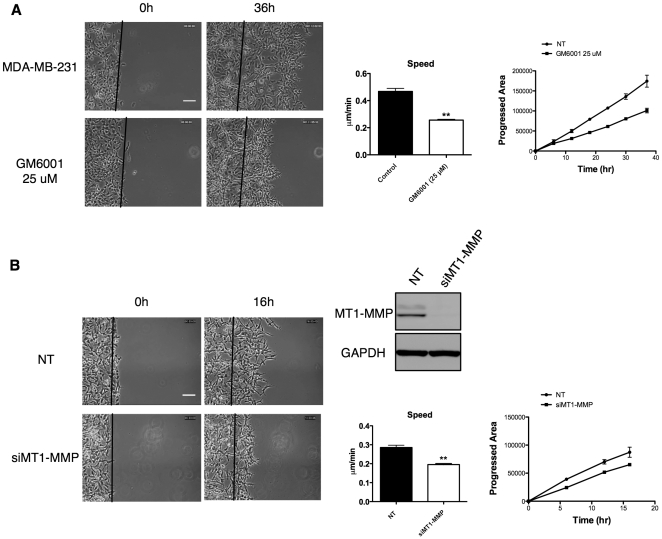
The ability of tumor cells to invade is one of the hallmarks of the metastatic phenotype. To elucidate the mechanisms by which tumor cells acquire an invasive phenotype, in vitro assays have been developed that mimic the process of cancer cell invasion through basement membrane or in the stroma. We have extended the characterization of the circular invasion assay and found that it provides a simple and amenable system to study cell invasion in matrix in an environment that closely mimics 3D invasion. Furthermore, it allows detailed microscopic analysis of both live and fixed cells during the invasion process. We find that cells invade in a protease dependent manner in this assay and that they assemble focal adhesions and invadopodia that resemble structures visualized in 3D embedded cells. We propose that this is a useful assay for routine and medium throughput analysis of invasion of cancer cells in vitro and the study of cells migrating in a 3D environment.
肿瘤细胞的侵袭能力是转移表型的特征之一。为了阐明肿瘤细胞获得侵袭表型的机制,已经开发了体外测定法,模拟肿瘤细胞通过基底膜或基质侵袭的过程。我们扩展了环形侵袭测定法的特征描述,发现它提供了一个简单且适用的系统,可在接近 3D 侵袭的环境中研究基质中细胞的侵袭。此外,它允许在侵袭过程中对活细胞和固定细胞进行详细的微观分析。我们发现,在该测定法中,细胞以依赖蛋白酶的方式侵袭,并且它们组装成类似于在 3D 嵌入细胞中观察到的结构的粘着斑和侵袭伪足。我们提出,这是一种有用的测定法,可用于常规和中等通量分析体外癌细胞的侵袭以及研究在 3D 环境中迁移的细胞。