State Key Laboratory of Hybrid Rice, College of Life Sciences, Wuhan University, Wuhan, China.
PLoS One. 2012;7(2):e30646. doi: 10.1371/journal.pone.0030646. Epub 2012 Feb 8.
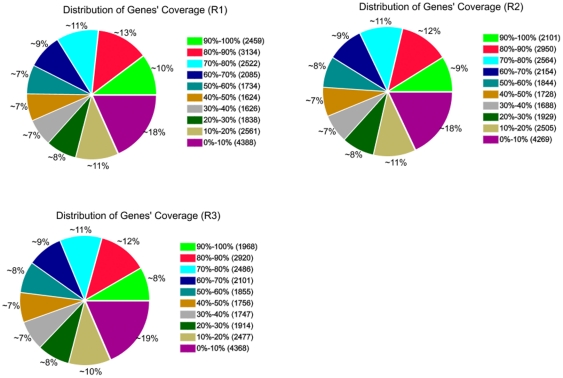
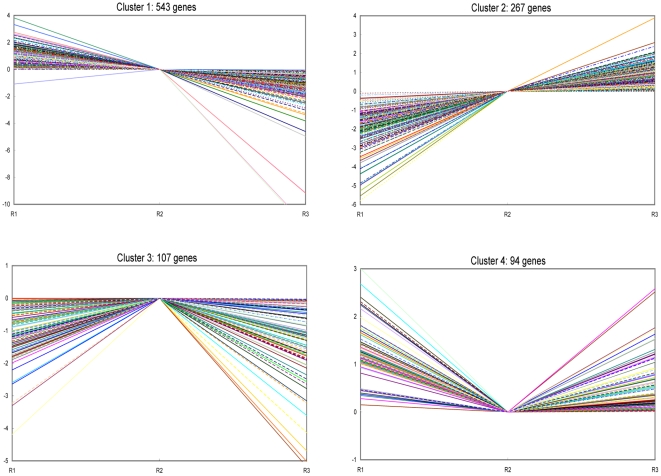
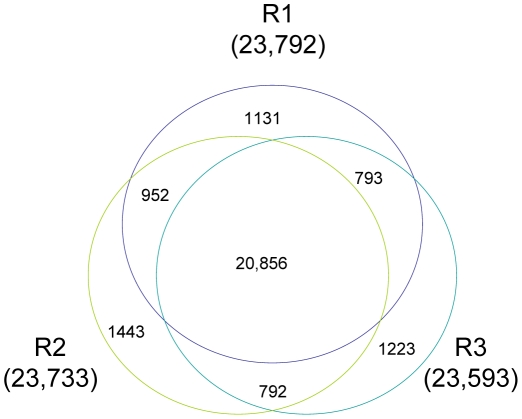
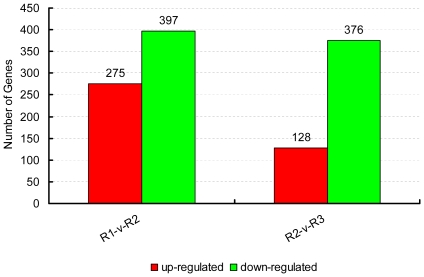
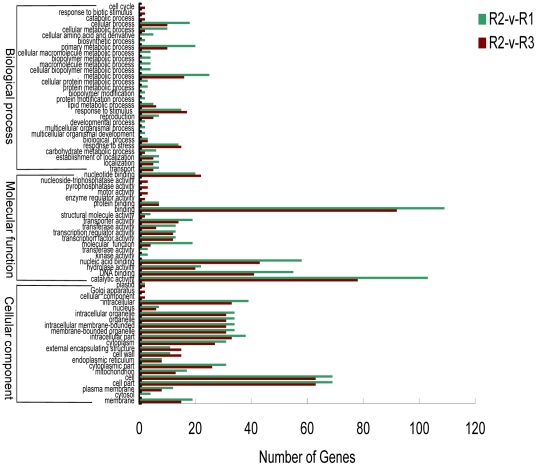
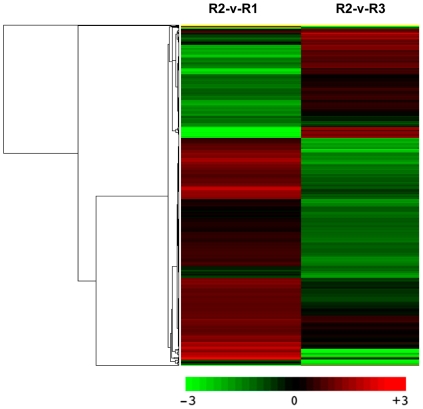
Rice (Oryza sativa) is an excellent model monocot with a known genome sequence for studying embryogenesis. Here we report the transcriptome profiling analysis of rice developing embryos using RNA-Seq as an attempt to gain insight into the molecular and cellular events associated with rice embryogenesis. RNA-Seq analysis generated 17,755,890 sequence reads aligned with 27,190 genes, which provided abundant data for the analysis of rice embryogenesis. A total of 23,971, 23,732, and 23,592 genes were identified from embryos at three developmental stages (3-5, 7, and 14 DAP), while an analysis between stages allowed the identification of a subset of stage-specific genes. The number of genes expressed stage-specifically was 1,131, 1,443, and 1,223, respectively. In addition, we investigated transcriptomic changes during rice embryogenesis based on our RNA-Seq data. A total of 1,011 differentially expressed genes (DEGs) (log(2)Ratio ≥ 1, FDR ≤ 0.001) were identified; thus, the transcriptome of the developing rice embryos changed considerably. A total of 672 genes with significant changes in expression were detected between 3-5 and 7 DAP; 504 DEGs were identified between 7 and 14 DAP. A large number of genes related to metabolism, transcriptional regulation, nucleic acid replication/processing, and signal transduction were expressed predominantly in the early and middle stages of embryogenesis. Protein biosynthesis-related genes accumulated predominantly in embryos at the middle stage. Genes for starch/sucrose metabolism and protein modification were highly expressed in the middle and late stages of embryogenesis. In addition, we found that many transcription factor families may play important roles at different developmental stages, not only in embryo initiation but also in other developmental processes. These results will expand our understanding of the complex molecular and cellular events in rice embryogenesis and provide a foundation for future studies on embryo development in rice and other cereal crops.
水稻(Oryza sativa)是研究胚胎发生的一种优秀的单子叶模式植物,其基因组序列已知。在这里,我们使用 RNA-Seq 报告了水稻发育胚胎的转录组谱分析,试图深入了解与水稻胚胎发生相关的分子和细胞事件。RNA-Seq 分析生成了 17755890 个与 27190 个基因对齐的序列读段,为水稻胚胎发生分析提供了丰富的数据。总共从三个发育阶段(3-5、7 和 14 DAP)的胚胎中鉴定出 23971、23732 和 23592 个基因,而阶段之间的分析允许鉴定出一组特定于阶段的基因。分别有 1131、1443 和 1223 个基因表达具有阶段特异性。此外,我们根据 RNA-Seq 数据研究了水稻胚胎发生过程中的转录组变化。总共鉴定出 1011 个差异表达基因(DEG)(log(2)Ratio ≥ 1,FDR ≤ 0.001);因此,发育中的水稻胚胎的转录组发生了很大变化。在 3-5 和 7 DAP 之间检测到 672 个表达显著变化的基因;在 7 和 14 DAP 之间鉴定出 504 个 DEG。在胚胎发生的早期和中期,大量与代谢、转录调控、核酸复制/加工和信号转导相关的基因表达上调。与蛋白质生物合成相关的基因在胚胎的中期积累较多。淀粉/蔗糖代谢和蛋白质修饰相关基因在胚胎发生的中后期高度表达。此外,我们发现许多转录因子家族可能在不同的发育阶段发挥重要作用,不仅在胚胎起始时,而且在其他发育过程中也发挥重要作用。这些结果将扩大我们对水稻胚胎发生中复杂分子和细胞事件的理解,并为水稻和其他谷类作物胚胎发育的未来研究提供基础。