Ge Xiaomeng, Chen Weihua, Song Shuhui, Wang Weiwei, Hu Songnian, Yu Jun
CAS Key Laboratory of Genome Sciences and Information, Beijing Institute of Genomics, Chinese Academy of Sciences, Beijing, 100029, PR China.
BMC Plant Biol. 2008 Nov 11;8:114. doi: 10.1186/1471-2229-8-114.
The mature embryo of rice (Oryza sativa, L.) is a synchronized and integrated tissue mass laying the foundation at molecular level for its growth, development, and differentiation toward a developing and ultimately a mature plant. We carried out an EST (expressed-sequence-tags)-based transcriptomic study, aiming at gaining molecular insights into embryonic development of a rice hybrid triad-an elite hybrid rice LYP9 and its parental lines (93-11 and PA64s)-and possible relatedness to heterosis.
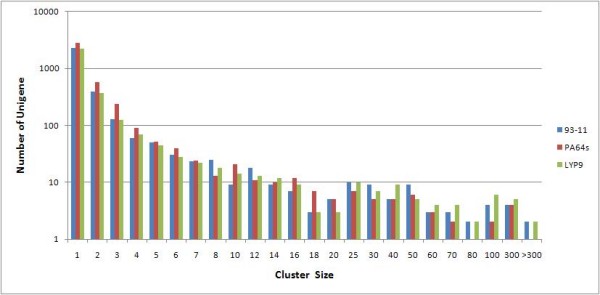
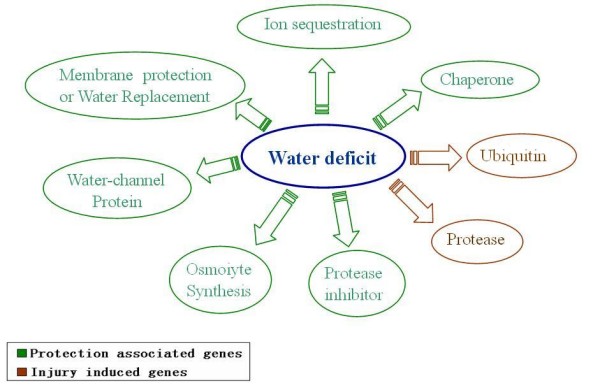
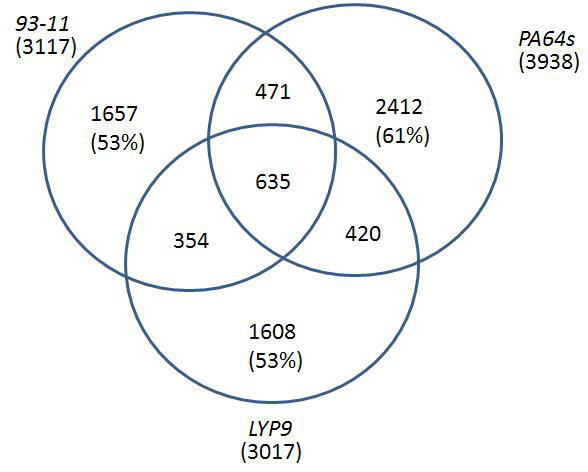
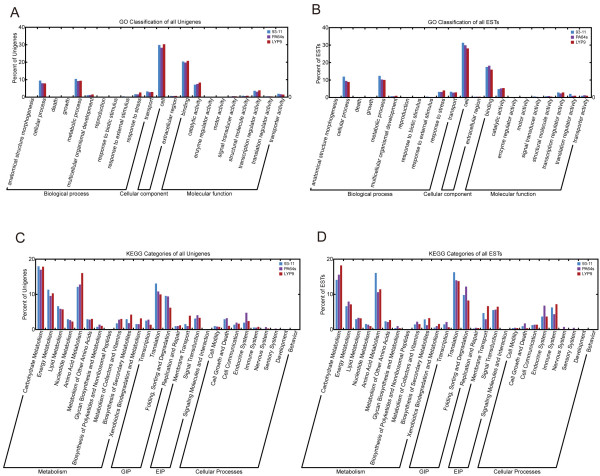
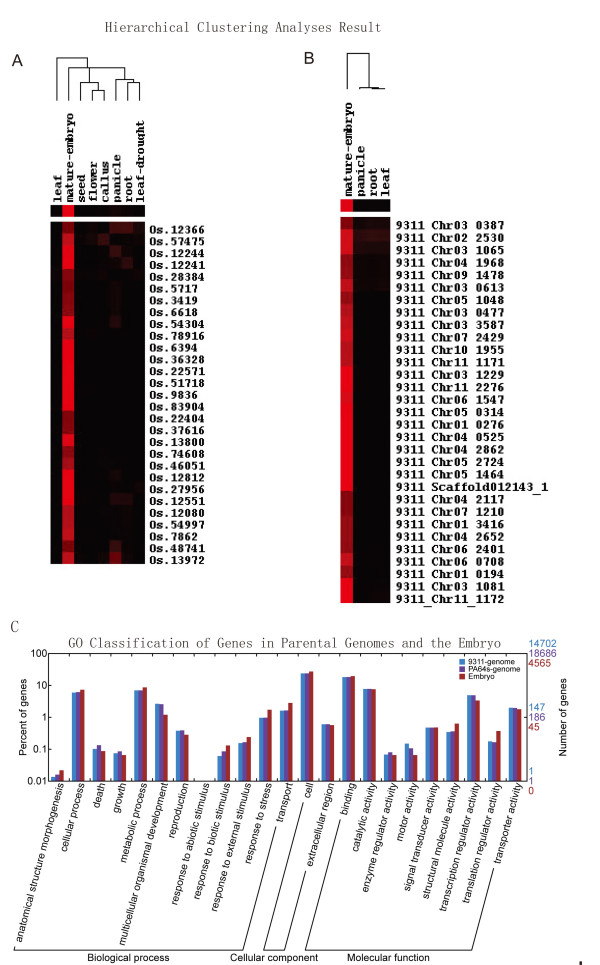
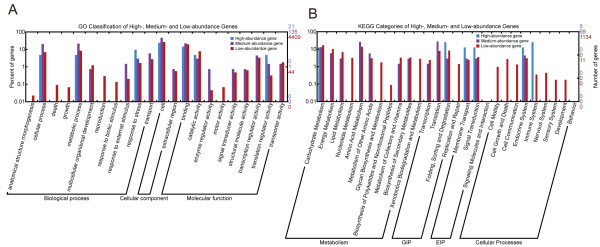
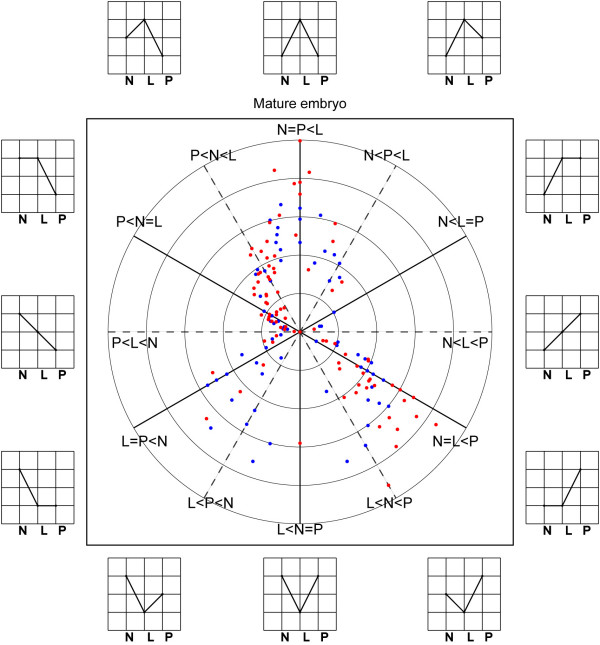
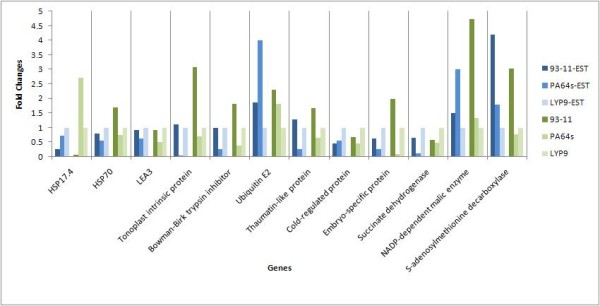
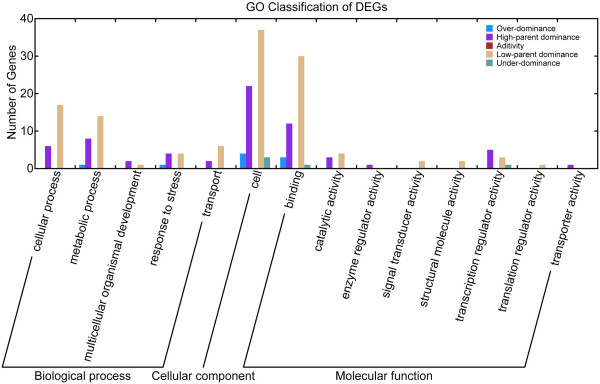
We generated 27,566 high-quality ESTs from cDNA libraries made from mature rice embryos. We classified these ESTs into 7,557 unigenes (2,511 contigs and 5,046 singletons) and 7,250 (95.9%) of them were annotated. We noticed that the high-abundance genes in mature rice embryos belong to two major functional categories, stress-tolerance and preparation-for-development, and we also identified 191 differentially-expressed genes (General Chi-squared test, P-value <= 0.05) between LYP9 and its parental lines, representing typical expression patterns including over-dominance, high- and low-parent dominance, additivity, and under-dominance. In LYP9, the majority of embryo-associated genes were found not only abundantly and specifically enriched but also significantly up-regulated.
Our results suggested that massively strengthening tissue-(or stage-) characteristic functions may contribute to heterosis rather than a few simple mechanistic explanations at the individual gene level. In addition, the large collection of rice embryonic ESTs provides significant amount of data for future comparative analyses on plant development, especially for the important crops of the grass family.
水稻(Oryza sativa, L.)的成熟胚是一个同步且整合的组织团块,在分子水平上为其生长、发育以及向发育中的最终成熟植株的分化奠定基础。我们开展了一项基于EST(表达序列标签)的转录组学研究,旨在深入了解水稻杂种三系——优良杂交水稻LYP9及其亲本系(93-11和PA64s)的胚胎发育情况以及与杂种优势可能的关联性。
我们从成熟水稻胚构建的cDNA文库中获得了27,566条高质量EST。我们将这些EST分类为7,557个单基因(2,511个重叠群和5,046个单拷贝序列),其中7,250个(95.9%)得到注释。我们注意到成熟水稻胚中的高丰度基因属于两个主要功能类别,即胁迫耐受性和发育准备,并且我们还鉴定出LYP9与其亲本系之间有191个差异表达基因(卡方检验,P值<=0.05),代表了典型的表达模式,包括超显性、高亲本优势和低亲本优势、加性和亚显性。在LYP9中,大多数与胚相关的基因不仅大量且特异性富集,而且显著上调。
我们的结果表明,大规模强化组织(或阶段)特征功能可能对杂种优势有贡献,而非个体基因水平上的一些简单机制解释。此外,大量的水稻胚胎EST为未来植物发育的比较分析,特别是对禾本科重要作物的比较分析,提供了大量数据。