Department of Pharmacology, Toxicology and Therapeutics, and Medicine, The University of Kansas Cancer Center, The University of Kansas Medical Center, Kansas City, Kansas, United States of America.
PLoS One. 2012;7(2):e31067. doi: 10.1371/journal.pone.0031067. Epub 2012 Feb 13.
Signal Transducer and Activator of Transcription 3 (STAT3) is an oncogene, which promotes cell survival, proliferation, motility and progression in cancer cells. Targeting STAT3 signaling may lead to the development of novel therapeutic approaches for human cancers. Here, we examined the effects of epigallocathechin gallate (EGCG) on STAT3 signaling in pancreatic cancer cells, and assessed the therapeutic potential of EGCG with gemcitabine or JAK3 inhibitor CP690550 (Tasocitinib) for the treatment and/or prevention of pancreatic cancer.
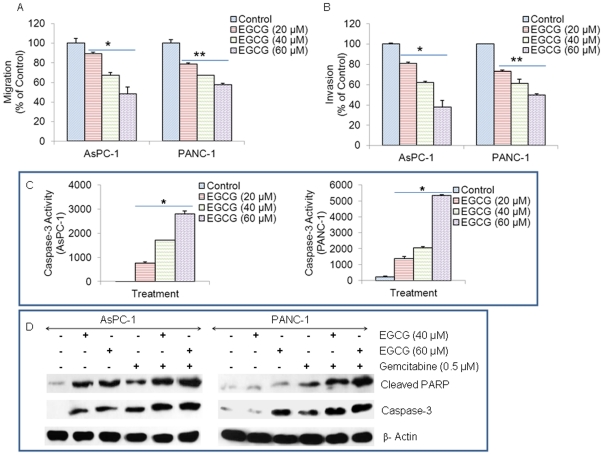
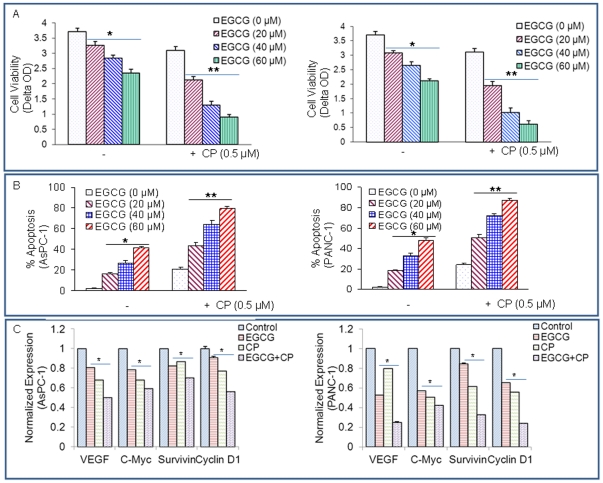
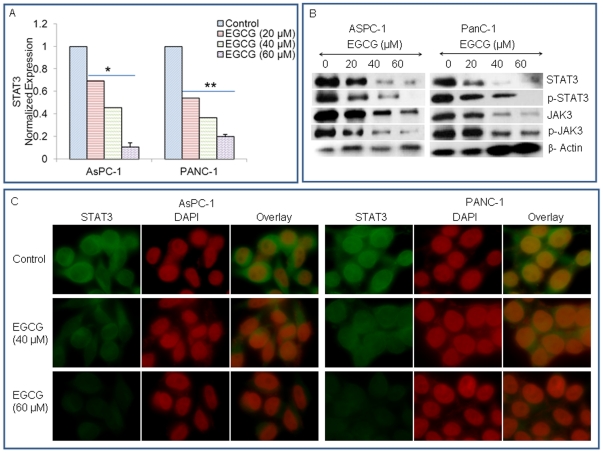
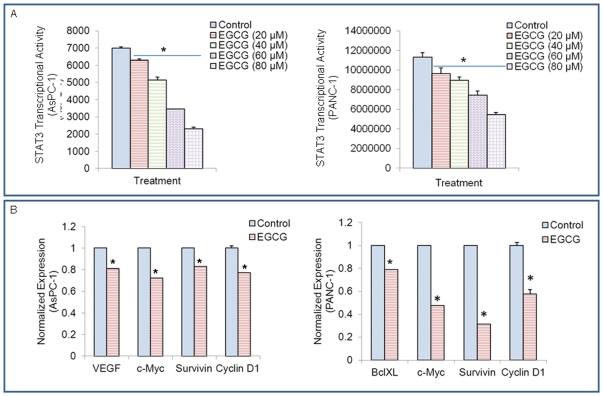
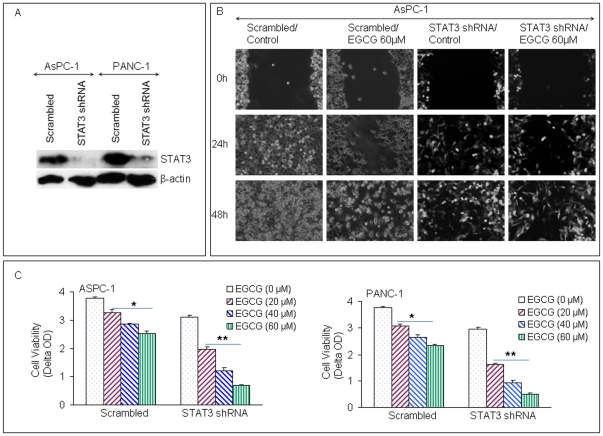
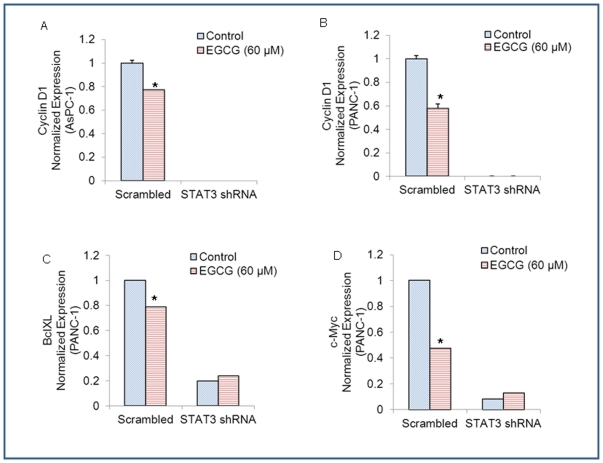
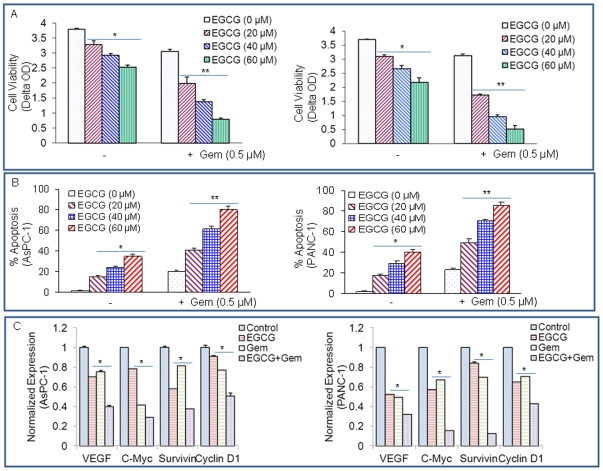
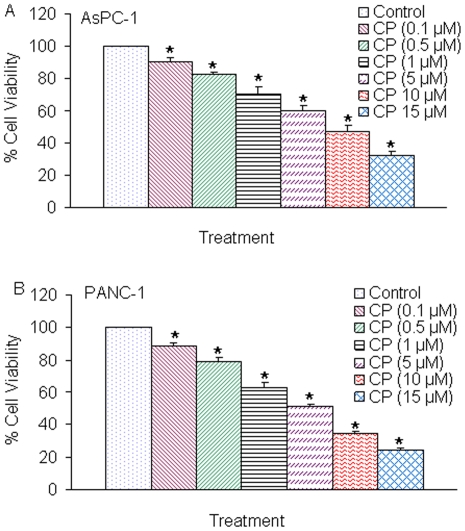
METHODOLOGY/PRINCIPAL FINDINGS: Cell viability and apoptosis were measured by XTT assay and TUNEL staining, respectively. Gene and protein expressions were measured by qRT-PCR and Western blot analysis, respectively. The results revealed that EGCG inhibited the expression of phospho and total JAK3 and STAT3, STAT3 transcription and activation, and the expression of STAT3-regulated genes, resulting in the inhibition of cell motility, migration and invasion, and the induction of caspase-3 and PARP cleavage. The inhibition of STAT3 enhanced the inhibitory effects of EGCG on cell motility and viability. Additionally, gemcitabine and CP690550 alone inhibited STAT3 target genes and synergized with EGCG to inhibit cell viability and induce apoptosis in pancreatic cancer cells.
CONCLUSIONS/SIGNIFICANCE: Overall, these results suggest that EGCG suppresses the growth, invasion and migration of pancreatic cancer cells, and induces apoptosis by interfering with the STAT3 signaling pathway. Moreover, EGCG further enhanced the therapeutic potential of gemcitabine and CP690550 against pancreatic cancer.
信号转导子和转录激活子 3(STAT3)是一种致癌基因,它促进癌细胞的存活、增殖、运动和进展。靶向 STAT3 信号可能会为人类癌症开发新的治疗方法。在这里,我们研究了表没食子儿茶素没食子酸酯(EGCG)对胰腺癌细胞中 STAT3 信号的影响,并评估了 EGCG 与吉西他滨或 JAK3 抑制剂 CP690550(托法替尼)联合用于治疗和/或预防胰腺癌的治疗潜力。
方法/主要发现:通过 XTT 测定法和 TUNEL 染色分别测定细胞活力和细胞凋亡。通过 qRT-PCR 和 Western blot 分析分别测定基因和蛋白表达。结果表明,EGCG 抑制磷酸化和总 JAK3 和 STAT3、STAT3 转录和激活以及 STAT3 调节基因的表达,从而抑制细胞运动、迁移和侵袭,并诱导 caspase-3 和 PARP 切割。STAT3 的抑制增强了 EGCG 对细胞运动和活力的抑制作用。此外,吉西他滨和 CP690550 单独抑制 STAT3 靶基因,并与 EGCG 协同抑制胰腺癌细胞活力并诱导细胞凋亡。
结论/意义:总的来说,这些结果表明 EGCG 通过干扰 STAT3 信号通路抑制胰腺癌细胞的生长、侵袭和迁移,并诱导细胞凋亡。此外,EGCG 进一步增强了吉西他滨和 CP690550 对胰腺癌的治疗潜力。