McMaster University School of Nursing, Hamilton, ON, Canada.
BMC Public Health. 2012 Feb 20;12:137. doi: 10.1186/1471-2458-12-137.
Core competencies for public health in Canada require proficiency in evidence informed decision making (EIDM). However, decision makers often lack access to information, many workers lack knowledge and skills to conduct systematic literature reviews, and public health settings typically lack infrastructure to support EIDM activities. This research was conducted to explore and describe critical factors and dynamics in the early implementation of one public health unit's strategic initiative to develop capacity to make EIDM standard practice.
This qualitative case study was conducted in one public health unit in Ontario, Canada between 2008 and 2010. In-depth information was gathered from two sets of semi-structured interviews and focus groups (n = 27) with 70 members of the health unit, and through a review of 137 documents. Thematic analysis was used to code the key informant and document data.
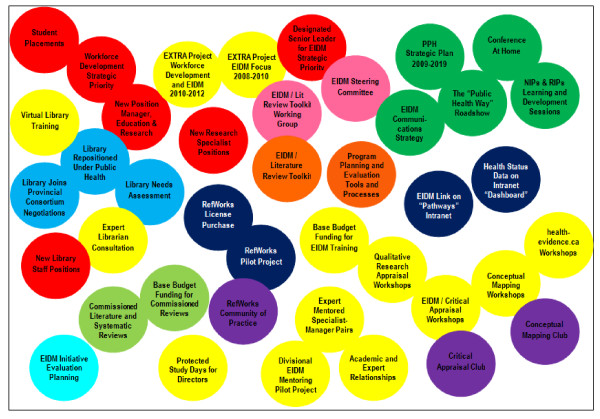
The critical factors and dynamics for building EIDM capacity at an organizational level included: clear vision and strong leadership, workforce and skills development, ability to access research (library services), fiscal investments, acquisition and development of technological resources, a knowledge management strategy, effective communication, a receptive organizational culture, and a focus on change management.
With leadership, planning, commitment and substantial investments, a public health department has made significant progress, within the first two years of a 10-year initiative, towards achieving its goal of becoming an evidence informed decision making organization.
加拿大公共卫生的核心能力要求精通循证决策(EIDM)。然而,决策者往往无法获取信息,许多工作人员缺乏进行系统文献综述的知识和技能,公共卫生机构通常缺乏支持 EIDM 活动的基础设施。本研究旨在探索和描述一个公共卫生部门实施其制定 EIDM 标准实践能力的战略计划的早期实施中的关键因素和动态。
本案例研究于 2008 年至 2010 年在加拿大安大略省的一个公共卫生部门进行。通过两组半结构化访谈和焦点小组(n=27),对该卫生部门的 70 名成员进行了深入的信息收集,并对 137 份文件进行了审查。对关键信息者和文件数据进行了主题分析编码。
在组织层面建立 EIDM 能力的关键因素和动态包括:明确的愿景和强大的领导力、员工队伍和技能发展、获取研究的能力(图书馆服务)、财政投资、获取和开发技术资源、知识管理策略、有效的沟通、接受的组织文化以及对变革管理的关注。
在领导层的带领下,经过规划、承诺和大量投资,在一个为期 10 年的计划的头两年内,该公共卫生部门在实现其成为循证决策组织的目标方面取得了重大进展。