Key Laboratory of Advanced Control and Optimization for Chemical Processes, Ministry of Education, East China University of Science and Technology, Shanghai 200237, People's Republic of China.
Med Biol Eng Comput. 2012 Mar;50(3):289-96. doi: 10.1007/s11517-012-0868-x. Epub 2012 Feb 18.
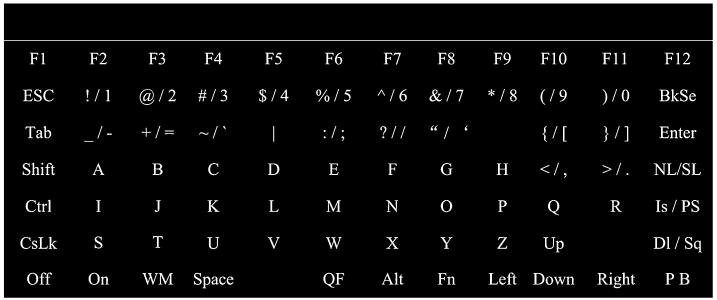
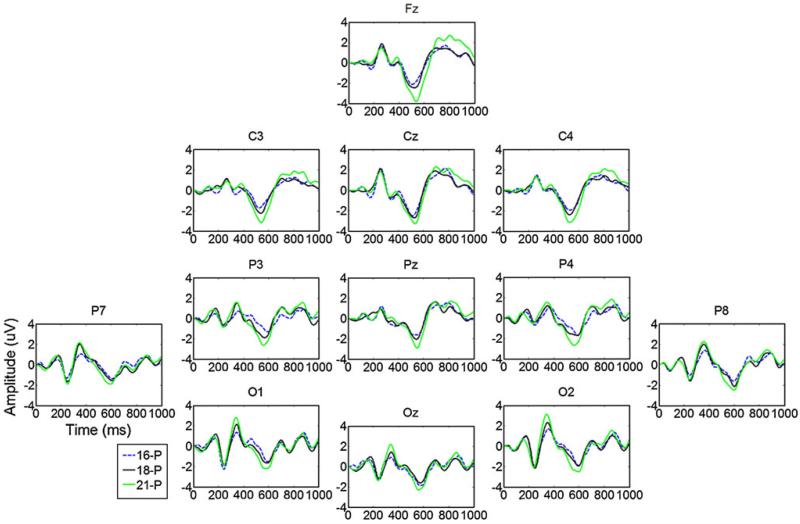
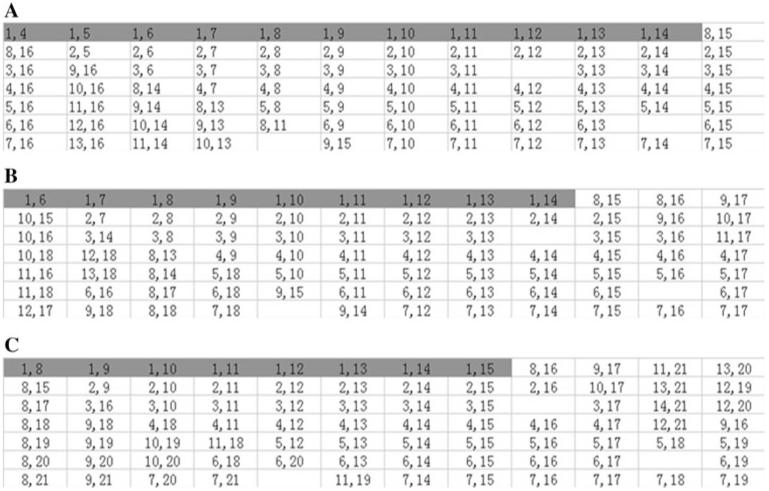
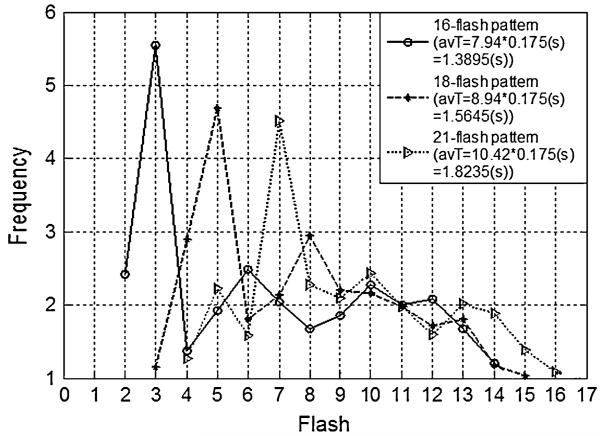
Longer target-to-target intervals (TTI) produce greater P300 event-related potential amplitude, which can increase brain-computer interface (BCI) classification accuracy and decrease the number of flashes needed for accurate character classification. However, longer TTIs requires more time for each trial, which will decrease the information transfer rate of BCI. In this paper, a P300 BCI using a 7 × 12 matrix explored new flash patterns (16-, 18- and 21-flash pattern) with different TTIs to assess the effects of TTI on P300 BCI performance. The new flash patterns were designed to minimize TTI, decrease repetition blindness, and examine the temporal relationship between each flash of a given stimulus by placing a minimum of one (16-flash pattern), two (18-flash pattern), or three (21-flash pattern) non-target flashes between each target flashes. Online results showed that the 16-flash pattern yielded the lowest classification accuracy among the three patterns. The results also showed that the 18-flash pattern provides a significantly higher information transfer rate (ITR) than the 21-flash pattern; both patterns provide high ITR and high accuracy for all subjects.
较长的靶标-靶标间隔(TTI)会产生更大的 P300 事件相关电位幅度,从而提高脑机接口(BCI)的分类准确性,并减少准确分类字符所需的闪烁次数。然而,较长的 TTI 需要每个试验更多的时间,这将降低 BCI 的信息传输率。在本文中,使用 7×12 矩阵的 P300 BCI 探索了新的闪烁模式(16、18 和 21 闪烁模式)和不同的 TTI,以评估 TTI 对 P300 BCI 性能的影响。新的闪烁模式旨在最小化 TTI,减少重复盲,通过在每个目标闪烁之间放置至少一个(16 闪烁模式)、两个(18 闪烁模式)或三个(21 闪烁模式)非目标闪烁来检查给定刺激的每个闪烁之间的时间关系。在线结果表明,在这三种模式中,16 闪烁模式的分类准确率最低。结果还表明,18 闪烁模式比 21 闪烁模式提供更高的信息传输率(ITR);这两种模式都为所有受试者提供了高 ITR 和高准确率。