Institute for Cell Engineering, Johns Hopkins University School of Medicine, Baltimore, Maryland, USA.
Dev Neurobiol. 2012 Jul;72(7):1032-43. doi: 10.1002/dneu.22014.
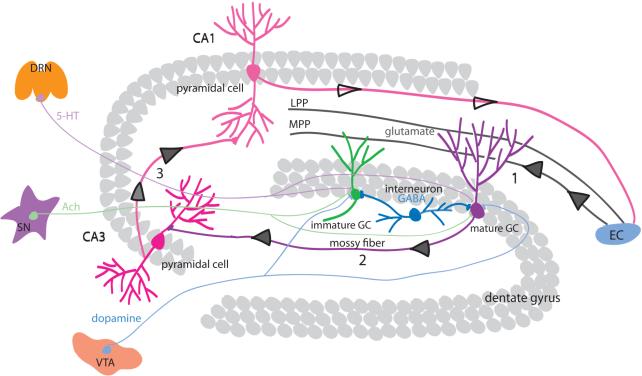
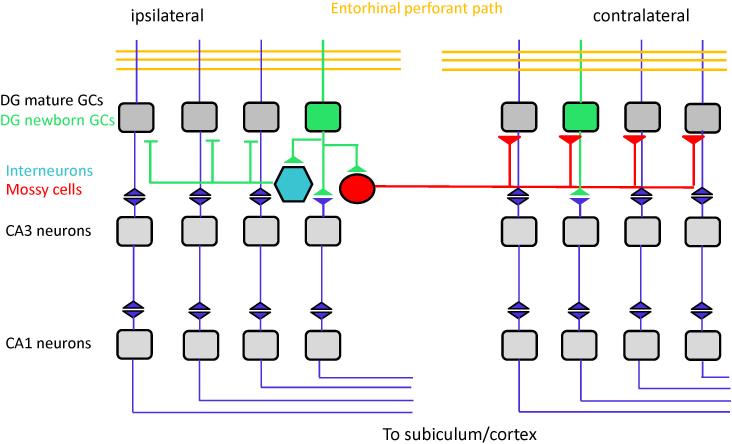
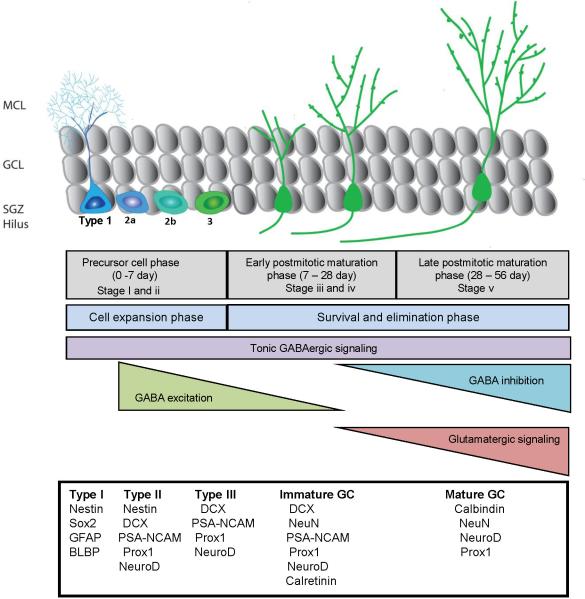
The adult hippocampus is one of the primary neural structures involved in memory formation. In addition to synapse-specific modifications thought to encode information at the subcellular level, changes in the intrahippocampal neuro-populational activity and dynamics at the circuit-level may contribute substantively to the functional capacity of this region. Within the hippocampus, the dentate gyrus has the potential to make a preferential contribution to neural circuit modification owing to the continuous addition of new granule cell population. The integration of newborn neurons into pre-existing circuitry is hypothesized to deliver a unique processing capacity, as opposed to merely replacing dying granule cells. Recent studies have begun to assess the impact of hippocampal neurogenesis by examining the extent to which adult-born neurons participate in hippocampal networks, including when newborn neurons become engaged in ongoing network activity and how they modulate circuit dynamics via their unique intrinsic physiological properties. Understanding the contributions of adult neurogenesis to hippocampal function will provide new insight into the fundamental aspects of brain plasticity, which can be used to guide therapeutic interventions to replace neural populations damaged by disease or injury.
成人海马体是参与记忆形成的主要神经结构之一。除了被认为在亚细胞水平上编码信息的突触特异性修饰外,海马内神经群体活动和电路水平动力学的变化可能对该区域的功能能力有实质性的贡献。在海马体中,由于不断添加新的颗粒细胞群体,齿状回有可能优先对神经回路的修饰做出贡献。新神经元整合到预先存在的电路中的假设提供了一种独特的处理能力,而不仅仅是替代死亡的颗粒细胞。最近的研究开始通过检查成年期神经元参与海马网络的程度来评估海马神经发生的影响,包括当新神经元参与正在进行的网络活动时,以及它们如何通过其独特的内在生理特性来调节电路动力学。了解成年神经发生对海马功能的贡献将为大脑可塑性的基本方面提供新的见解,这可以用于指导治疗干预措施,以替代因疾病或损伤而受损的神经群体。