Chen Grace Megumi, Yoder Keith Jonathon, Ganzel Barbara Lynn, Goodwin Matthew S, Belmonte Matthew Kenneth
Developmental Disabilities Clinic, Yale Child Study Center New Haven, CT, USA.
Front Psychol. 2012 Feb 16;3:12. doi: 10.3389/fpsyg.2012.00012. eCollection 2012.
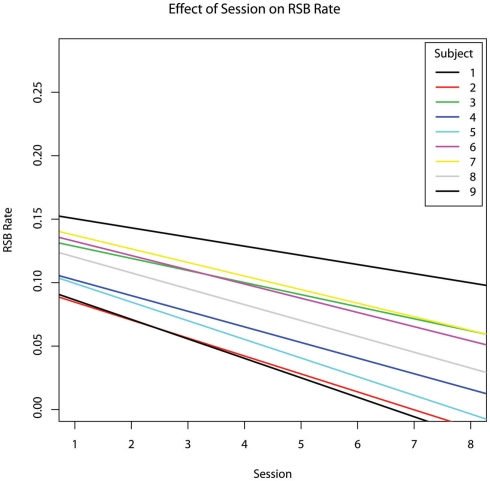
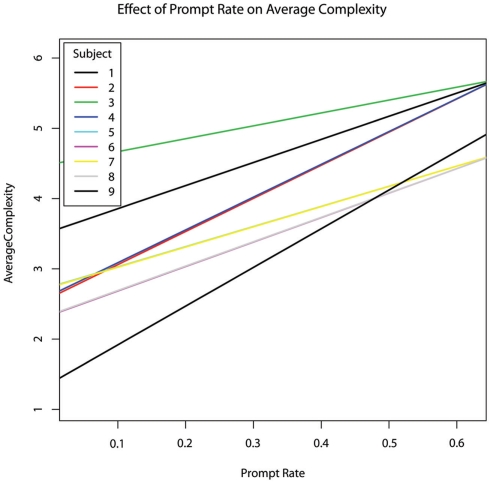
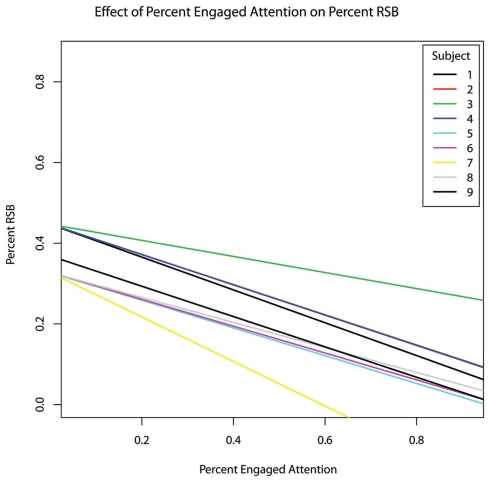
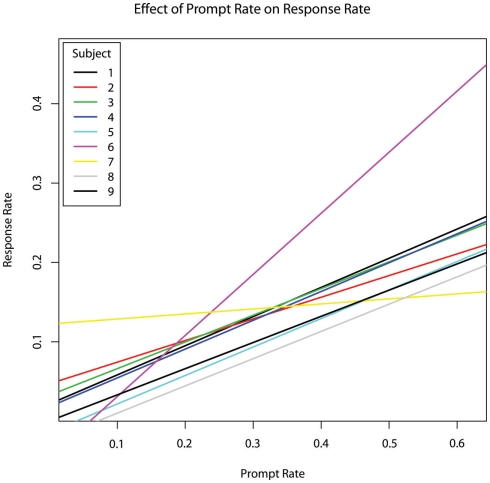
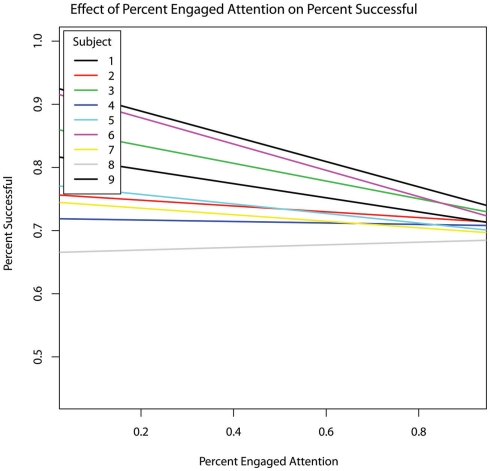
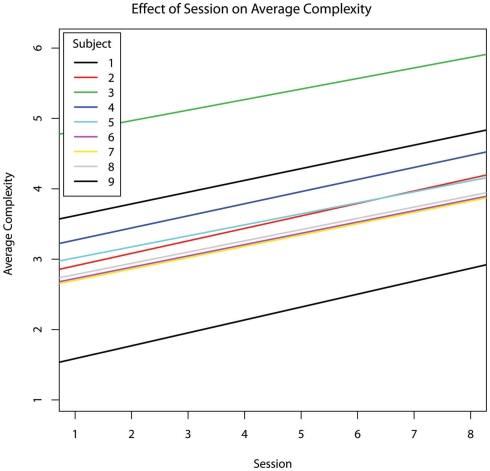
Rigorous, quantitative examination of therapeutic techniques anecdotally reported to have been successful in people with autism who lack communicative speech will help guide basic science toward a more complete characterisation of the cognitive profile in this underserved subpopulation, and show the extent to which theories and results developed with the high-functioning subpopulation may apply. This study examines a novel therapy, the "Rapid Prompting Method" (RPM). RPM is a parent-developed communicative and educational therapy for persons with autism who do not speak or who have difficulty using speech communicatively. The technique aims to develop a means of interactive learning by pointing amongst multiple-choice options presented at different locations in space, with the aid of sensory "prompts" which evoke a response without cueing any specific response option. The prompts are meant to draw and to maintain attention to the communicative task - making the communicative and educational content coincident with the most physically salient, attention-capturing stimulus - and to extinguish the sensory-motor preoccupations with which the prompts compete. Video-recorded RPM sessions with nine autistic children ages 8-14 years who lacked functional communicative speech were coded for behaviours of interest. An analysis controlled for age indicates that exposure to the claimed therapy appears to support a decrease in repetitive behaviours and an increase in the number of multiple-choice response options without any decrease in successful responding. Direct gaze is not related to successful responding, suggesting that direct gaze might not be any advantage for this population and need not in all cases be a precondition to communication therapies.
对那些据传闻对缺乏交流性言语的自闭症患者有效的治疗技术进行严谨、定量的研究,将有助于引导基础科学更全面地刻画这一服务不足亚群体的认知概况,并表明针对高功能亚群体所发展的理论和结果在多大程度上可能适用。本研究考察了一种新型疗法——“快速提示法”(RPM)。RPM是一种由家长开发的针对不会说话或在交流性使用言语方面有困难的自闭症患者的交流和教育疗法。该技术旨在通过在空间中不同位置呈现的多项选择选项中进行指向来开发一种互动学习方式,借助感官“提示”引发反应,而不提示任何特定的反应选项。这些提示旨在吸引并保持对交流任务的关注——使交流和教育内容与最突出、最能吸引注意力的身体刺激相一致——并消除与提示相竞争的感觉运动方面的专注行为。对9名年龄在8至14岁、缺乏功能性交流言语的自闭症儿童的RPM治疗过程进行录像,并对感兴趣的行为进行编码。一项针对年龄的分析表明,接受这种所谓的疗法似乎有助于减少重复行为,增加多项选择反应选项的数量,同时成功反应的次数并未减少。直接注视与成功反应无关,这表明直接注视可能对这一群体没有任何优势,而且在所有情况下不一定是交流疗法的先决条件。