Department of Neurology, Columbia University Medical Center, New York, New York, United States of America.
PLoS One. 2012;7(2):e30606. doi: 10.1371/journal.pone.0030606. Epub 2012 Feb 16.
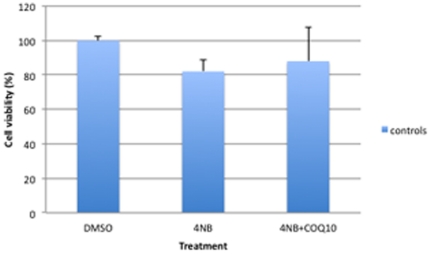
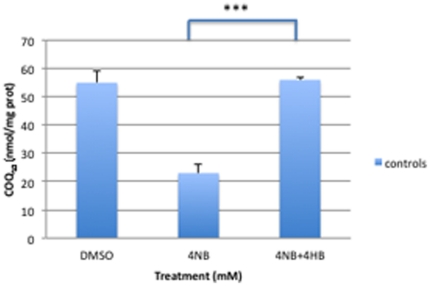
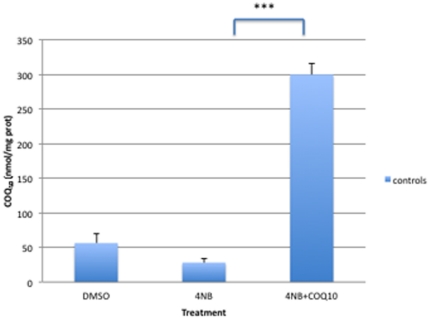
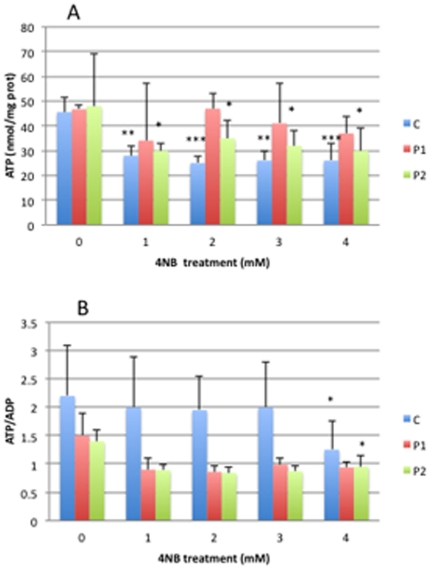
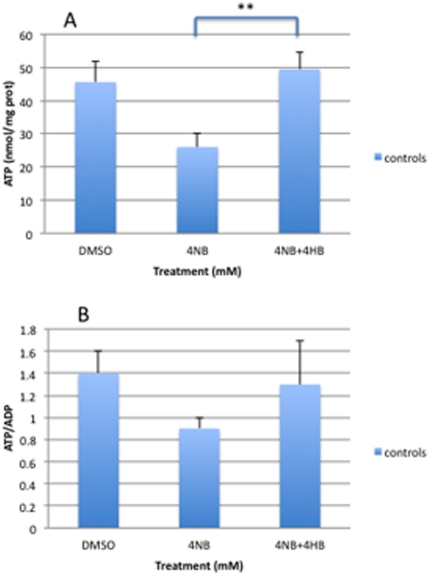
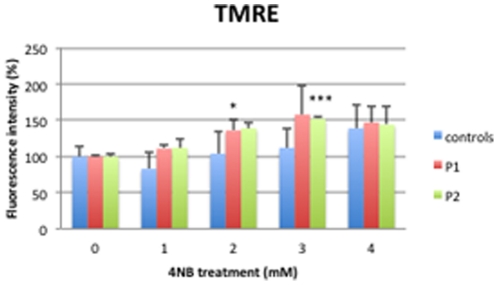
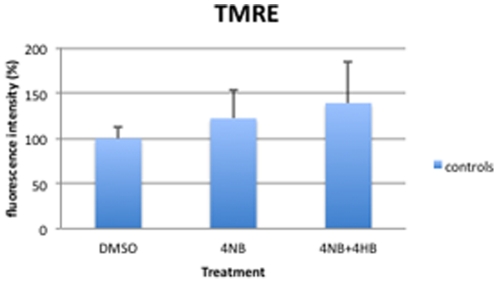
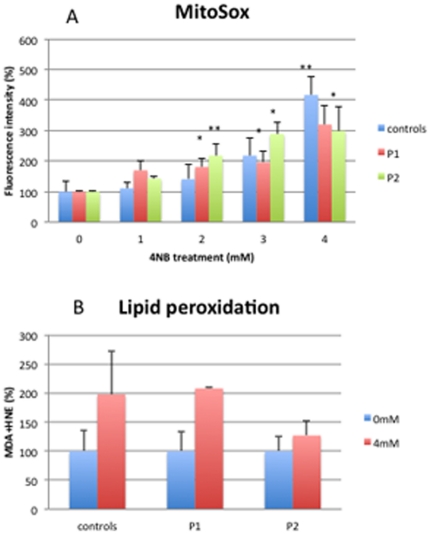
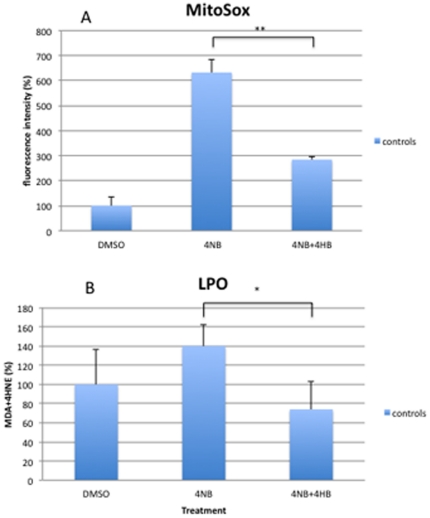
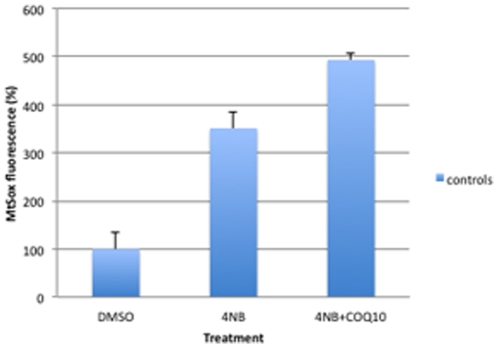
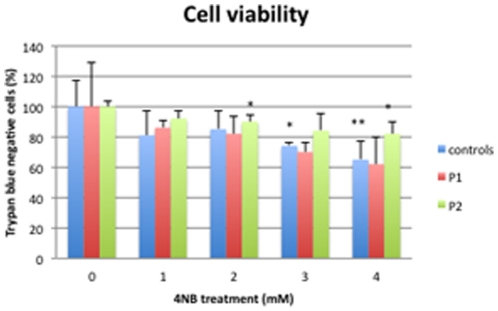
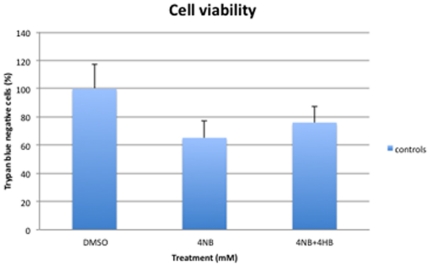
Coenzyme Q(10) (CoQ(10)) is a potent lipophilic antioxidant in cell membranes and a carrier of electrons in the mitochondrial respiratory chain. We previously characterized the effects of varying severities of CoQ(10) deficiency on ROS production and mitochondrial bioenergetics in cells harboring genetic defects of CoQ(10) biosynthesis. We observed a unimodal distribution of ROS production with CoQ(10) deficiency: cells with <20% of CoQ(10) and 50-70% of CoQ(10) did not generate excess ROS while cells with 30-45% of CoQ(10) showed increased ROS production and lipid peroxidation. Because our previous studies were limited to a small number of mutant cell lines with heterogeneous molecular defects, here, we treated 5 control and 2 mildly CoQ(10) deficient fibroblasts with varying doses of 4-nitrobenzoate (4-NB), an analog of 4-hydroxybenzoate (4-HB) and inhibitor of 4-para-hydroxybenzoate:polyprenyl transferase (COQ2) to induce a range of CoQ(10) deficiencies. Our results support the concept that the degree of CoQ(10) deficiency in cells dictates the extent of ATP synthesis defects and ROS production and that 40-50% residual CoQ(10) produces maximal oxidative stress and cell death.
辅酶 Q(10)(CoQ(10))是细胞膜中一种有效的亲脂性抗氧化剂,也是线粒体呼吸链中电子的载体。我们之前研究了不同严重程度的 CoQ(10)缺乏对携带有 CoQ(10)生物合成遗传缺陷的细胞中 ROS 产生和线粒体生物能量学的影响。我们观察到 ROS 产生与 CoQ(10)缺乏呈单峰分布:CoQ(10)含量<20%和 50-70%的细胞不会产生过多的 ROS,而 CoQ(10)含量 30-45%的细胞则显示出 ROS 产生和脂质过氧化增加。由于我们之前的研究仅限于少数具有异质分子缺陷的突变细胞系,因此,我们用不同剂量的 4-硝基苯甲酸(4-NB)处理 5 个对照和 2 个轻度 CoQ(10)缺乏的成纤维细胞,4-NB 是 4-羟基苯甲酸(4-HB)的类似物,也是 4-对羟基苯甲酸:聚异戊二烯转移酶(COQ2)的抑制剂,以诱导一系列 CoQ(10)缺乏。我们的结果支持这样一种概念,即细胞中 CoQ(10)缺乏的程度决定了 ATP 合成缺陷和 ROS 产生的程度,并且 40-50%的残余 CoQ(10)产生最大的氧化应激和细胞死亡。