Department of Radiology, Surgical Planning Laboratory, Brigham and Women's Hospital, Harvard Medical School, Boston, Massachusetts, United States of America.
PLoS One. 2012;7(2):e31064. doi: 10.1371/journal.pone.0031064. Epub 2012 Feb 21.
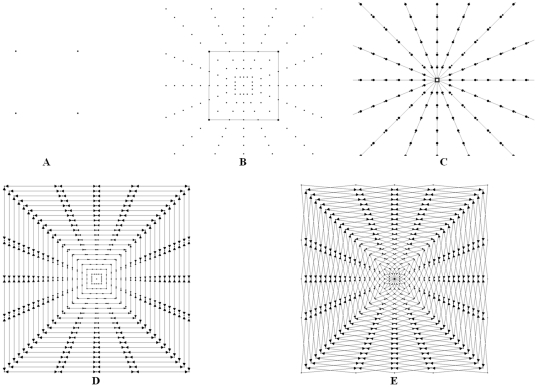
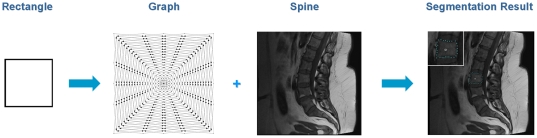
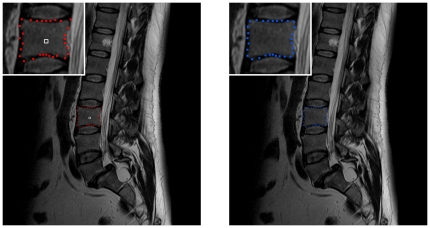
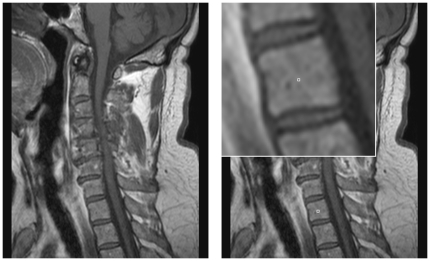
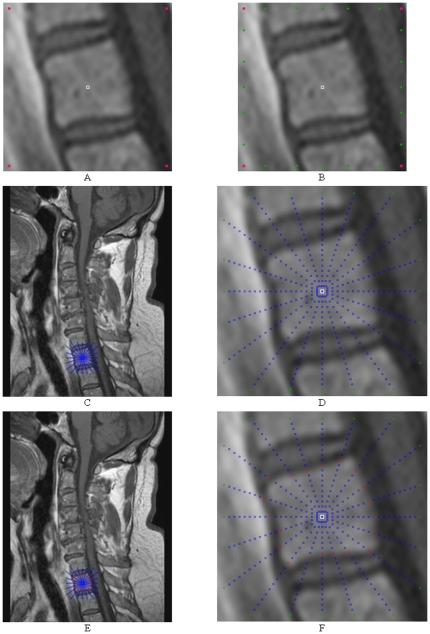
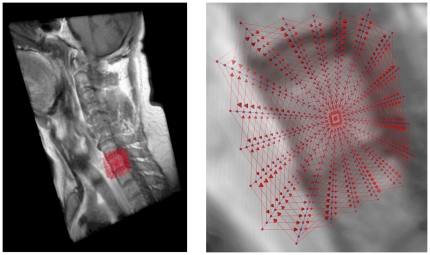
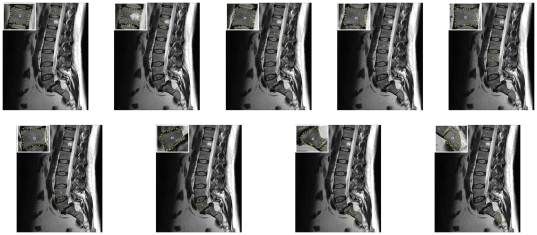
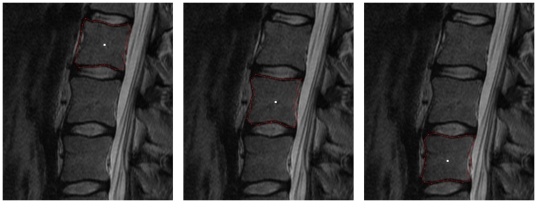
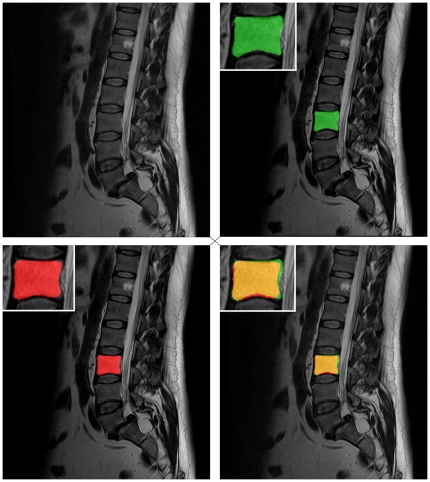
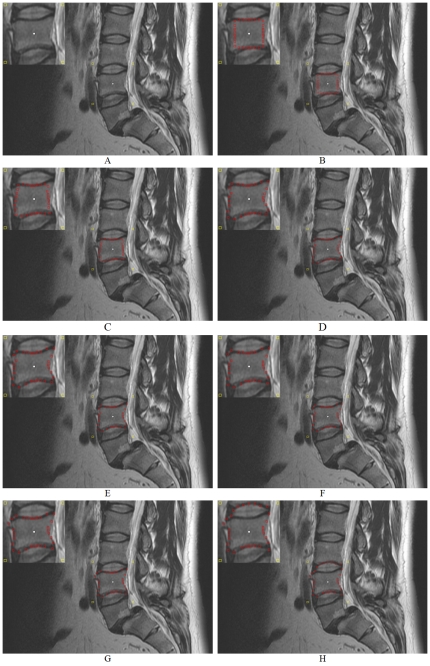
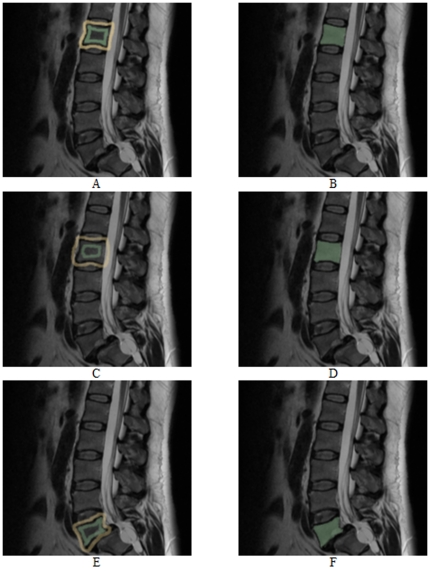
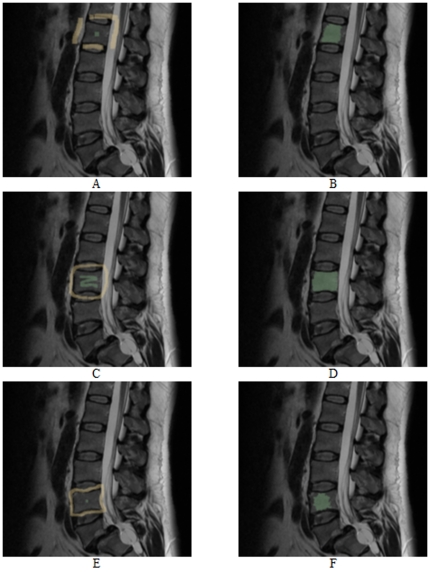
We present a rectangle-based segmentation algorithm that sets up a graph and performs a graph cut to separate an object from the background. However, graph-based algorithms distribute the graph's nodes uniformly and equidistantly on the image. Then, a smoothness term is added to force the cut to prefer a particular shape. This strategy does not allow the cut to prefer a certain structure, especially when areas of the object are indistinguishable from the background. We solve this problem by referring to a rectangle shape of the object when sampling the graph nodes, i.e., the nodes are distributed non-uniformly and non-equidistantly on the image. This strategy can be useful, when areas of the object are indistinguishable from the background. For evaluation, we focus on vertebrae images from Magnetic Resonance Imaging (MRI) datasets to support the time consuming manual slice-by-slice segmentation performed by physicians. The ground truth of the vertebrae boundaries were manually extracted by two clinical experts (neurological surgeons) with several years of experience in spine surgery and afterwards compared with the automatic segmentation results of the proposed scheme yielding an average Dice Similarity Coefficient (DSC) of 90.97±2.2%.
我们提出了一种基于矩形的分割算法,该算法构建了一个图,并执行图割操作,以将对象与背景分离。然而,基于图的算法将图的节点均匀且等距地分布在图像上。然后,添加一个平滑项来强制分割偏向于特定的形状。这种策略不允许分割偏向于特定的结构,尤其是当对象的某些区域与背景难以区分时。为了解决这个问题,我们在采样图节点时参考对象的矩形形状,即节点在图像上的分布是非均匀和非等距的。当对象的某些区域与背景难以区分时,这种策略可能会很有用。为了进行评估,我们专注于磁共振成像(MRI)数据集的椎骨图像,以支持医生耗时的逐片手动分割。椎骨边界的真实情况由两位具有多年脊柱外科经验的临床专家(神经外科医生)手动提取,然后与所提出方案的自动分割结果进行比较,得到平均骰子相似系数(DSC)为 90.97±2.2%。