Institute of Microbiology, College of Life Sciences, Zhejiang University, Hangzhou, Zhejiang Province, People's Republic of China.
PLoS One. 2012;7(2):e31235. doi: 10.1371/journal.pone.0031235. Epub 2012 Feb 17.
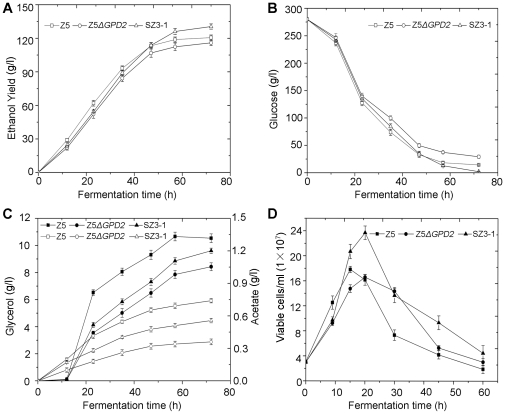
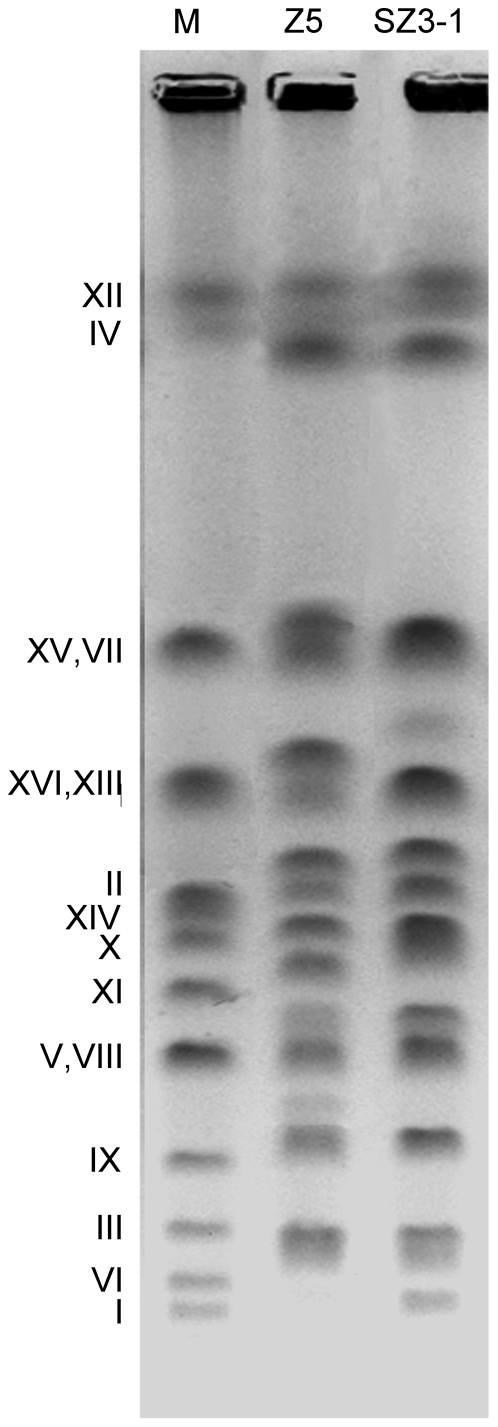
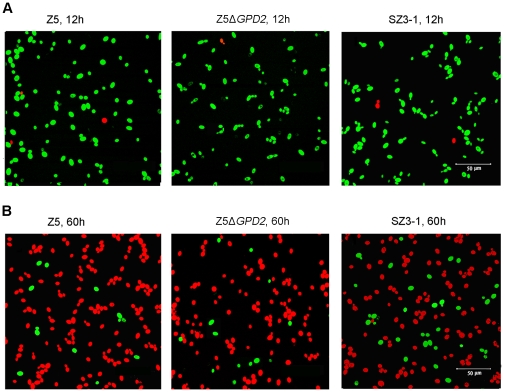
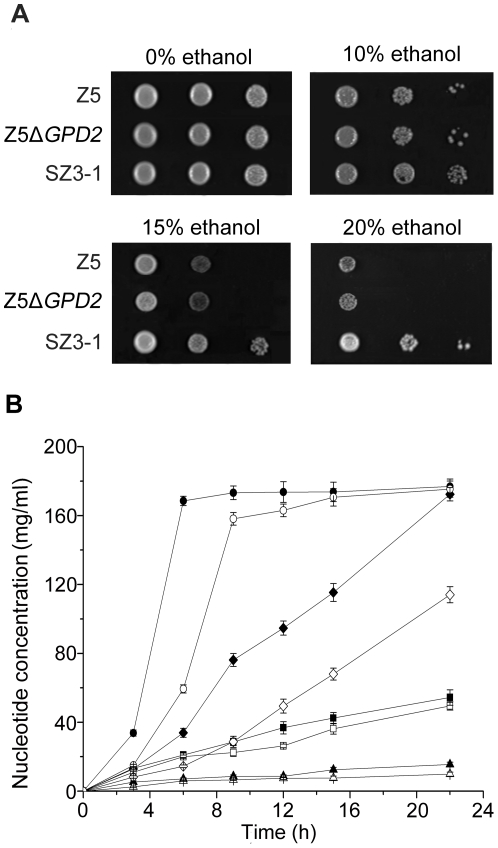
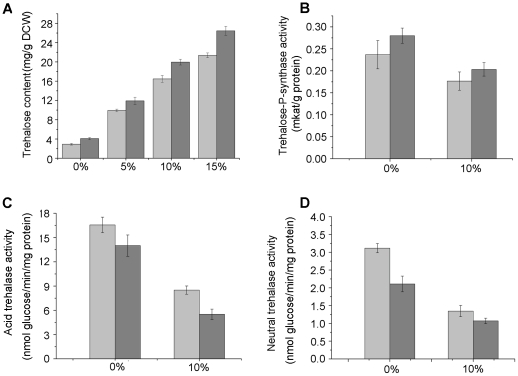
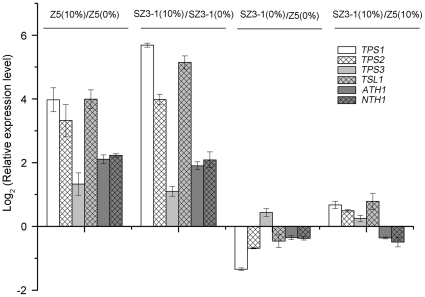
Very high gravity (VHG) fermentation is aimed to considerably increase both the fermentation rate and the ethanol concentration, thereby reducing capital costs and the risk of bacterial contamination. This process results in critical issues, such as adverse stress factors (ie., osmotic pressure and ethanol inhibition) and high concentrations of metabolic byproducts which are difficult to overcome by a single breeding method. In the present paper, a novel strategy that combines metabolic engineering and genome shuffling to circumvent these limitations and improve the bioethanol production performance of Saccharomyces cerevisiae strains under VHG conditions was developed. First, in strain Z5, which performed better than other widely used industrial strains, the gene GPD2 encoding glycerol 3-phosphate dehydrogenase was deleted, resulting in a mutant (Z5ΔGPD2) with a lower glycerol yield and poor ethanol productivity. Second, strain Z5ΔGPD2 was subjected to three rounds of genome shuffling to improve its VHG fermentation performance, and the best performing strain SZ3-1 was obtained. Results showed that strain SZ3-1 not only produced less glycerol, but also increased the ethanol yield by up to 8% compared with the parent strain Z5. Further analysis suggested that the improved ethanol yield in strain SZ3-1 was mainly contributed by the enhanced ethanol tolerance of the strain. The differences in ethanol tolerance between strains Z5 and SZ3-1 were closely associated with the cell membrane fatty acid compositions and intracellular trehalose concentrations. Finally, genome rearrangements in the optimized strain were confirmed by karyotype analysis. Hence, a combination of genome shuffling and metabolic engineering is an efficient approach for the rapid improvement of yeast strains for desirable industrial phenotypes.
高浓度(VHG)发酵旨在大幅提高发酵速度和乙醇浓度,从而降低资本成本和细菌污染风险。该过程会产生一些棘手的问题,例如不利的胁迫因素(例如渗透压和乙醇抑制)以及难以通过单一育种方法克服的高浓度代谢副产物。在本文中,我们提出了一种新策略,将代谢工程和基因组改组相结合,以克服这些限制,提高在 VHG 条件下酿酒酵母菌株的生物乙醇生产性能。首先,在表现优于其他广泛使用的工业菌株的 Z5 菌株中,删除编码甘油 3-磷酸脱氢酶的 GPD2 基因,得到甘油产量较低、乙醇生产效率较差的突变株(Z5ΔGPD2)。其次,对 Z5ΔGPD2 菌株进行三轮基因组改组,以提高其 VHG 发酵性能,得到性能最佳的 SZ3-1 菌株。结果表明,与亲本菌株 Z5 相比,SZ3-1 菌株不仅产生更少的甘油,而且乙醇得率提高了 8%。进一步分析表明,SZ3-1 菌株乙醇得率的提高主要归因于该菌株对乙醇的耐受性增强。菌株 Z5 和 SZ3-1 之间的乙醇耐受性差异与细胞膜脂肪酸组成和细胞内海藻糖浓度密切相关。最后,通过染色体核型分析证实了优化菌株中的基因组重排。因此,基因组改组和代谢工程的结合是快速改善酵母菌株以获得理想工业表型的有效方法。