FRIST Research Center for Innovative Nanobiodevice, Nagoya University, Nagoya 464-8603, Japan.
Cancer Cell Int. 2012 Feb 24;12(1):7. doi: 10.1186/1475-2867-12-7.
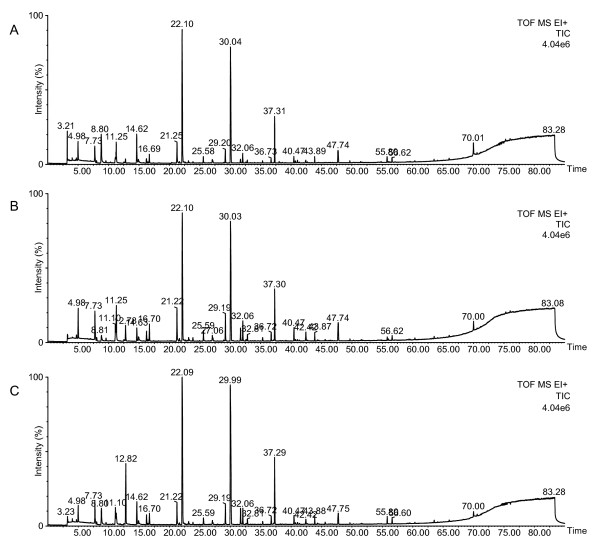
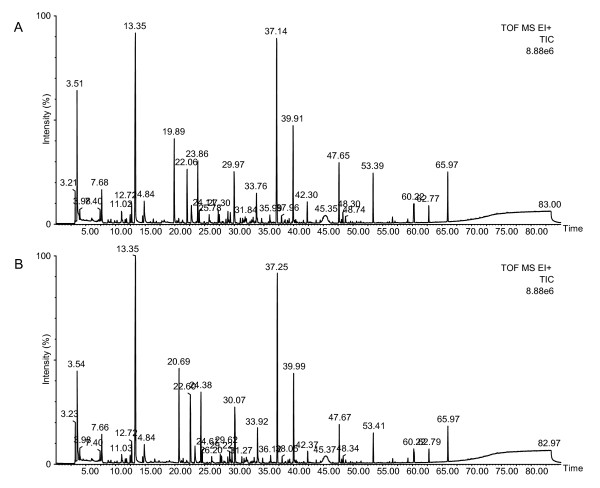
A potential strategy for the diagnosis of lung cancer is to exploit the distinct metabolic signature of this disease by way of biomarkers found in different sample types. In this study, we investigated whether specific volatile organic compounds (VOCs) could be detected in the culture medium of the lung cancer cell line A549 in addition to the urine of mice implanted with A549 cells.
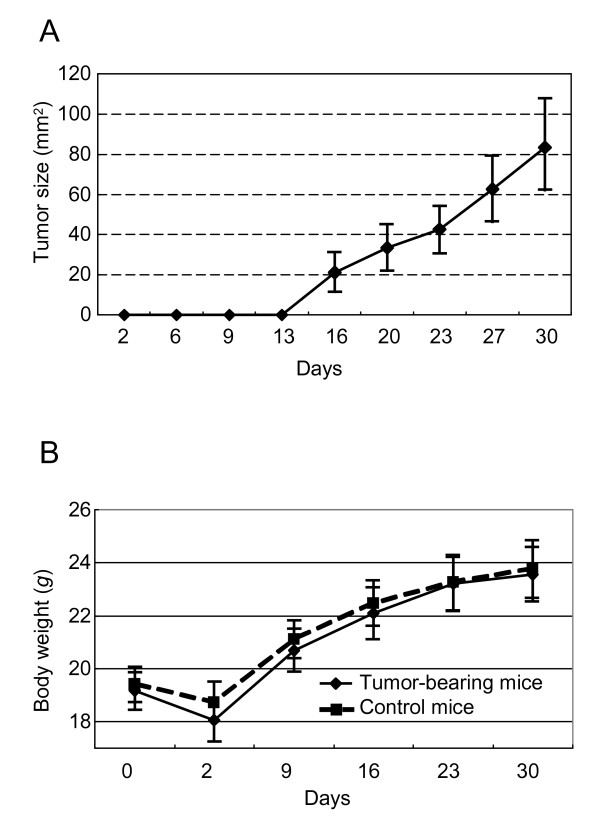
Several VOCs were found at significantly increased or decreased concentrations in the headspace of the A549 cell culture medium as compared with the culture medium of two normal lung cell lines. We also analyzed the urine of mice implanted with A549 cells and several VOCs were also found to be significantly increased or decreased relative to urine obtained from control mice. It was also revealed that seven VOCs were found at increased concentrations in both sample types. These compounds were found to be dimethyl succinate, 2-pentanone, phenol, 2-methylpyrazine, 2-hexanone, 2-butanone and acetophenone.
Both sample types produce distinct biomarker profiles, and VOCs have potential to distinguish between true- and false-positive screens for lung cancer.
通过在不同样本类型中发现的生物标志物来利用肺癌独特的代谢特征,这可能是诊断肺癌的一种策略。在这项研究中,我们研究了除了接种 A549 细胞的小鼠尿液外,是否还可以在肺癌细胞系 A549 的培养液中检测到特定的挥发性有机化合物 (VOCs)。
与两种正常肺细胞系的培养液相比,A549 细胞培养液的顶空部分发现了几种 VOCs,其浓度显著增加或降低。我们还分析了接种 A549 细胞的小鼠的尿液,发现与对照小鼠尿液相比,几种 VOCs 的浓度也显著增加或降低。结果还表明,在两种样本类型中都发现了七种浓度增加的 VOCs。这些化合物分别是:琥珀酸二甲酯、2-戊酮、苯酚、2-甲基吡嗪、2-己酮、2-丁酮和苯乙酮。
两种样本类型均产生独特的生物标志物图谱,并且 VOCs 有可能区分肺癌的真阳性和假阳性筛查。