Coleman Memorial Laboratory, Department of Otolaryngology-HNS, The UCSF Center for Integrative Neuroscience, University of California San Francisco, San Francisco, California, United States of America.
PLoS One. 2012;7(2):e31537. doi: 10.1371/journal.pone.0031537. Epub 2012 Feb 27.
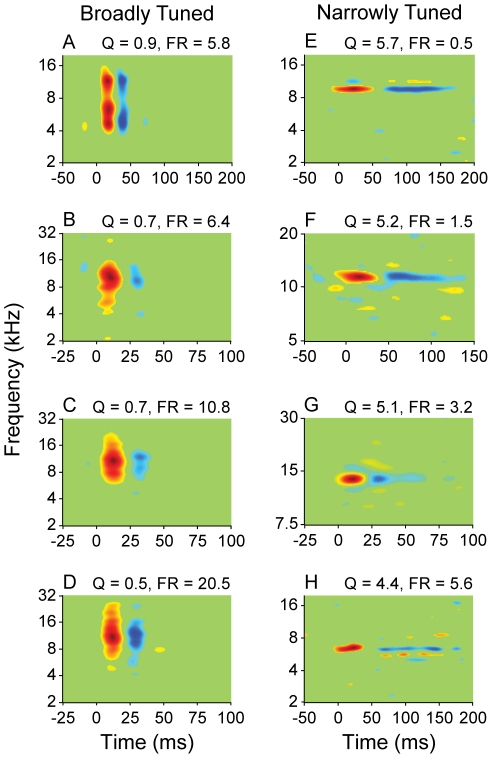
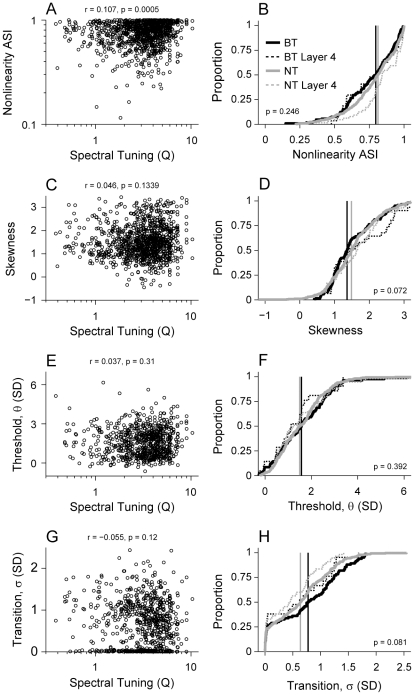
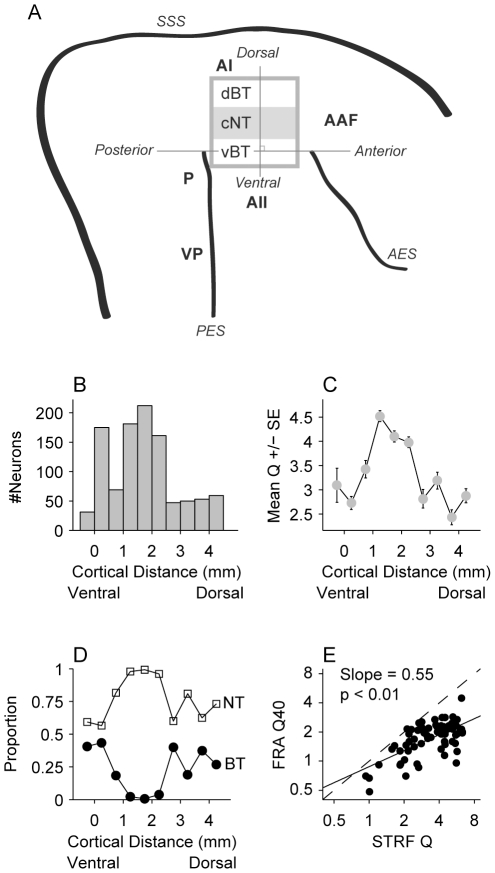
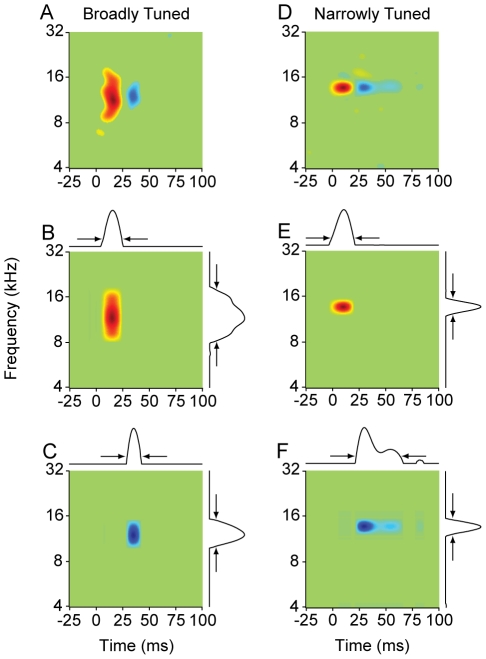
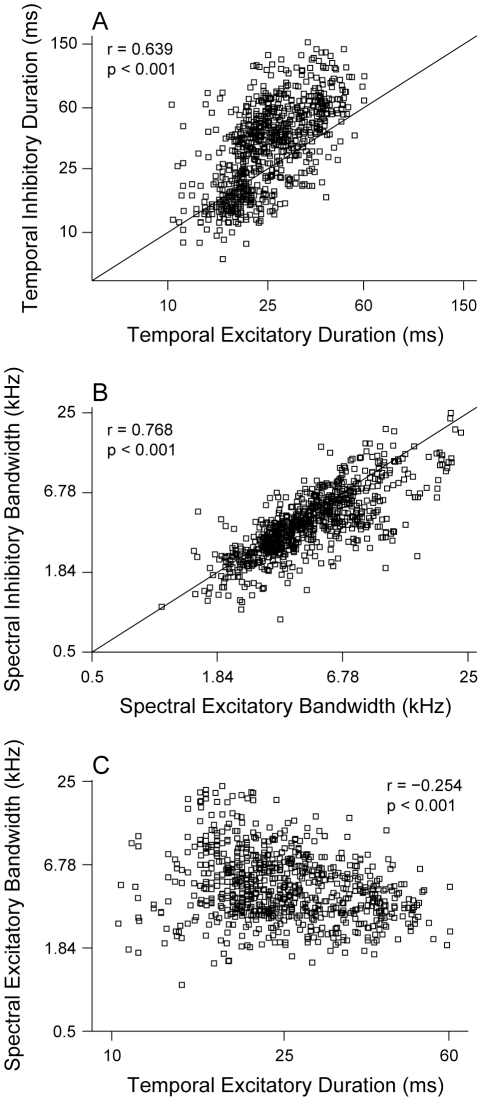
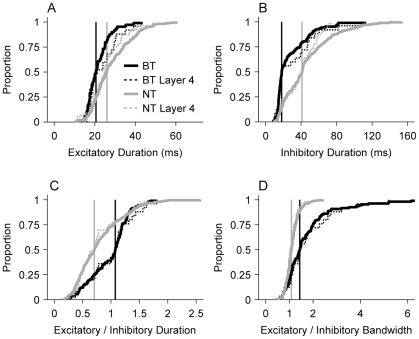
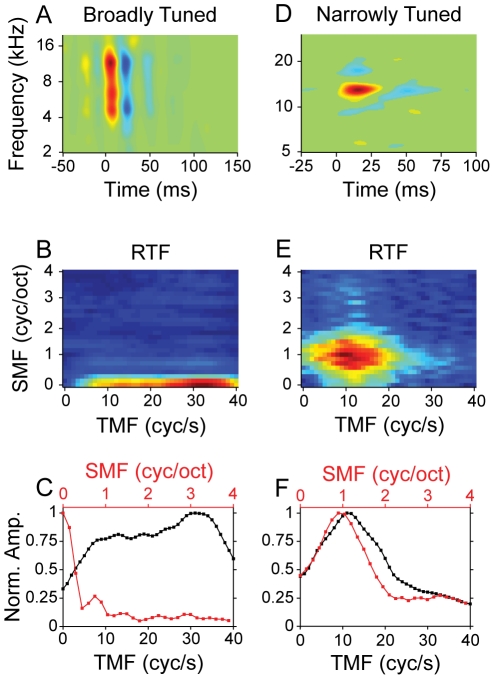
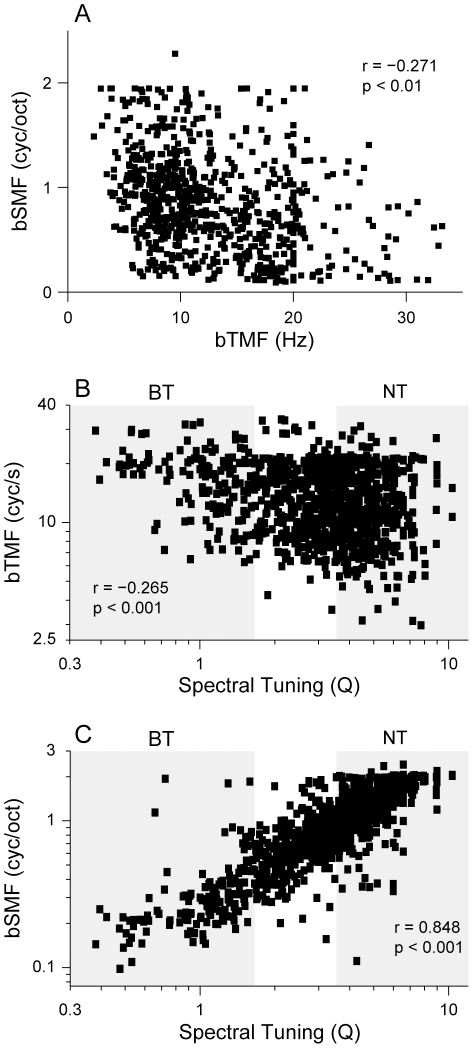
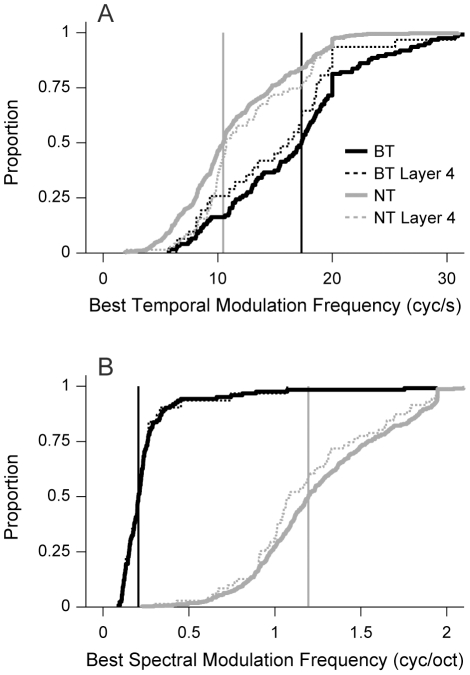
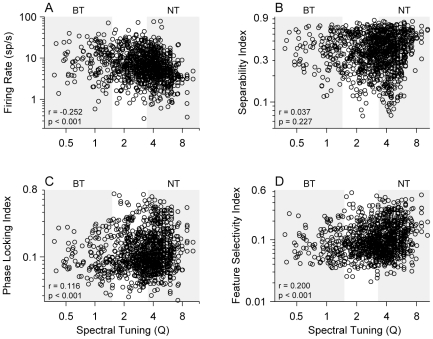
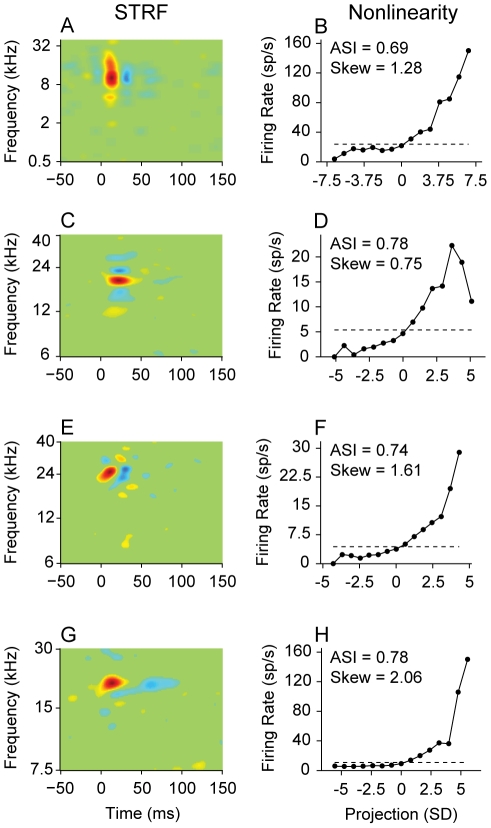
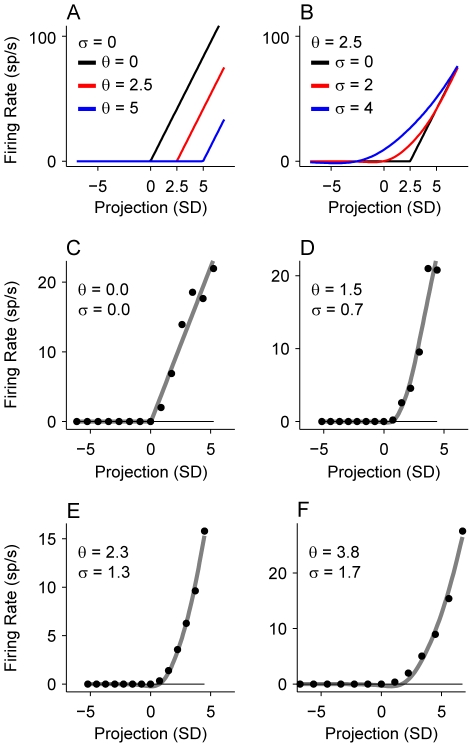
Spectral integration properties show topographical order in cat primary auditory cortex (AI). Along the iso-frequency domain, regions with predominantly narrowly tuned (NT) neurons are segregated from regions with more broadly tuned (BT) neurons, forming distinct processing modules. Despite their prominent spatial segregation, spectrotemporal processing has not been compared for these regions. We identified these NT and BT regions with broad-band ripple stimuli and characterized processing differences between them using both spectrotemporal receptive fields (STRFs) and nonlinear stimulus/firing rate transformations. The durations of STRF excitatory and inhibitory subfields were shorter and the best temporal modulation frequencies were higher for BT neurons than for NT neurons. For NT neurons, the bandwidth of excitatory and inhibitory subfields was matched, whereas for BT neurons it was not. Phase locking and feature selectivity were higher for NT neurons. Properties of the nonlinearities showed only slight differences across the bandwidth modules. These results indicate fundamental differences in spectrotemporal preferences--and thus distinct physiological functions--for neurons in BT and NT spectral integration modules. However, some global processing aspects, such as spectrotemporal interactions and nonlinear input/output behavior, appear to be similar for both neuronal subgroups. The findings suggest that spectral integration modules in AI differ in what specific stimulus aspects are processed, but they are similar in the manner in which stimulus information is processed.
光谱整合特性在猫的初级听觉皮层 (AI) 中表现出地形学顺序。沿着等频域,主要具有狭窄调谐 (NT) 神经元的区域与具有更广泛调谐 (BT) 神经元的区域分离,形成不同的处理模块。尽管它们有明显的空间分离,但这些区域的声谱时处理尚未进行比较。我们使用宽带纹波刺激来识别这些 NT 和 BT 区域,并使用声谱时感受野 (STRF) 和非线性刺激/放电率转换来表征它们之间的处理差异。BT 神经元的 STRF 兴奋性和抑制性子场的持续时间更短,最佳时间调制频率更高,而 NT 神经元则相反。对于 NT 神经元,兴奋性和抑制性子场的带宽匹配,而对于 BT 神经元则不匹配。NT 神经元的相位锁定和特征选择性更高。非线性的特性在带宽模块之间仅显示出微小的差异。这些结果表明,BT 和 NT 光谱整合模块中的神经元在声谱时偏好方面存在根本差异--因此具有不同的生理功能。然而,一些全局处理方面,如声谱时相互作用和非线性输入/输出行为,对于两个神经元亚群似乎相似。这些发现表明,AI 中的光谱整合模块在处理特定的刺激方面存在差异,但在处理刺激信息的方式上相似。