CBS Fungal Biodiversity Centre, Uppsalalaan 8, 3584 CT Utrecht, The Netherlands; corresponding author e-mail:
Persoonia. 2011 Dec;27:20-45. doi: 10.3767/003158511X606239. Epub 2011 Oct 7.
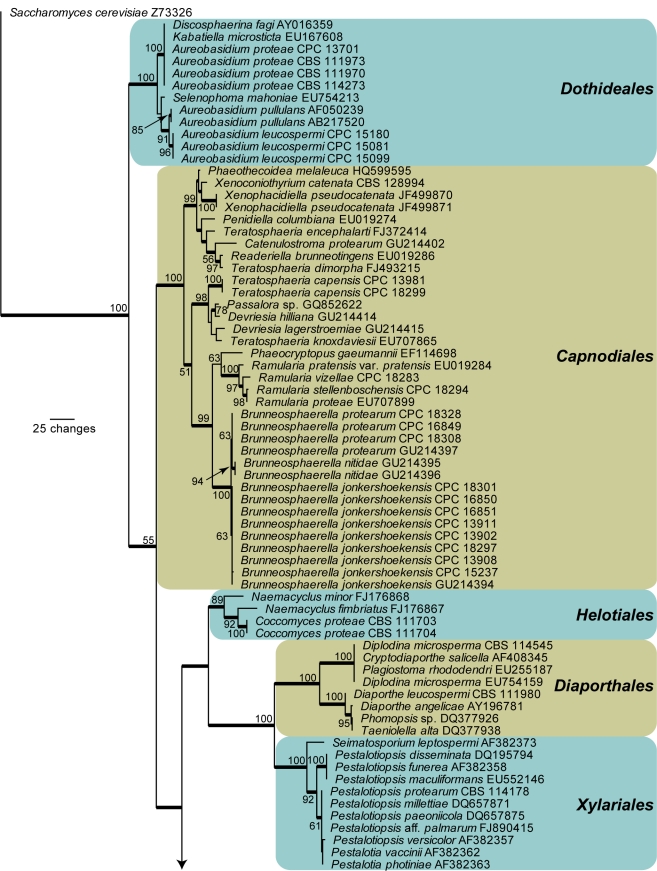
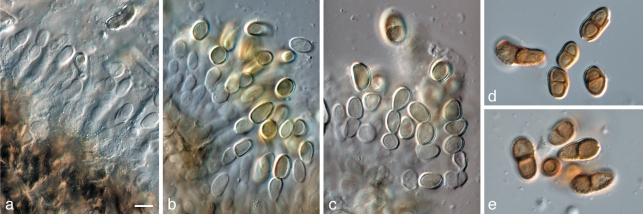
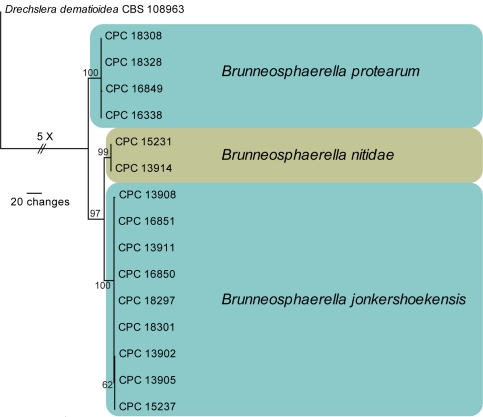
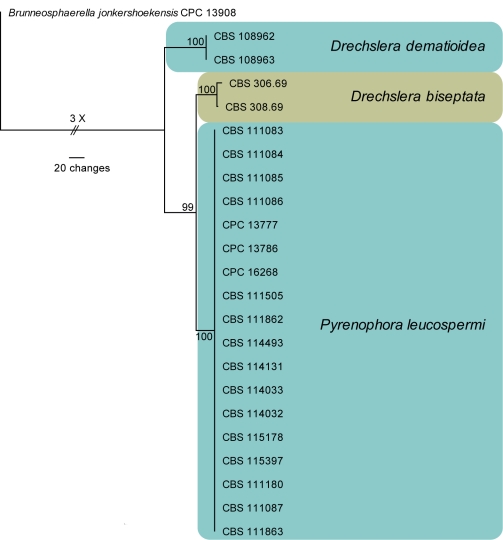
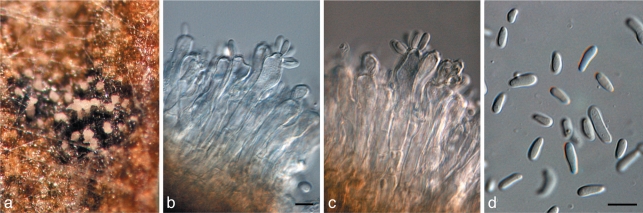
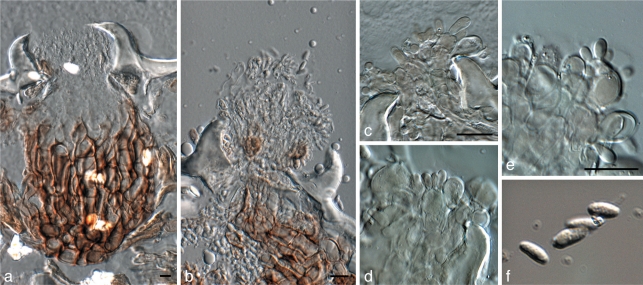
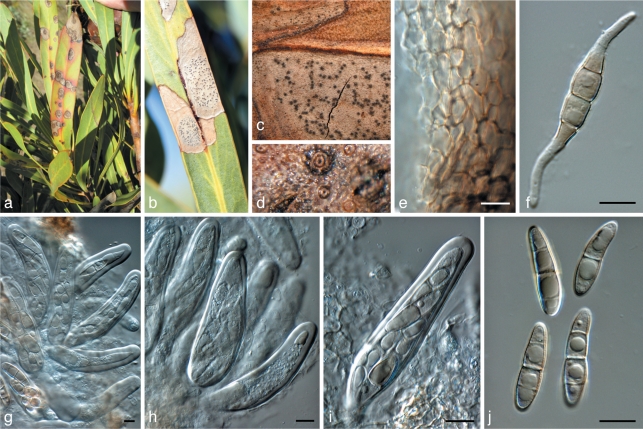
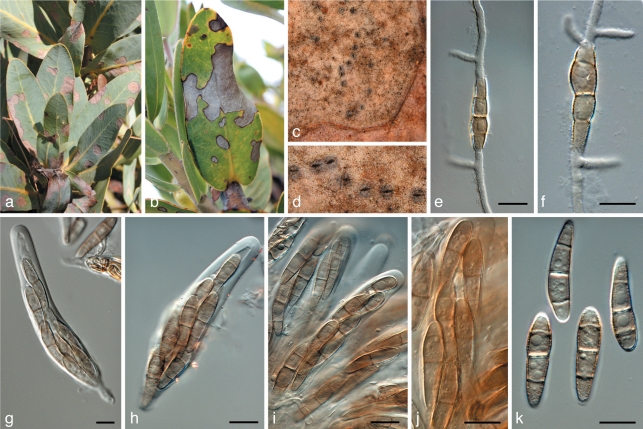
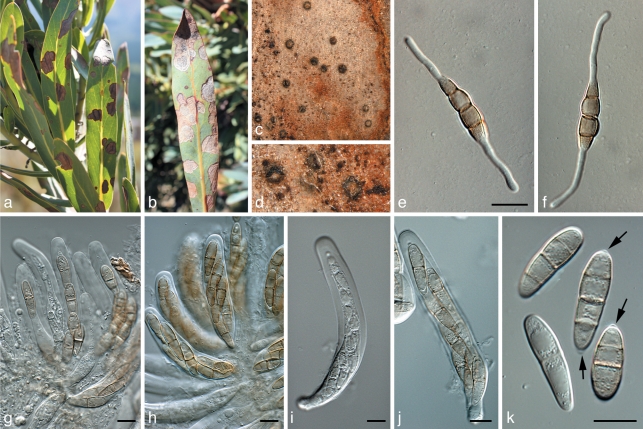
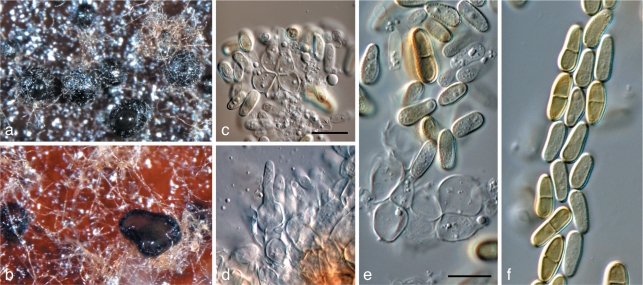
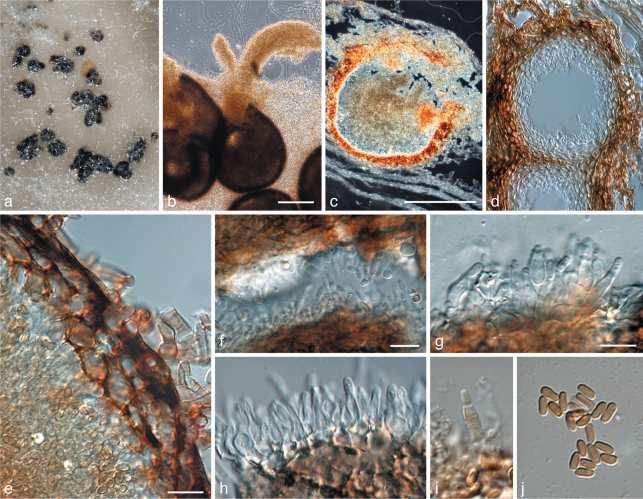
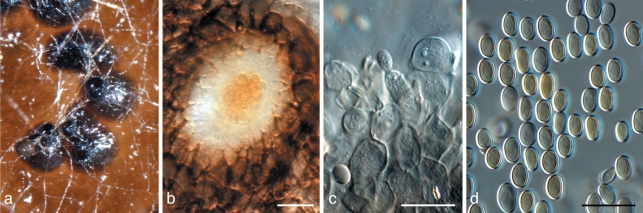
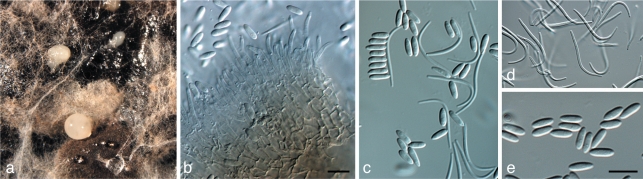
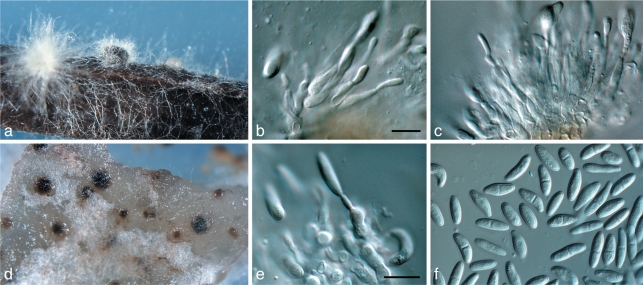
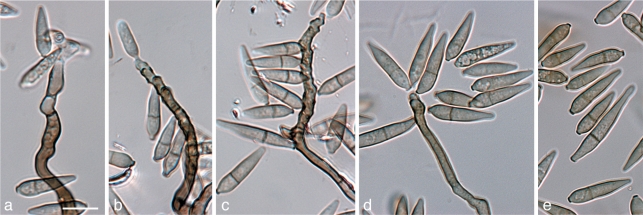
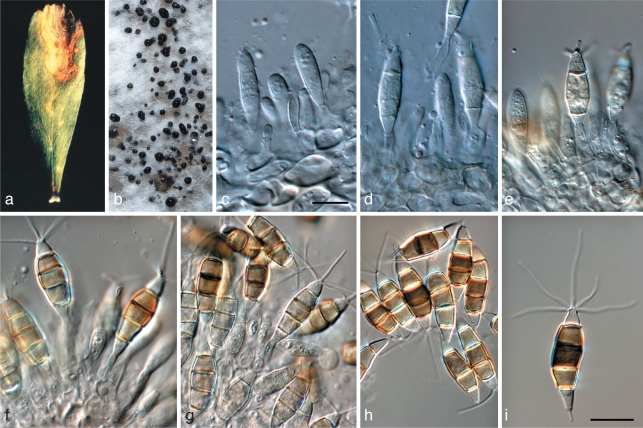
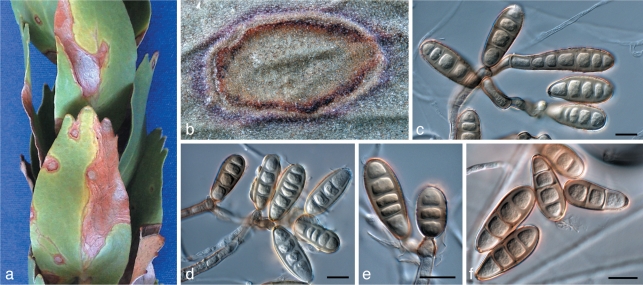
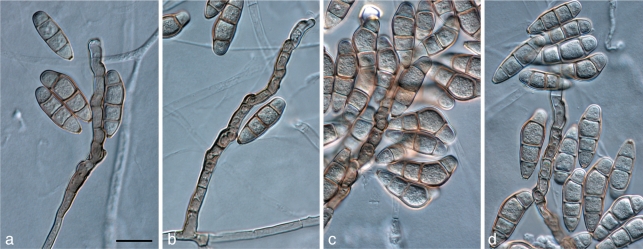
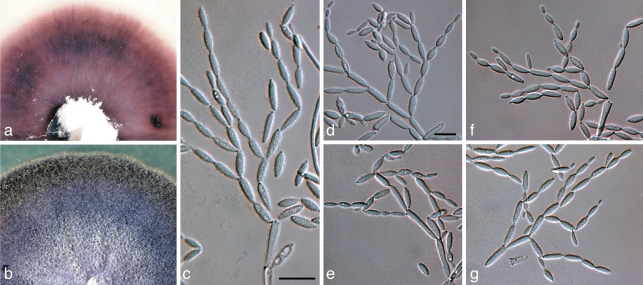
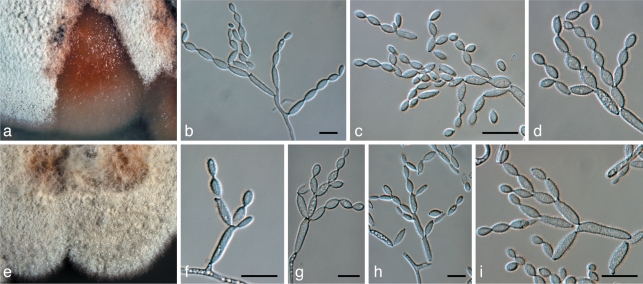
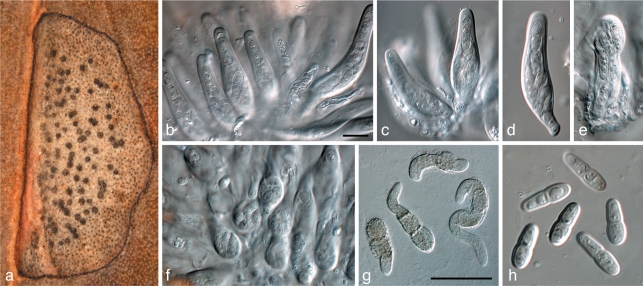
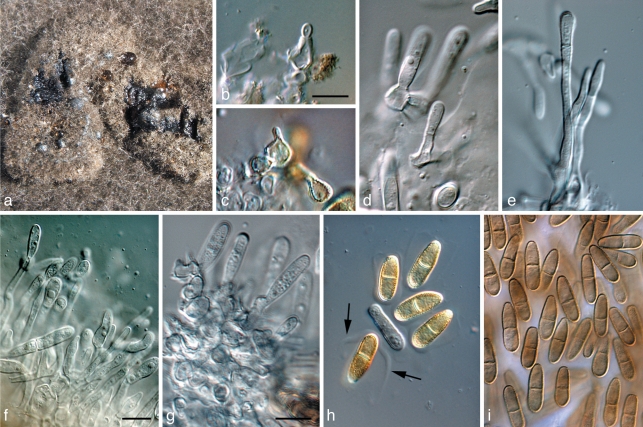
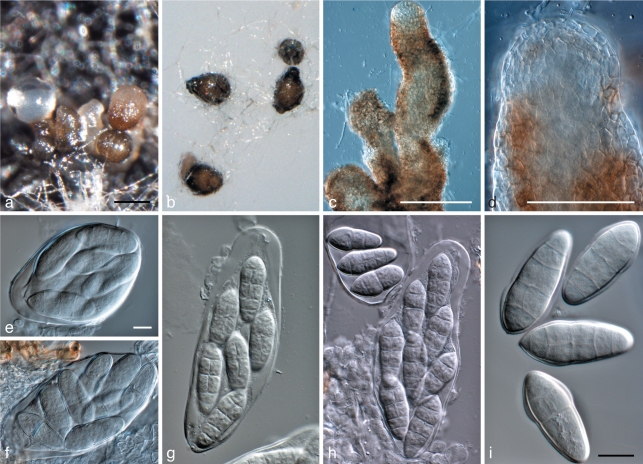
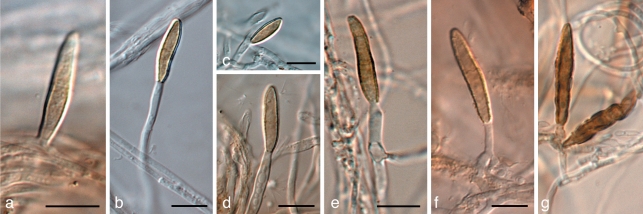
Species of Leucadendron, Leucospermum and Protea (Proteaceae) are in high demand for the international floriculture market due to their brightly coloured and textured flowers or bracts. Fungal pathogens, however, create a serious problem in cultivating flawless blooms. The aim of the present study was to characterise several of these pathogens using morphology, culture characteristics, and DNA sequence data of the rRNA-ITS and LSU genes. In some cases additional genes such as TEF 1-α and CHS were also sequenced. Based on the results of this study, several novel species and genera are described. Brunneosphaerella leaf blight is shown to be caused by three species, namely B. jonkershoekensis on Protea repens, B. nitidae sp. nov. on Protea nitida and B. protearum on a wide host range of Protea spp. (South Africa). Coniothyrium-like species associated with Coniothyrium leaf spot are allocated to other genera, namely Curreya grandicipis on Protea grandiceps, and Microsphaeropsis proteae on P. nitida (South Africa). Diaporthe leucospermi is described on Leucospermum sp. (Australia), and Diplodina microsperma newly reported on Protea sp. (New Zealand). Pyrenophora blight is caused by a novel species, Pyrenophora leucospermi, and not Drechslera biseptata or D. dematoidea as previously reported. Fusicladium proteae is described on Protea sp. (South Africa), Pestalotiopsis protearum on Leucospermum cuneiforme (Zimbabwe), Ramularia vizellae and R. stellenboschensis on Protea spp. (South Africa), and Teratosphaeria capensis on Protea spp. (Portugal, South Africa). Aureobasidium leaf spot is shown to be caused by two species, namely A. proteae comb. nov. on Protea spp. (South Africa), and A. leucospermi sp. nov. on Leucospermum spp. (Indonesia, Portugal, South Africa). Novel genera and species elucidated in this study include Gordonomyces mucovaginatus and Pseudopassalora gouriqua (hyphomycetes), and Xenoconiothyrium catenata (coelomycete), all on Protea spp. (South Africa).
银莲花属、半边莲属和普洛蒂亚属(山龙眼科)的物种因其色彩鲜艳和纹理分明的花朵或苞片而在国际花卉市场上需求量很大。然而,真菌病原体在培育无瑕疵的花朵方面造成了严重的问题。本研究的目的是使用 rRNA-ITS 和 LSU 基因的形态学、培养特性和 DNA 序列数据来描述其中的几种病原体。在某些情况下,还测序了 TEF 1-α 和 CHS 等其他基因。根据本研究的结果,描述了几个新的物种和属。Brunneosphaerella 叶枯病由三种物种引起,即 Protea repens 上的 B. jonkershoekensis、Protea nitida 上的 B. nitidae sp. nov. 和广泛宿主范围内的 Protea spp.(南非)上的 B. protearum。与 Coniothyrium 叶斑病相关的 Coniothyrium-like 物种被分配到其他属,即 Protea grandiceps 上的 Curreya grandicipis 和 P. nitida(南非)上的 Microsphaeropsis proteae。Diaporthe leucospermi 被描述为 Leucospermum sp.(澳大利亚)上的一种新物种,而 Diplodina microsperma 则是首次报道的 Protea sp.(新西兰)上的一种新物种。Pyrenophora blight 由一种新物种 Pyrenophora leucospermi 引起,而不是以前报道的 Drechslera biseptata 或 D. dematoidea。Fusicladium proteae 被描述为 Protea sp.(南非)上的一种新物种,Pestalotiopsis protearum 为 Leucospermum cuneiforme(津巴布韦),Ramularia vizellae 和 R. stellenboschensis 为 Protea spp.(南非),Teratosphaeria capensis 为 Protea spp.(葡萄牙、南非)上的一种新物种。Aureobasidium leaf spot 由两种物种引起,即 Protea spp.(南非)上的 A. proteae comb. nov. 和 Leucospermum spp.(印度尼西亚、葡萄牙、南非)上的 A. leucospermi sp. nov.。本研究中阐明的新属和种包括 Gordonomyces mucovaginatus 和 Pseudopassalora gouriqua(丝孢纲),以及 Xenoconiothyrium catenata(腔孢纲),均为 Protea spp.(南非)。