Division of Medical Microbiology, Department of Clinical and Experimental Medicine, Faculty of Health Sciences, Linköping University, Linköping, Sweden.
PLoS One. 2012;7(3):e31326. doi: 10.1371/journal.pone.0031326. Epub 2012 Mar 5.
Neutrophils are key-players in the innate host defense and their programmed cell death and removal are essential for efficient resolution of inflammation. These cells recognize a variety of pathogens, and the NOD-like receptors (NLRs) have been suggested as intracellular sensors of microbial components and cell injury/stress. Some NLR will upon activation form multi-protein complexes termed inflammasomes that result in IL-1β production. NLR mutations are associated with auto-inflammatory syndromes, and our previous data propose NLRP3 (Q705K)/CARD-8 (C10X) polymorphisms to contribute to increased risk and severity of inflammatory disease by acting as genetic susceptibility factors. These gene products are components of the NALP3 inflammasome, and approximately 6.5% of the Swedish population are heterozygote carriers of these combined gene variants. Since patients carrying the Q705K/C10X polymorphisms display leukocytosis, the aim of the present study was to find out whether the inflammatory phenotype was related to dysfunctional apoptosis and impaired clearance of neutrophils by macrophages.
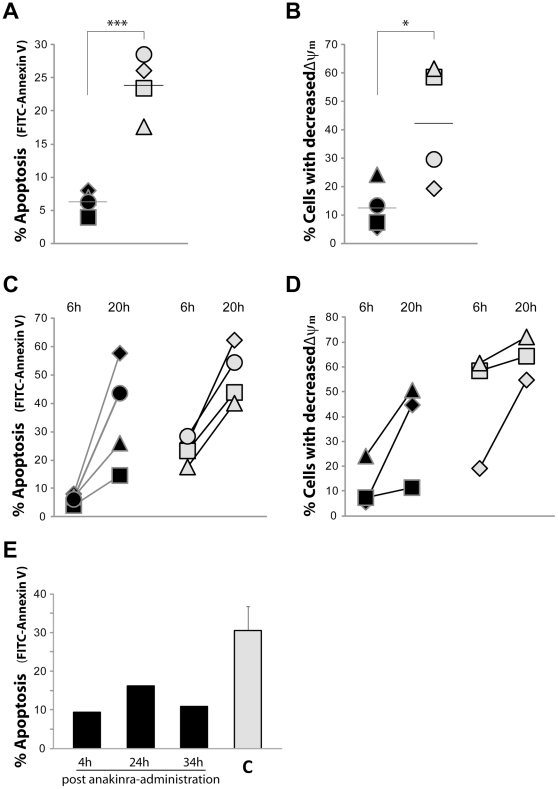
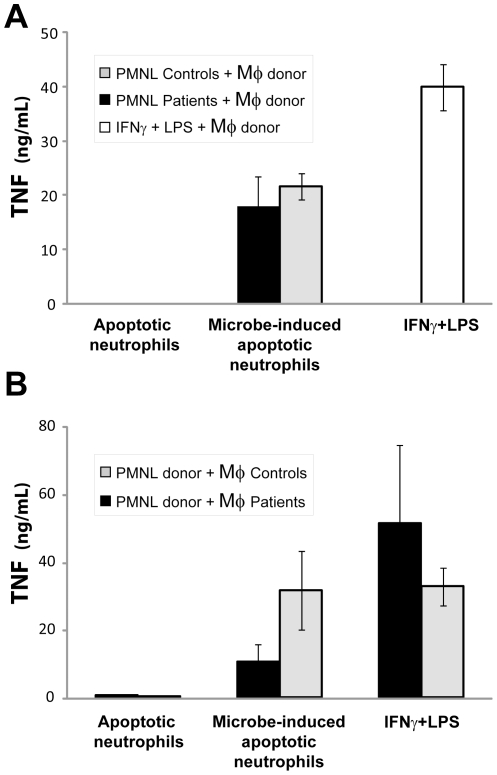
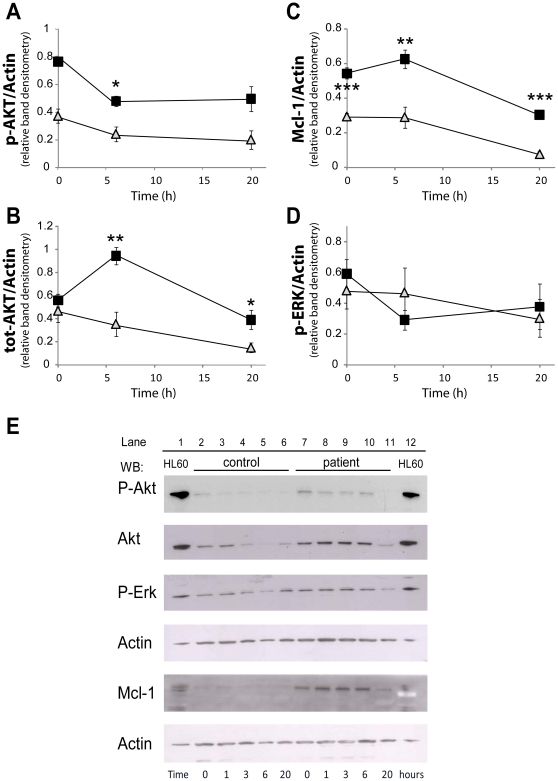
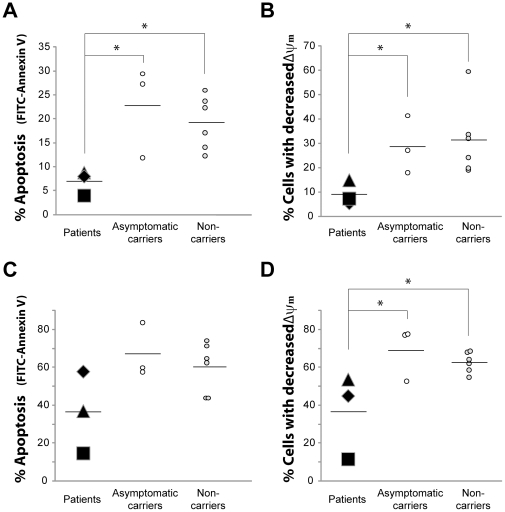
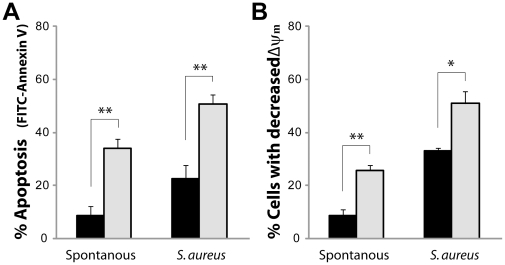
Patients carrying the Q705K/C10X polymorphisms displayed significantly delayed spontaneous as well as microbe-induced apoptosis compared to matched controls. Western blotting revealed increased levels and phosphorylation of Akt and Mcl-1 in the patients' neutrophils. In contrast to macrophages from healthy controls, macrophages from the patients produced lower amounts of TNF; suggesting impaired macrophage clearance response.
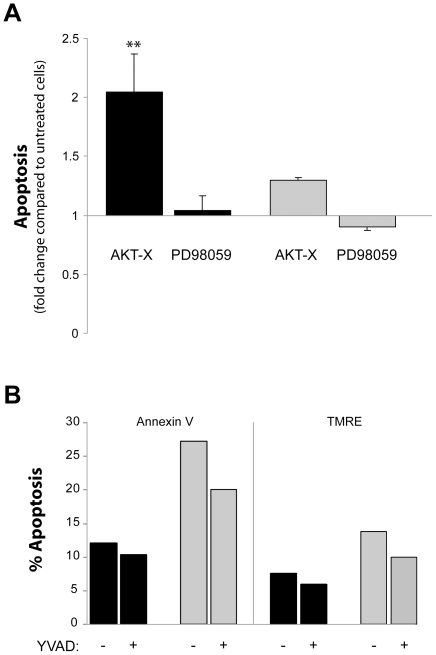
The Q705K/C10X polymorphisms are associated with delayed apoptosis of neutrophils. These findings are explained by altered involvement of different regulators of apoptosis, resulting in an anti-apoptotic profile. Moreover, the macrophage response to ingestion of microbe-induced apoptotic neutrophils is altered in the patients. Taken together, the patients display impaired turnover and clearance of apoptotic neutrophils, pointing towards a dysregulated innate immune response that influences the resolution of inflammation. The future challenge is to understand how microbes affect the activation of inflammasomes, and why this interaction will develop into severe inflammatory disease in certain individuals.
中性粒细胞是先天宿主防御的关键参与者,其程序性细胞死亡和清除对于有效解决炎症至关重要。这些细胞识别各种病原体,NOD 样受体 (NLRs) 被认为是微生物成分和细胞损伤/应激的细胞内传感器。一些 NLR 在激活后会形成多蛋白复合物,称为炎性体,导致 IL-1β 的产生。NLR 突变与自身炎症综合征有关,我们之前的数据表明 NLRP3 (Q705K)/CARD-8 (C10X) 多态性通过作为遗传易感性因素,增加炎症性疾病的风险和严重程度。这些基因产物是 NALP3 炎性体的组成部分,大约 6.5%的瑞典人口是这些组合基因变异的杂合子携带者。由于携带 Q705K/C10X 多态性的患者表现出白细胞增多,因此本研究的目的是确定炎症表型是否与中性粒细胞的功能失调性凋亡和巨噬细胞清除受损有关。
携带 Q705K/C10X 多态性的患者与匹配的对照组相比,自发性和微生物诱导的凋亡明显延迟。Western blot 显示患者中性粒细胞中 Akt 和 Mcl-1 的水平和磷酸化增加。与健康对照组的巨噬细胞相比,来自患者的巨噬细胞产生的 TNF 量较低;提示巨噬细胞清除反应受损。
Q705K/C10X 多态性与中性粒细胞凋亡延迟有关。这些发现可以通过改变凋亡不同调节因子的参与来解释,导致抗凋亡谱。此外,患者的巨噬细胞对微生物诱导的凋亡中性粒细胞的摄取反应发生改变。总之,患者表现出凋亡中性粒细胞的周转率和清除受损,表明先天免疫反应失调,影响炎症的消退。未来的挑战是了解微生物如何影响炎性体的激活,以及为什么这种相互作用会在某些个体中发展为严重的炎症性疾病。