Lithuanian University of Health Sciences, Medical Academy, Health Research Institute, Kaunas, Lithuania.
BMC Public Health. 2012 Mar 21;12:218. doi: 10.1186/1471-2458-12-218.
During the post-communist transition period, political, economic, and social changes affected the lifestyles of the Lithuanian population, including their nutritional habits. However, people of lower socio-economic position were more vulnerable to these changes. The aim of the present study was to evaluate the trends in selected food habits of the Lithuanian adult population by their level of education and place of residence from 1994 to 2010.
The data were obtained from nine biannual cross-sectional postal surveys of Lithuanian health behaviours, beginning in 1994. Each survey used a randomly selected nationally representative sample of 3000 inhabitants aged 20-64 drawn from the population register. In total, 7358 men and 9796 women participated in these surveys. Questions about food consumption were included within all health behaviour questionnaires.
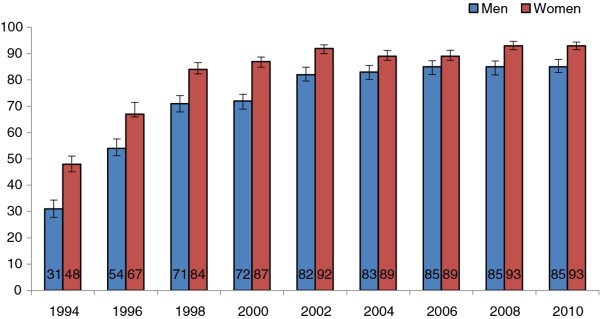
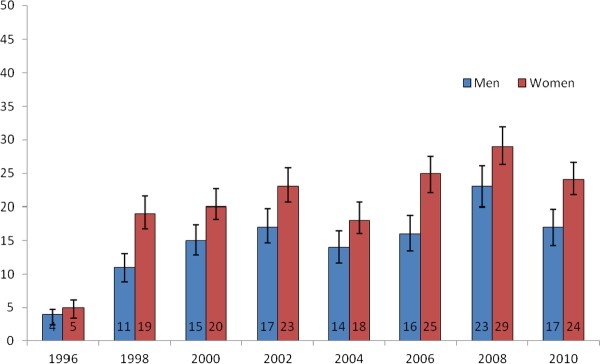
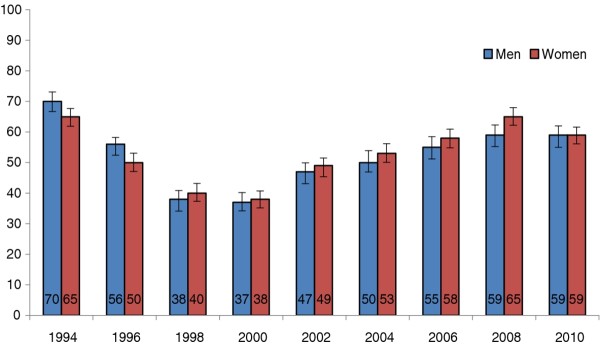
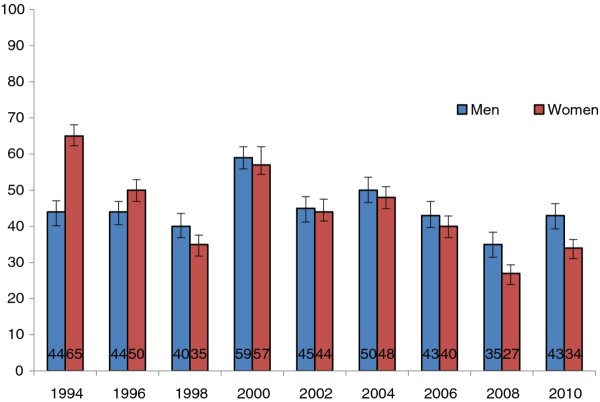
During the transition period, use of vegetable oil in cooking and the frequency of consumption of fresh vegetables increased, use of butter on bread decreased, and the proportion of women drinking high-fat milk declined. Lithuanians with higher education reported more frequent use of vegetable oil in cooking as well as daily consumption of fresh vegetables than those with a lower level of education. Consumption of high-fat milk was inversely associated with educational background. In addition, the proportion of persons spreading butter on bread increased with higher education level. The greatest urban-rural difference was observed in high-fat milk consumption. The increase in the use of vegetable oil in cooking, and the reduction of spreading butter on bread was more evident among less educated and rural inhabitants. Meanwhile, a greater proportion of the rural population, compared to urban, reduced their use of butter on bread. Daily consumption of fresh vegetables increased most among highly educated Lithuanians.
The data from our study indicate beneficial dietary changes among the Lithuanian adult population. In general, those with a higher level of education had healthier food habits than those with low education. The educational gradient in analyzed food habits, except the use of vegetable oil, enlarged. A higher proportion of the rural population, compared to urban, reduced their usage of butter on bread. However, consumption of high-fat milk was greatest in the rural population. Our data highlight the need for future food and nutrition policies, as well as health promotion programmes, targeting the whole population, particularly those with lower education and living in rural areas.
在后共产主义转型时期,政治、经济和社会变革影响了立陶宛人口的生活方式,包括他们的饮食习惯。然而,社会经济地位较低的人群更容易受到这些变化的影响。本研究的目的是评估 1994 年至 2010 年期间,立陶宛成年人口按教育程度和居住地划分的部分饮食习惯变化趋势。
本研究数据来自立陶宛健康行为的 9 次两年一次的横断面邮政调查,始于 1994 年。每次调查都从人口登记册中随机抽取 3000 名 20-64 岁的居民作为全国代表性样本。共有 7358 名男性和 9796 名女性参与了这些调查。关于食物消费的问题被包含在所有健康行为问卷中。
在转型期间,烹饪时使用植物油和食用新鲜蔬菜的频率增加,涂抹在面包上的黄油用量减少,饮用高脂牛奶的女性比例下降。受教育程度较高的立陶宛人比受教育程度较低的人更频繁地使用植物油烹饪,并更经常食用新鲜蔬菜。高脂牛奶的摄入与教育背景呈负相关。此外,涂抹黄油的人数比例随着受教育程度的提高而增加。在食用高脂牛奶方面,城乡差异最大。烹饪时使用植物油的增加,以及涂抹黄油的减少,在受教育程度较低和农村居民中更为明显。与此同时,与城市相比,农村人口减少了在面包上涂抹黄油的比例。食用新鲜蔬菜的比例在受教育程度较高的立陶宛人中增加最多。
本研究的数据表明,立陶宛成年人口的饮食模式有所改善。一般来说,受教育程度较高的人群比受教育程度较低的人群有更健康的饮食习惯。除了植物油的使用,分析中的饮食习惯的教育梯度有所扩大。与城市相比,农村人口减少了在面包上涂抹黄油的比例。然而,农村人口的高脂牛奶摄入量最大。我们的数据强调了未来制定面向全体人群,特别是教育程度较低和居住在农村地区人群的食品和营养政策以及健康促进计划的必要性。