Department of Earth Sciences, University of Cambridge, Cambridge, United Kingdom.
PLoS One. 2012;7(3):e31838. doi: 10.1371/journal.pone.0031838. Epub 2012 Mar 16.
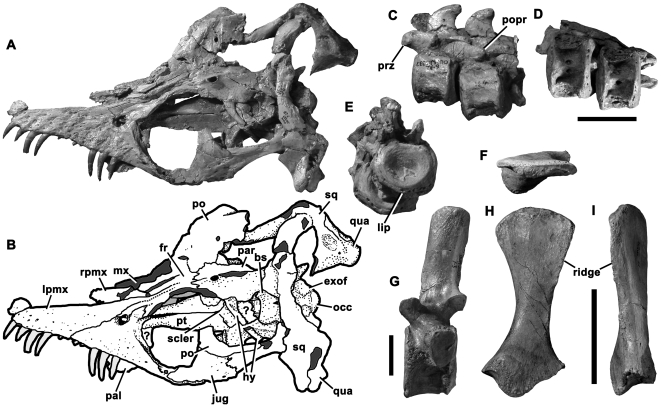
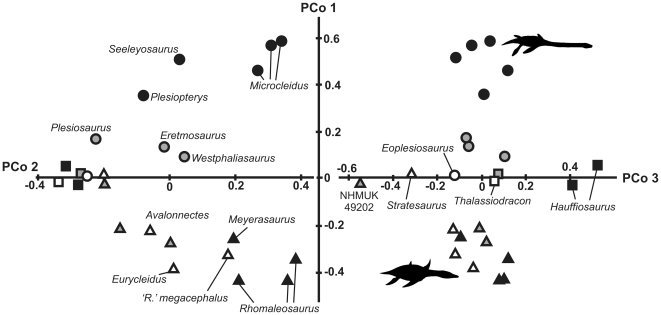
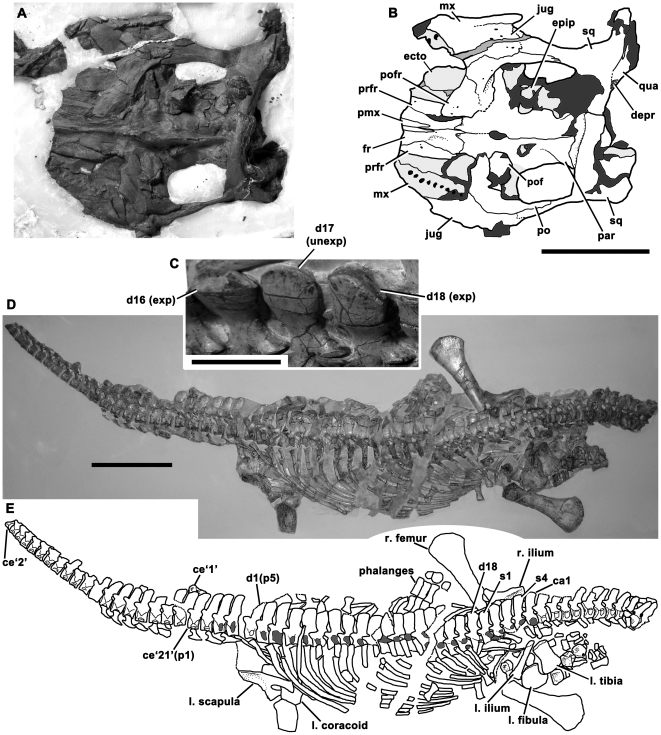
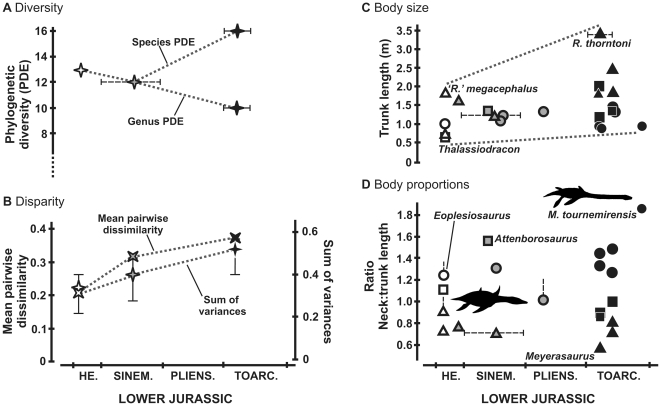
Invasion of the open ocean by tetrapods represents a major evolutionary transition that occurred independently in cetaceans, mosasauroids, chelonioids (sea turtles), ichthyosaurs and plesiosaurs. Plesiosaurian reptiles invaded pelagic ocean environments immediately following the Late Triassic extinctions. This diversification is recorded by three intensively-sampled European fossil faunas, spanning 20 million years (Ma). These provide an unparalleled opportunity to document changes in key macroevolutionary parameters associated with secondary adaptation to pelagic life in tetrapods. A comprehensive assessment focuses on the oldest fauna, from the Blue Lias Formation of Street, and nearby localities, in Somerset, UK (Earliest Jurassic: 200 Ma), identifying three new species representing two small-bodied rhomaleosaurids (Stratesaurus taylori gen et sp. nov.; Avalonnectes arturi gen. et sp. nov) and the most basal plesiosauroid, Eoplesiosaurus antiquior gen. et sp. nov. The initial radiation of plesiosaurs was characterised by high, but short-lived, diversity of an archaic clade, Rhomaleosauridae. Representatives of this initial radiation were replaced by derived, neoplesiosaurian plesiosaurs at small-medium body sizes during a more gradual accumulation of morphological disparity. This gradualistic modality suggests that adaptive radiations within tetrapod subclades are not always characterised by the initially high levels of disparity observed in the Paleozoic origins of major metazoan body plans, or in the origin of tetrapods. High rhomaleosaurid diversity immediately following the Triassic-Jurassic boundary supports the gradual model of Late Triassic extinctions, mostly predating the boundary itself. Increase in both maximum and minimum body length early in plesiosaurian history suggests a driven evolutionary trend. However, Maximum-likelihood models suggest only passive expansion into higher body size categories.
四足动物向开阔大洋的入侵代表了一个主要的进化转折点,它在鲸类、沧龙类、海龟类、鱼龙类和蛇颈龙类中独立发生。蛇颈龙类爬行动物在晚三叠世灭绝后立即侵入了远洋海洋环境。这种多样化在三个欧洲化石动物群中得到了记录,这些动物群跨越了 2000 万年(Ma)。这为记录与四足动物对远洋生活的次生适应相关的关键宏观进化参数的变化提供了一个无与伦比的机会。一项全面评估集中在最古老的动物群,即来自英国萨默塞特郡斯特雷特的蓝里阿斯组(早侏罗世:200Ma)及其附近的地点,确定了三个新物种,代表了两个小体型的混鱼龙类(Stratesaurus taylori 属种新种;Avalonnectes arturi 属种新种)和最基础的蛇颈龙类,Eoplesiosaurus antiquior 属种新种。蛇颈龙类的最初辐射特征是古老的混鱼龙科(Rhomaleosauridae)的多样性高但短暂。这种最初辐射的代表被更衍生的、新蛇颈龙类的蛇颈龙类在中小体型中取代,同时形态差异逐渐积累。这种渐进化模式表明,四足动物亚类中的适应性辐射并不总是以古生代主要后生动物体计划起源或四足动物起源中观察到的最初高水平差异为特征。在三叠纪-侏罗纪边界之后,混鱼龙科的高多样性支持了晚三叠世灭绝的渐进化模型,这些灭绝大多发生在边界本身之前。蛇颈龙类历史早期最大和最小体长的增加表明了一种驱动的进化趋势。然而,最大似然模型表明,只有被动地扩展到更高的体型类别。