Rodriguez Fausto J, Lewis-Tuffin Laura J, Anastasiadis Panos Z
Department of Pathology, Mayo Clinic, 200 First Street SW, Rochester, MN 55905, USA.
Biochim Biophys Acta. 2012 Aug;1826(1):23-31. doi: 10.1016/j.bbcan.2012.03.002. Epub 2012 Mar 13.
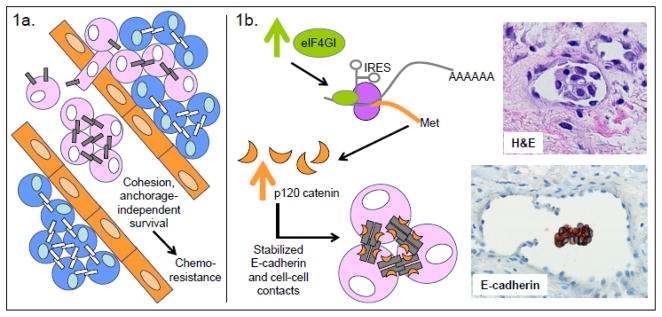
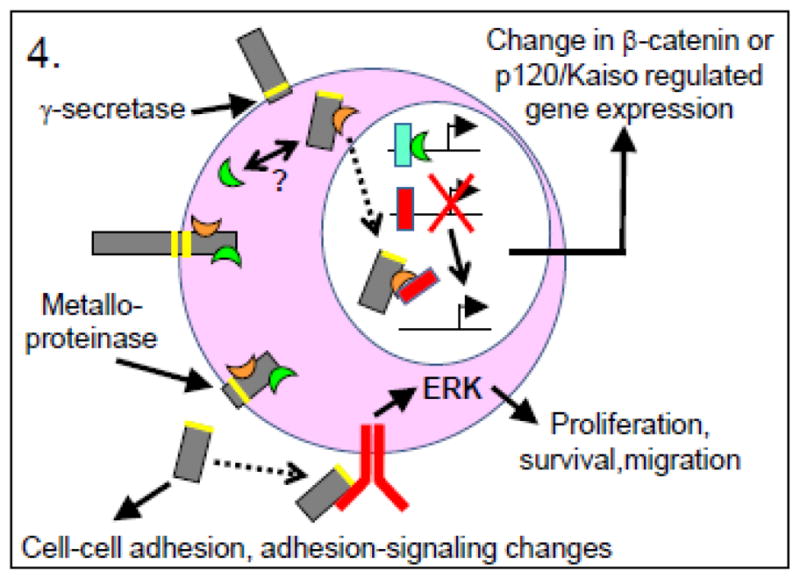
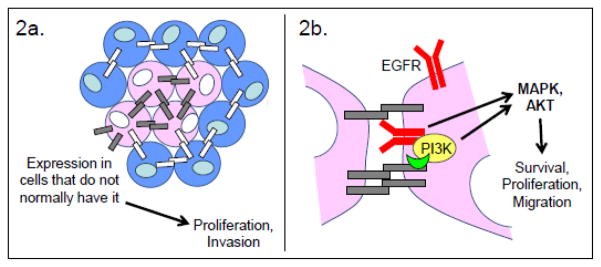
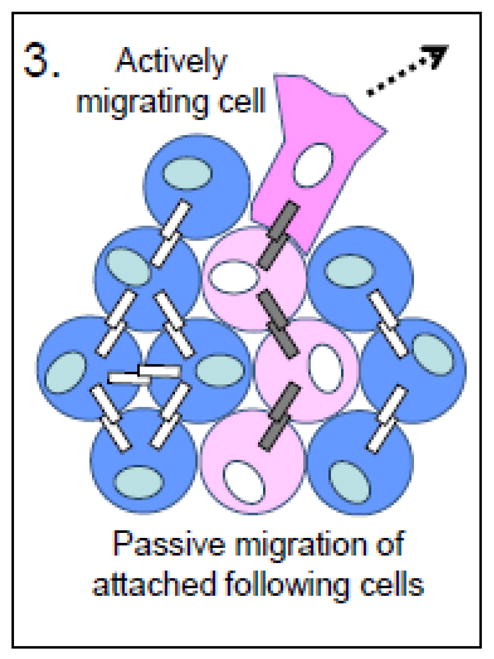
In the context of cancer, E-cadherin has traditionally been categorized as a tumor suppressor, given its essential role in the formation of proper intercellular junctions, and its downregulation in the process of epithelial-mesenchymal transition (EMT) in epithelial tumor progression. Germline or somatic mutations in the E-cadherin gene (CDH1) or downregulation by epigenetic mechanisms have been described in a small subset of epithelial cancers. However, recent evidence also points toward a promoting role of E-cadherin in several aspects of tumor progression. This includes preserved (or increased) E-cadherin expression in microemboli of inflammatory breast carcinoma, a possible "mesenchymal to epithelial transition" (MET) in ovarian carcinoma, collective cell invasion in some epithelial cancers, a recent association of E-cadherin expression with a more aggressive brain tumor subset, as well as the intriguing possibility of E-cadherin involvement in specific signaling networks in the cytoplasm and/or nucleus. In this review we address a lesser-known, positive role for E-cadherin in cancer.
在癌症背景下,鉴于E-钙黏蛋白在形成合适的细胞间连接中起关键作用,且在上皮性肿瘤进展过程中的上皮-间质转化(EMT)过程中表达下调,传统上它被归类为一种肿瘤抑制因子。E-钙黏蛋白基因(CDH1)的种系或体细胞突变,或通过表观遗传机制导致的表达下调,已在一小部分上皮性癌症中被描述。然而,最近的证据也表明E-钙黏蛋白在肿瘤进展的几个方面具有促进作用。这包括炎性乳腺癌微栓子中E-钙黏蛋白表达保留(或增加)、卵巢癌中可能存在的“间质向上皮转化”(MET)、某些上皮性癌症中的集体细胞侵袭、E-钙黏蛋白表达与侵袭性更强的脑肿瘤亚群的近期关联,以及E-钙黏蛋白参与细胞质和/或细胞核中特定信号网络的有趣可能性。在本综述中,我们探讨了E-钙黏蛋白在癌症中鲜为人知的积极作用。