Disciplina de Imunologia, Departamento de Microbiologia, Imunologia e Parasitologia, Universidade Federal de São Paulo-Escola Paulista de Medicina, São Paulo, Brasil.
PLoS One. 2012;7(3):e33955. doi: 10.1371/journal.pone.0033955. Epub 2012 Mar 20.
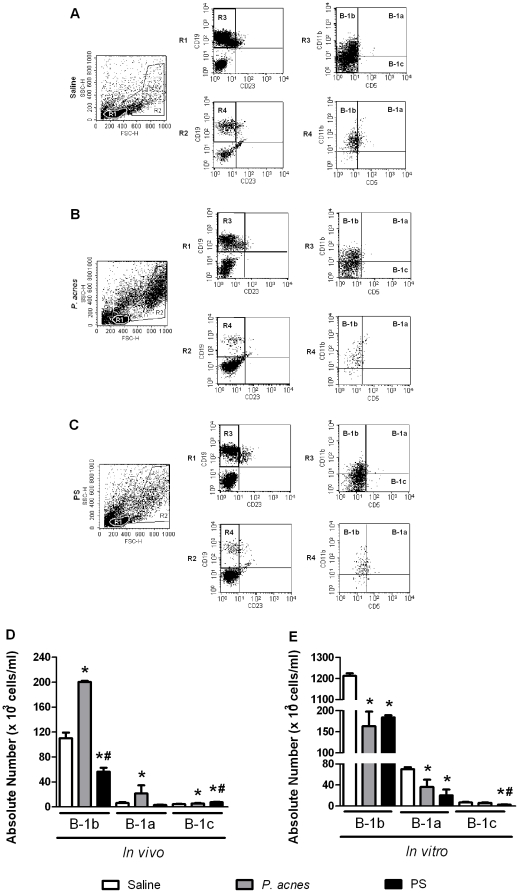
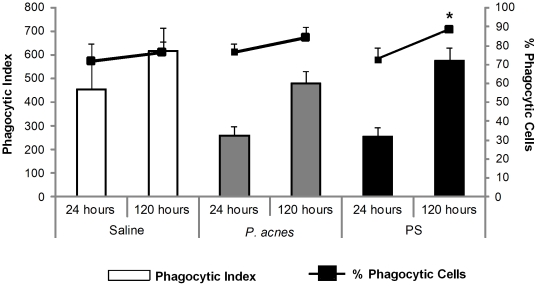
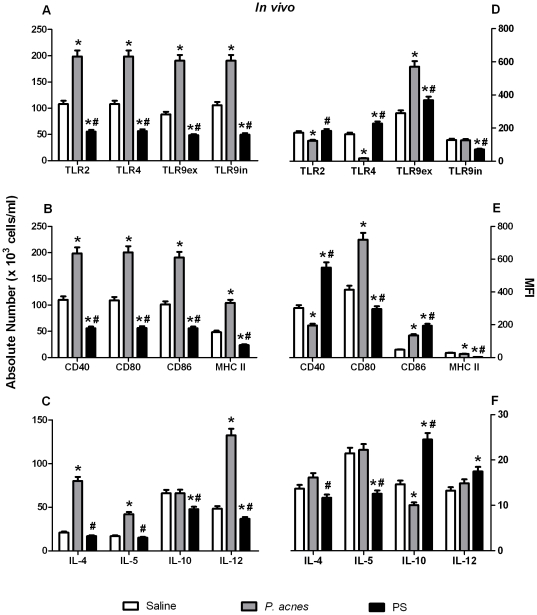
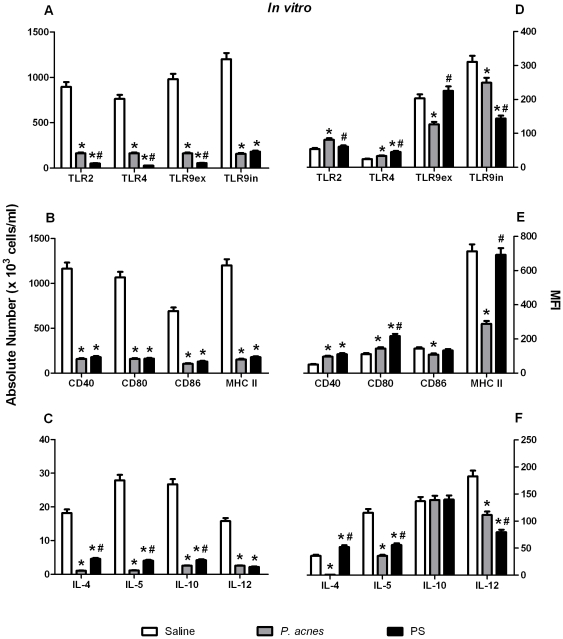
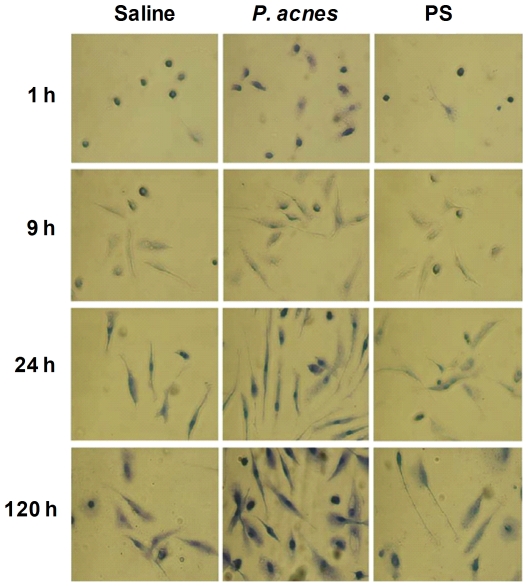
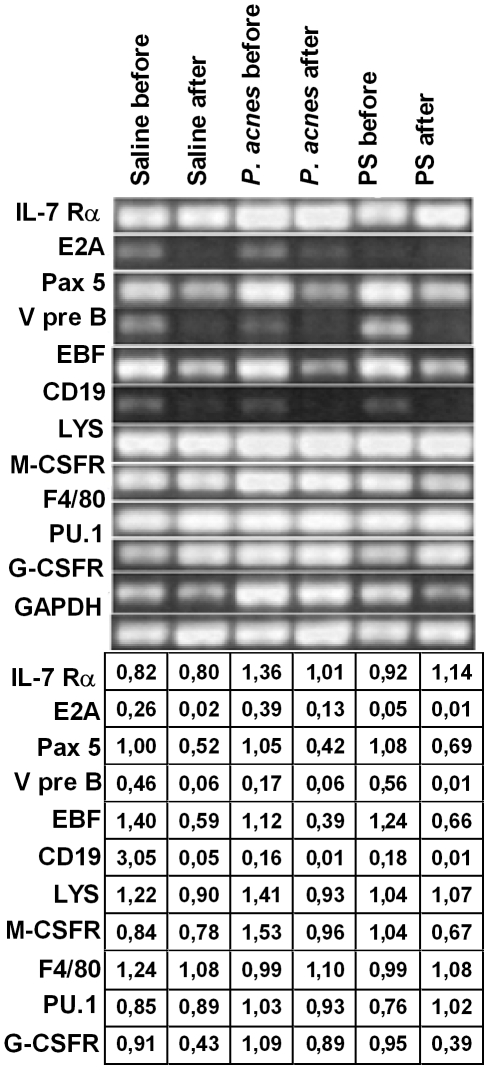
B-1 lymphocytes are the predominant cells in mouse peritoneal cavity. They express macrophage and lymphocyte markers and are divided into B-1a, B-1b and B-1c subtypes. The role of B-1 cells is not completely clear, but they are responsible for natural IgM production and seem to play a regulatory role. An enriched B-1b cell population can be obtained from non-adherent peritoneal cell cultures, and we have previously demonstrated that these cells undergo differentiation to acquire a mononuclear phagocyte phenotype upon attachment to the substrate in vitro. Nevertheless, the B-1 cell response to antigens or adjuvants has been poorly investigated. Because killed Propionibacterium acnes exhibits immunomodulatory effects on both macrophages and B-2 lymphocytes, we analyzed whether a killed bacterial suspension or its soluble polysaccharide (PS) could modulate the absolute number of peritoneal B-1 cells in BALB/c mice, the activation status of these cells and their ability to differentiate into phagocytes in vitro. In vivo, P. acnes treatment elevated the absolute number of all B-1 subsets, whereas PS only increased B-1c. Moreover, the bacterium increased the number of B-1b cells that were positive for MHC II, TLR2, TLR4, TLR9, IL-4, IL-5 and IL-12, in addition to up-regulating TLR9, CD80 and CD86 expression. PS increased B-1b cell expression of TLR4, TLR9, CD40 and CD86, as well as IL-10 and IL-12 synthesis. Both of the treatments decreased the absolute number of B-1b cells in vitro, suggesting their early differentiation into B-1 cell-derived phagocytes (B-1CDP). We also observed a higher phagocytic activity from the phagocytes that were derived from B-1b cells after P. acnes and PS treatment. The adjuvant effect that P. acnes has on B-1 cells, mainly the B-1b subtype, reinforces the importance of B-1 cells in the innate and adaptive immune responses.
B-1 淋巴细胞是小鼠腹腔中的主要细胞。它们表达巨噬细胞和淋巴细胞标记物,并分为 B-1a、B-1b 和 B-1c 亚型。B-1 细胞的作用尚不完全清楚,但它们负责天然 IgM 的产生,并似乎发挥调节作用。可以从非贴壁腹腔细胞培养物中获得富含 B-1b 细胞的群体,我们之前已经证明,这些细胞在体外附着到基质上后会分化为单核吞噬细胞表型。然而,B-1 细胞对抗原或佐剂的反应尚未得到充分研究。由于死的痤疮丙酸杆菌对巨噬细胞和 B-2 淋巴细胞均具有免疫调节作用,因此我们分析了死细菌悬液或其可溶性多糖 (PS) 是否可以调节 BALB/c 小鼠腹腔中 B-1 细胞的绝对数量,这些细胞的激活状态及其在体外分化为吞噬细胞的能力。在体内,痤疮丙酸杆菌处理增加了所有 B-1 亚群的绝对数量,而 PS 仅增加了 B-1c。此外,该细菌增加了 MHC II、TLR2、TLR4、TLR9、IL-4、IL-5 和 IL-12 阳性的 B-1b 细胞的数量,同时上调了 TLR9、CD80 和 CD86 的表达。PS 增加了 B-1b 细胞 TLR4、TLR9、CD40 和 CD86 的表达,以及 IL-10 和 IL-12 的合成。两种处理均减少了体外 B-1b 细胞的绝对数量,表明其早期分化为 B-1 细胞来源的吞噬细胞 (B-1CDP)。我们还观察到,在痤疮丙酸杆菌和 PS 处理后,源自 B-1b 细胞的吞噬细胞的吞噬活性更高。痤疮丙酸杆菌对 B-1 细胞(主要是 B-1b 亚型)的佐剂作用,加强了 B-1 细胞在先天和适应性免疫反应中的重要性。