Department of Infectious Diseases, Department of Medicine, Immunology Institute, Mount Sinai School of Medicine, New York, New York, United States of America.
PLoS One. 2012;7(3):e33961. doi: 10.1371/journal.pone.0033961. Epub 2012 Mar 20.
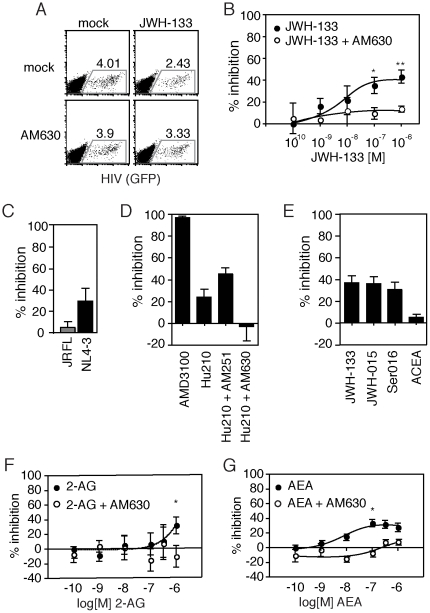
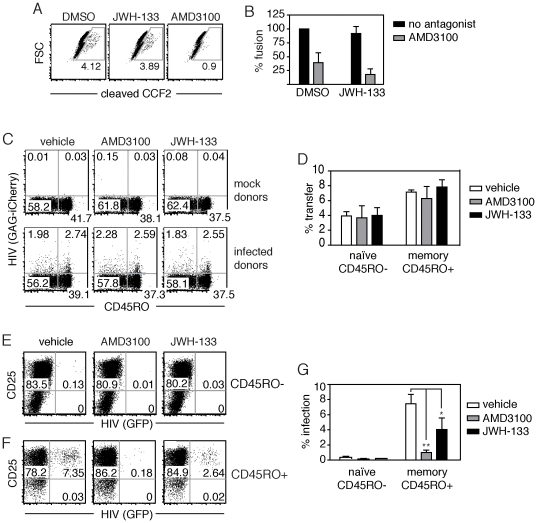
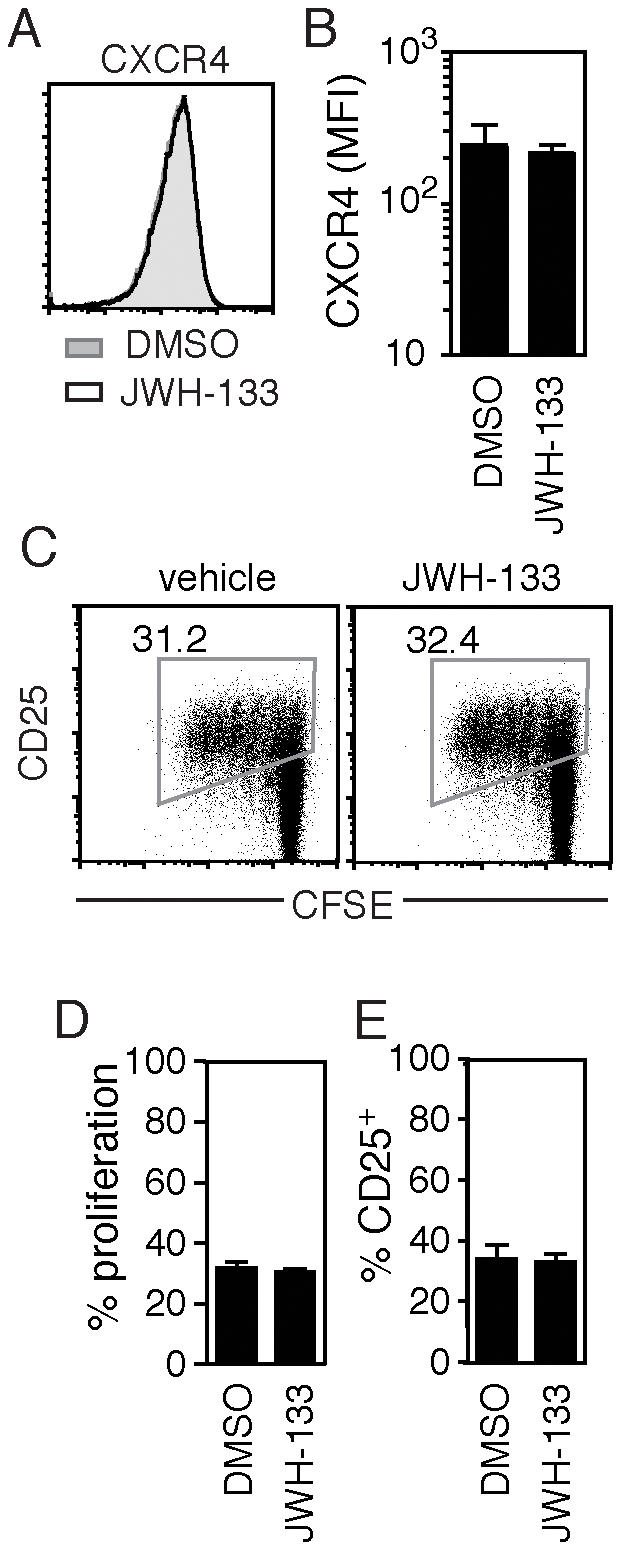
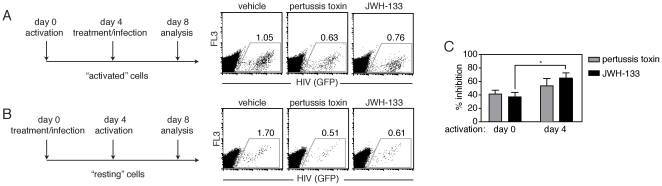
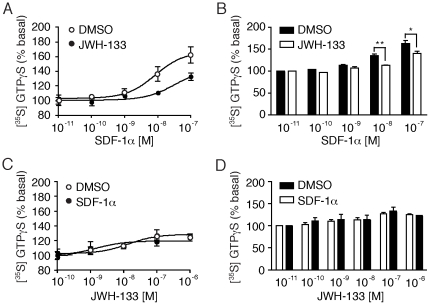
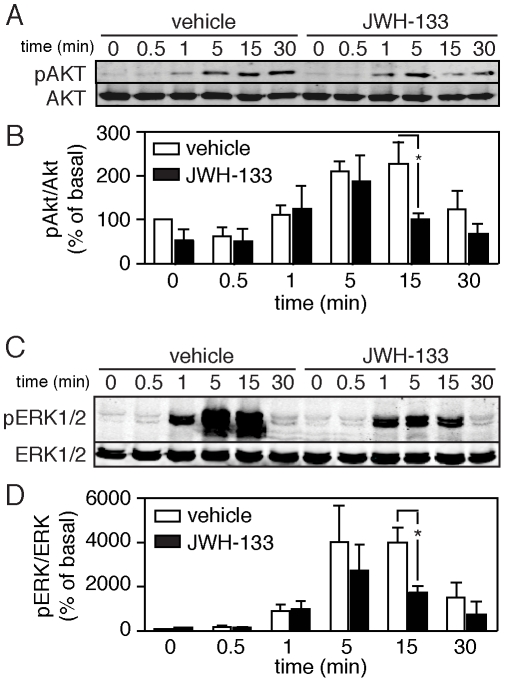
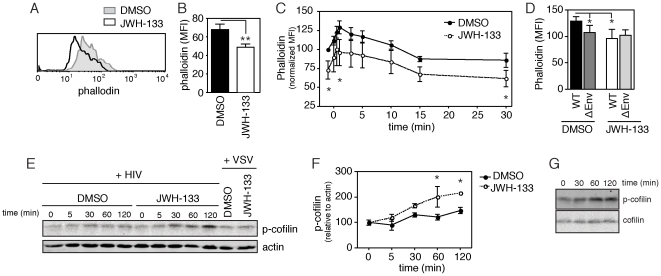
Agents that activate cannabinoid receptor pathways have been tested as treatments for cachexia, nausea or neuropathic pain in HIV-1/AIDS patients. The cannabinoid receptors (CB(1)R and CB(2)R) and the HIV-1 co-receptors, CCR5 and CXCR4, all signal via Gαi-coupled pathways. We hypothesized that drugs targeting cannabinoid receptors modulate chemokine co-receptor function and regulate HIV-1 infectivity. We found that agonism of CB(2)R, but not CB(1)R, reduced infection in primary CD4+ T cells following cell-free and cell-to-cell transmission of CXCR4-tropic virus. As this change in viral permissiveness was most pronounced in unstimulated T cells, we investigated the effect of CB(2)R agonism on to CXCR4-induced signaling following binding of chemokine or virus to the co-receptor. We found that CB(2)R agonism decreased CXCR4-activation mediated G-protein activity and MAPK phosphorylation. Furthermore, CB(2)R agonism altered the cytoskeletal architecture of resting CD4+ T cells by decreasing F-actin levels. Our findings suggest that CB(2)R activation in CD4+ T cells can inhibit actin reorganization and impair productive infection following cell-free or cell-associated viral acquisition of CXCR4-tropic HIV-1 in resting cells. Therefore, the clinical use of CB(2)R agonists in the treatment of AIDS symptoms may also exert beneficial adjunctive antiviral effects against CXCR4-tropic viruses in late stages of HIV-1 infection.
激活大麻素受体途径的药物已被测试用于治疗 HIV-1/AIDS 患者的恶病质、恶心或神经病理性疼痛。大麻素受体(CB1R 和 CB2R)和 HIV-1 共受体 CCR5 和 CXCR4 均通过 Gαi 偶联途径发出信号。我们假设靶向大麻素受体的药物可调节趋化因子共受体功能并调节 HIV-1 感染性。我们发现,CB2R 的激动剂,而不是 CB1R 的激动剂,可减少 CXCR4 嗜性病毒的无细胞和细胞间传播后原代 CD4+T 细胞的感染。由于这种病毒易感性的变化在未受刺激的 T 细胞中最为明显,因此我们研究了 CB2R 激动剂对趋化因子或病毒与共受体结合后 CXCR4 诱导的信号转导的影响。我们发现,CB2R 激动剂降低了 CXCR4 激活介导的 G 蛋白活性和 MAPK 磷酸化。此外,CB2R 激动剂通过降低 F-肌动蛋白水平改变了静息 CD4+T 细胞的细胞骨架结构。我们的研究结果表明,CB2R 在 CD4+T 细胞中的激活可以抑制肌动蛋白重排并损害静息细胞中 CXCR4 嗜性 HIV-1 的无细胞或细胞相关病毒获得后的有效感染。因此,CB2R 激动剂在治疗 AIDS 症状的临床应用也可能对 HIV-1 感染晚期的 CXCR4 嗜性病毒产生有益的辅助抗病毒作用。