Department of Psychology, University of Wisconsin, Madison, WI 53706, USA.
Personal Disord. 2012 Oct;3(4):370-8. doi: 10.1037/a0025593. Epub 2011 Oct 24.
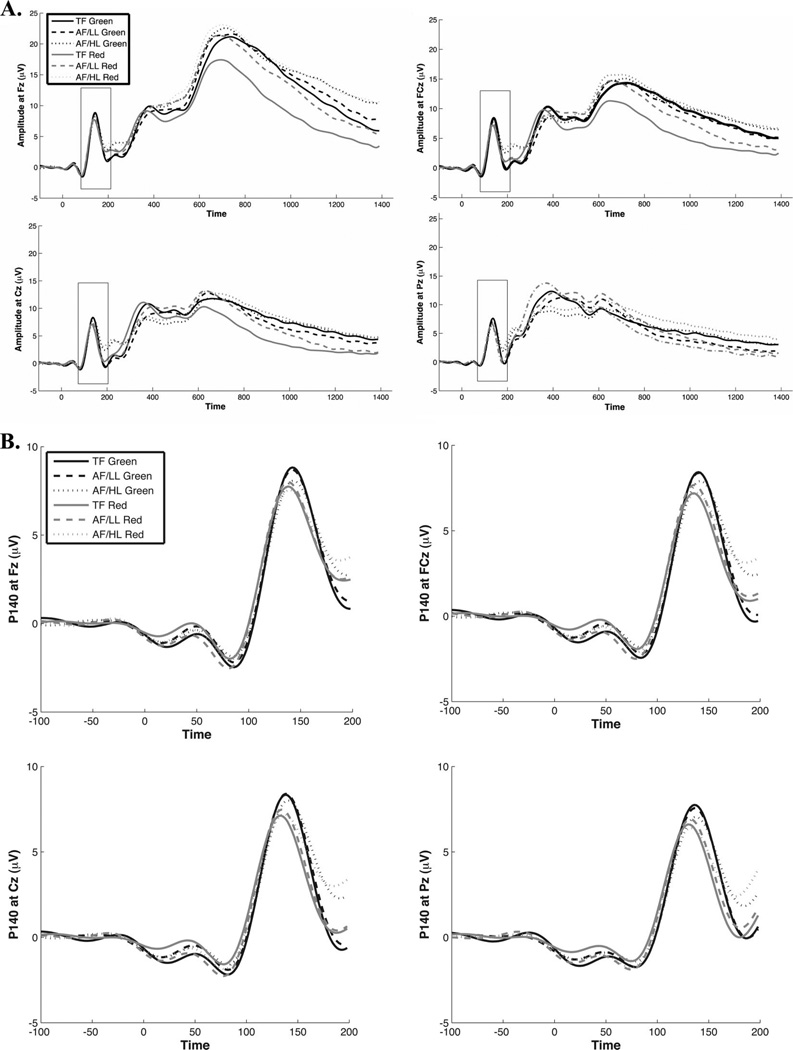
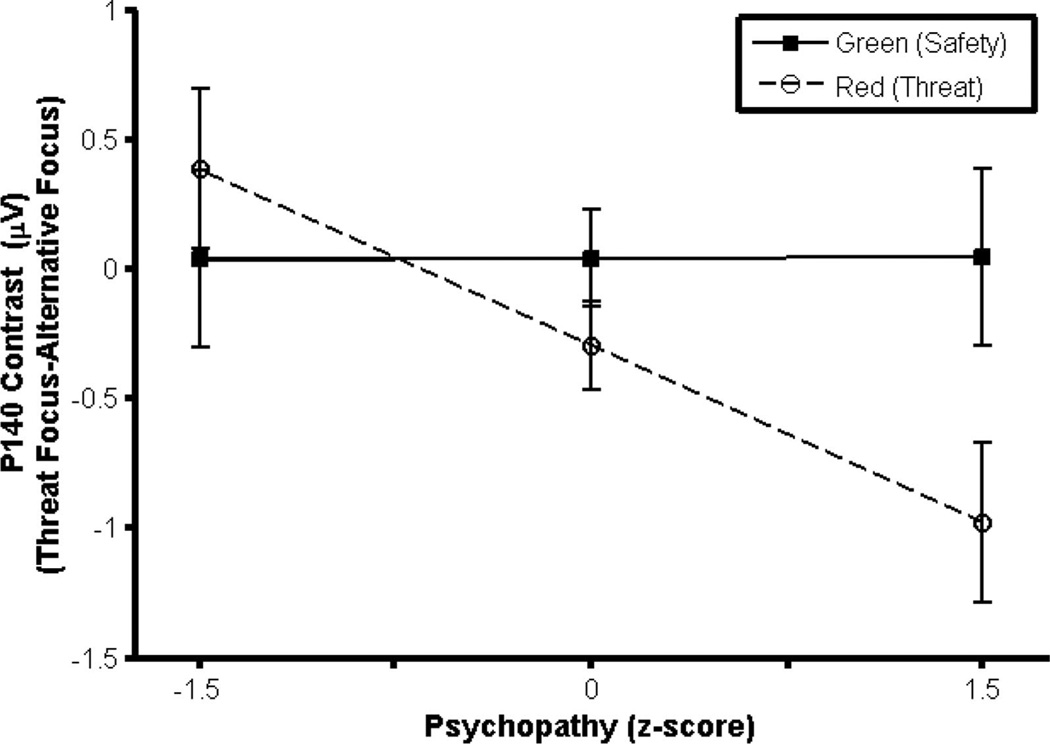
According to the response modulation model, the poorly regulated behavior of psychopathic individuals reflects a problem reallocating attention to process peripheral information while engaged in goal-directed behavior (Patterson & Newman, 1993). We evaluated this tenet using male prisoners and an early event-related potential component (P140) to index attentional processing. In all task conditions, participants viewed and categorized letter stimuli that could also be used to predict electric shocks. Instructions focused attention either on the threat-relevant dimension of the letters or an alternative, threat-irrelevant dimension. Offenders with high scores on Hare's (2003) Psychopathy Checklist-Revised displayed a larger P140 under alternative versus threat conditions. Beyond demonstrating psychopathy-related differences in early attention, these findings suggest that psychopathic individuals find it easier to ignore threat-related distractors when they are peripheral versus central to their goal-directed behavior.
根据反应调节模型,精神病态个体的不良行为反映了在进行目标导向行为时重新分配注意力以处理外围信息的问题(Patterson & Newman,1993)。我们使用男性囚犯和早期事件相关电位成分(P140)来评估这一原理,以评估注意力处理情况。在所有任务条件下,参与者都观看并对字母刺激进行分类,这些字母刺激也可以用来预测电击。指令将注意力集中在字母的威胁相关维度或替代的、与威胁无关的维度上。在 Hare(2003)的《精神病态检查表修订版》中得分较高的罪犯在替代条件与威胁条件下显示出更大的 P140。这些发现不仅表明了早期注意力方面与精神病态相关的差异,还表明精神病态个体在目标导向行为中,当威胁相关的分心物处于外围时,比处于中心位置时更容易忽略它们。