Shi's Center of Orthopedics and Traumatology, Shuguang Hospital, Shanghai University of Traditional Chinese Medicine, 528 Zhangheng Road, Pudong New Area, Shanghai 201203, China.
Evid Based Complement Alternat Med. 2012;2012:171706. doi: 10.1155/2012/171706. Epub 2012 Feb 12.
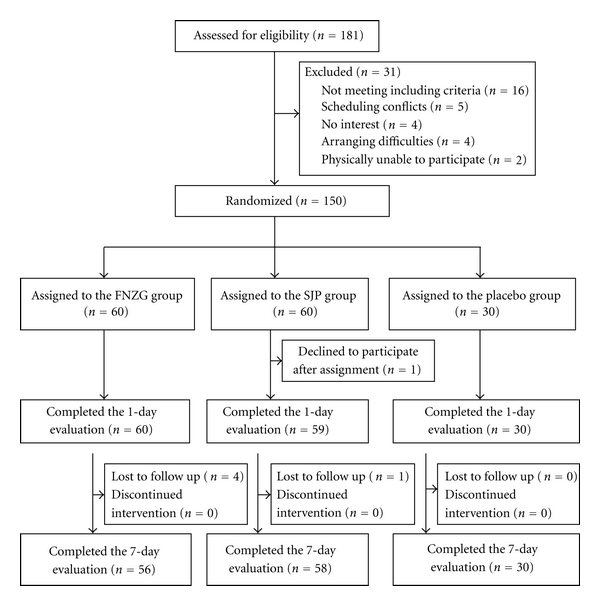
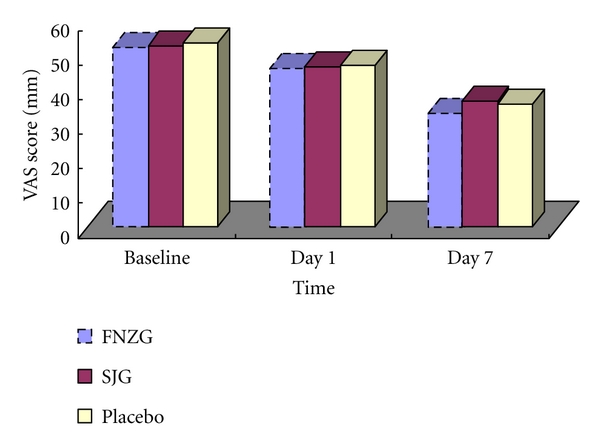
Objective. To assess the short-term efficacy and safety of two kinds of Traditional Chinese herbal patches, Fufang Nanxing Zhitong Gao (FNZG) and Shangshi Jietong Gao (SJG), for painful knee osteoarthritis (OA). Methods. Patients were randomly enrolled in a double-blind, placebo-controlled study to receive FNZG (n = 60), SJG (n = 60), or placebo patch (n = 30) for 7 days. Outcome measures included visual analogue scale (VAS), Western Ontario and McMaster Universities Osteoarthritis Index (WOMAC), and Traditional Chinese Medicine Syndrome Questionnaire (TCMSQ) subscale. Results. Although there was no significant difference among, three groups in short-term pain management, patients receiving FNZG got significant improvement in symptom of fear of coldness as compared with placebo patch (P = 0.029). The most common local adverse events of rash, itching, erythema, and slightly damaged skin were observed in 7% of participants. Conclusions. FNZG may be a useful treatment for symptom of knee OA and merits long-term study in broader populations.
目的。评估两种中药贴剂复方南星止痛膏(FNZG)和麝香壮骨膏(SJG)治疗膝骨关节炎(OA)疼痛的短期疗效和安全性。方法。患者被随机纳入一项双盲、安慰剂对照研究,接受 FNZG(n=60)、SJG(n=60)或安慰剂贴剂(n=30)治疗 7 天。疗效评估指标包括视觉模拟评分(VAS)、西安大略和麦克马斯特大学骨关节炎指数(WOMAC)以及中医证候量表(TCMSQ)子量表。结果。尽管三组在短期疼痛管理方面没有显著差异,但与安慰剂贴剂相比,接受 FNZG 的患者怕冷症状得到了显著改善(P=0.029)。最常见的局部不良反应是皮疹、瘙痒、红斑和皮肤轻微损伤,发生率为 7%。结论。FNZG 可能是治疗膝 OA 症状的有效方法,值得在更广泛的人群中进行长期研究。