Department of Neurology, Mitchell Center for Alzheimer's Disease and Related Brain Disorders, University of Texas Medical School, Houston, Texas, USA.
Nat Struct Mol Biol. 2012 Apr 4;19(4):370-7. doi: 10.1038/nsmb.2266.
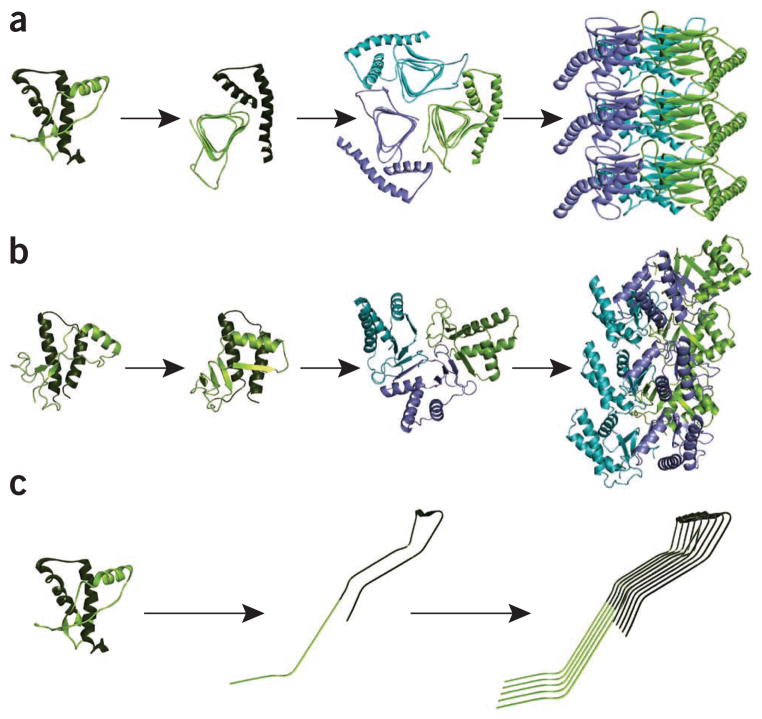
Prions are the proteinaceous infectious agents responsible for the transmission of prion diseases. The main or sole component of prions is the misfolded prion protein (PrP(Sc)), which is able to template the conversion of the host's natively folded form of the protein (PrP(C)). The detailed mechanism of prion replication and the high-resolution structure of PrP(Sc) are unknown. The currently available information on PrP(Sc) structure comes mostly from low-resolution biophysical techniques, which have resulted in quite divergent models. Recent advances in the production of infectious prions, using very pure recombinant protein, offer new hope for PrP(Sc) structural studies. This review highlights the importance of, challenges for and recent progress toward elucidating the elusive structure of PrP(Sc), arguably the major pending milestone to reach in understanding prions.
朊病毒是负责朊病毒病传播的蛋白质传染性病原体。朊病毒的主要或唯一成分是错误折叠的朊病毒蛋白(PrP(Sc)),它能够模板化宿主天然折叠形式的蛋白质(PrP(C))的转换。朊病毒复制的详细机制和 PrP(Sc)的高分辨率结构尚不清楚。目前关于 PrP(Sc)结构的信息主要来自于低分辨率的生物物理技术,这些技术导致了相当不同的模型。最近在使用非常纯的重组蛋白生产感染性朊病毒方面的进展,为 PrP(Sc)结构研究带来了新的希望。这篇综述强调了阐明 PrP(Sc)难以捉摸的结构的重要性、挑战和最新进展,这可以说是理解朊病毒的主要待解决的里程碑。