IBMC - Instituto de Biologia Molecular e Celular , Universidade do Porto , Rua do Campo Alegre, 823, 4150-180 Porto , Portugal.
AoB Plants. 2012;2012:pls002. doi: 10.1093/aobpla/pls002. Epub 2012 Mar 2.
Catharanthus roseus is a highly valuable medicinal plant producing several terpenoid indole alkaloids (TIAs) with pharmaceutical applications, including the anticancer agents vinblastine and vincristine. Due to the interest in its TIAs, C. roseus is one of the most extensively studied medicinal plants and has become a model species for the study of plant secondary metabolism. However, very little is known about the cytogenetics and genome size of this species, in spite of their importance for breeding programmes, TIA genetics and emerging genomic research. Therefore, the present paper provides a karyotype description and fluorescence in situ hybridization (FISH) data for C. roseus, as well as a rigorous characterization of its genome size.
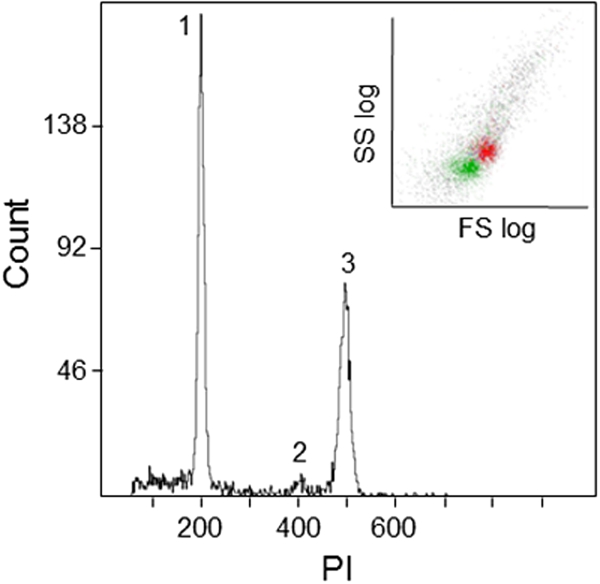
The organization of C. roseus chromosomes was characterized using several DNA/chromatin staining techniques and FISH of rDNA. Genome size was investigated by flow cytometry using an optimized methodology.
The C. roseus full chromosome complement of 2n = 16 includes two metacentric, four subtelocentric and two telocentric chromosome pairs, with the presence of a single nucleolus organizer region in chromosome 6. An easy and reliable flow cytometry protocol for nuclear genome analysis of C. roseus was optimized, and the C-value of this species was estimated to be 1C = 0.76 pg, corresponding to 738 Mbp.
The organization and size of the C. roseus genome were characterized, providing an important basis for future studies of this important medicinal species, including further cytogenetic mapping, genomics, TIA genetics and breeding programmes.
长春花是一种极具价值的药用植物,可产生多种具有药用价值的萜吲哚生物碱(TIAs),包括抗癌药物长春碱和长春新碱。由于对其 TIAs 的兴趣,长春花是研究最多的药用植物之一,已成为植物次生代谢研究的模式物种。然而,尽管其在育种计划、TIA 遗传学和新兴基因组研究方面具有重要意义,但对该物种的细胞遗传学和基因组大小却知之甚少。因此,本文提供了长春花的核型描述和荧光原位杂交(FISH)数据,以及对其基因组大小的严格特征描述。
使用几种 DNA/染色质染色技术和 rDNA 的 FISH 对长春花的染色体组织进行了表征。通过优化的方法使用流式细胞术研究了基因组大小。
长春花的全染色体组为 2n = 16,包括两对着丝粒染色体、四对亚端着丝粒染色体和两对端着丝粒染色体,6 号染色体上存在一个单一的核仁组织者区域。优化了用于长春花核基因组分析的简单可靠的流式细胞术方案,并估计该物种的 C 值为 1C = 0.76pg,对应于 738 Mbp。
对长春花基因组的组织和大小进行了特征描述,为进一步研究该重要药用物种提供了重要基础,包括进一步的细胞遗传学作图、基因组学、TIA 遗传学和育种计划。