Departments of Clinical Neurosciences and Oncology, Hotchkiss Brain Institute, University of Calgary, 3330 Hospital Drive NW, Calgary, AB T2N 4N1, Canada.
J Neuroinflammation. 2012 Apr 5;9:64. doi: 10.1186/1742-2094-9-64.
Extracellular matrix metalloproteinase inducer (EMMPRIN; CD147, basigin) is an inducer of the expression of several matrix metalloproteinases (MMPs). We reported previously that blocking EMMPRIN activity reduced neuroinflammation and severity of disease in an animal model of multiple sclerosis (MS), experimental autoimmune encephalomyelitis (EAE).
To improve upon EMMPRIN blockade, and to help unravel the biological functions of EMMPRIN in inflammatory disorders, we have developed several anti-EMMPRIN monoclonal antibodies.
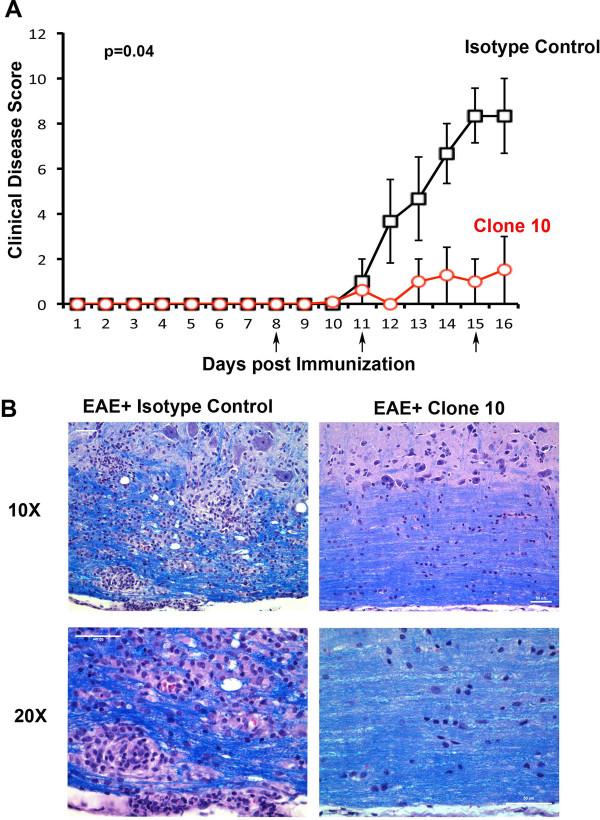
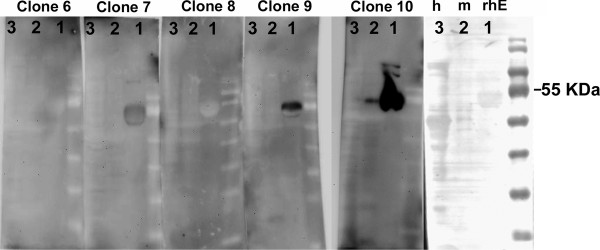
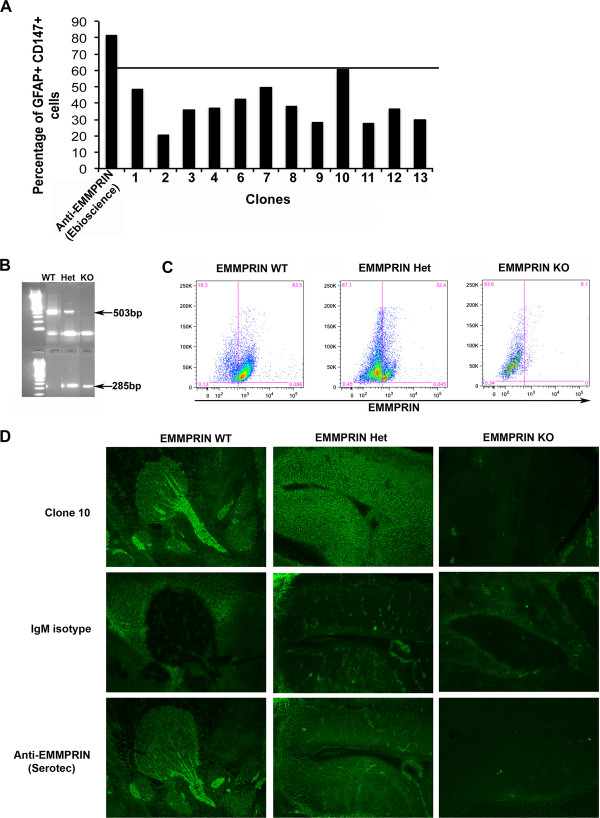
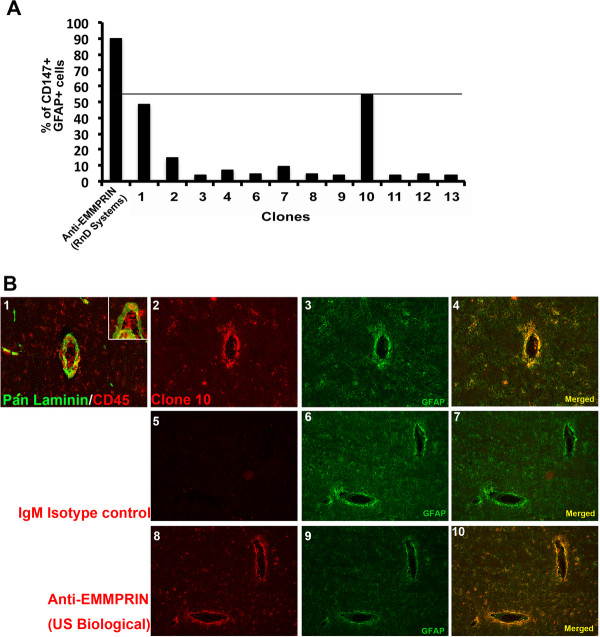
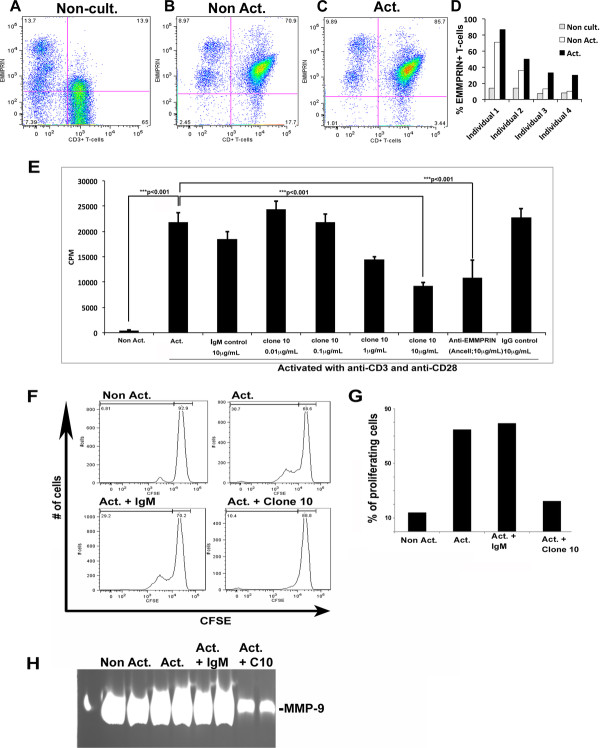
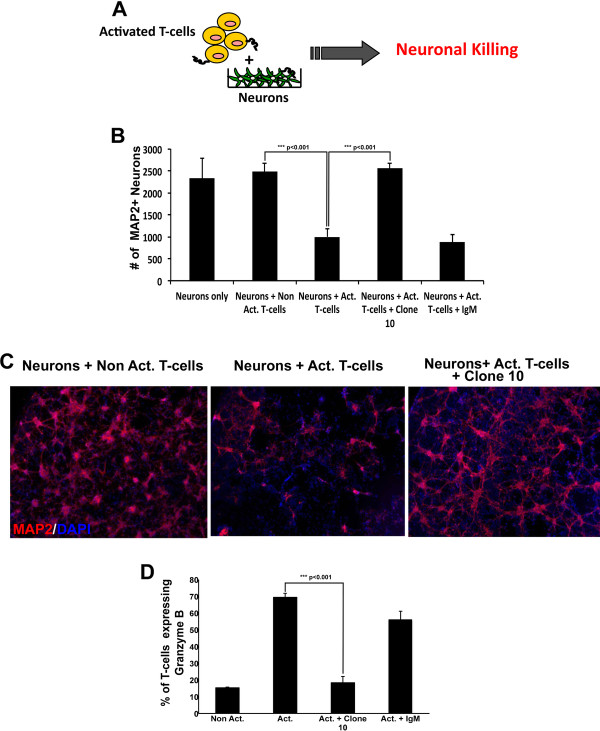
Of these monoclonal antibodies, a particular one, clone 10, was efficient in binding mouse and human cells using several methods of detection. The specificity of clone 10 was demonstrated by its lack of staining of EMMPRIN-null embryos compared to heterozygous and wild-type mouse samples. Functionally, human T cells activated with anti-CD3 and anti-CD28 elevated their expression of EMMPRIN and the treatment of these T cells with clone 10 resulted in decreased proliferation and matrix metalloproteinase- 9 (MMP-9) production. Activated human T cells were toxic to human neurons in culture and clone 10 pretreatment reduced T cell cytotoxicity correspondent with decrease of granzyme B levels within T cells. In vivo, EAE mice treated with clone 10 had a markedly reduced disease score compared to mice treated with IgM isotype control.
We have produced a novel anti-EMMPRIN monoclonal antibody that blocks several aspects of T cell activity, thus highlighting the multiple roles of EMMPRIN in T cell biology. Moreover, clone 10 reduces EAE scores in mice compared to controls, and has activity on human cells, potentially allowing for the testing of anti-EMMPRIN treatment not only in EAE, but conceivably also in MS.
细胞外基质金属蛋白酶诱导因子(EMMPRIN;CD147、basigin)是几种基质金属蛋白酶(MMPs)表达的诱导剂。我们之前报道过,阻断 EMMPRIN 活性可减少多发性硬化症(MS)、实验性自身免疫性脑脊髓炎(EAE)动物模型中的神经炎症和疾病严重程度。
为了改善 EMMPRIN 阻断,并帮助阐明 EMMPRIN 在炎症性疾病中的生物学功能,我们开发了几种抗 EMMPRIN 单克隆抗体。
在这些单克隆抗体中,一种特定的抗体,克隆 10,通过几种检测方法有效地结合了小鼠和人类细胞。通过比较 EMMPRIN 缺失胚胎与杂合子和野生型小鼠样本的缺乏染色,证明了克隆 10 的特异性。在功能上,用抗 CD3 和抗 CD28 激活的人 T 细胞增加了它们的 EMMPRIN 表达,用克隆 10 处理这些 T 细胞可导致增殖和基质金属蛋白酶-9(MMP-9)产生减少。在体外,激活的人 T 细胞对培养的人神经元有毒性,而克隆 10 预处理可降低 T 细胞毒性,同时降低 T 细胞内颗粒酶 B 水平。在体内,与用 IgM 同种型对照治疗的小鼠相比,用克隆 10 治疗的 EAE 小鼠的疾病评分明显降低。
我们生产了一种新型的抗 EMMPRIN 单克隆抗体,可阻断 T 细胞活性的几个方面,从而突出了 EMMPRIN 在 T 细胞生物学中的多种作用。此外,与对照相比,克隆 10 可降低 EAE 小鼠的评分,并且对人细胞具有活性,这可能允许不仅在 EAE 中,而且在 MS 中测试抗 EMMPRIN 治疗。