Department of Biosystems Science and Engineering, ETH Zurich, Basel, Switzerland.
J Neurophysiol. 2012 Jul;108(1):334-48. doi: 10.1152/jn.01106.2011. Epub 2012 Apr 4.
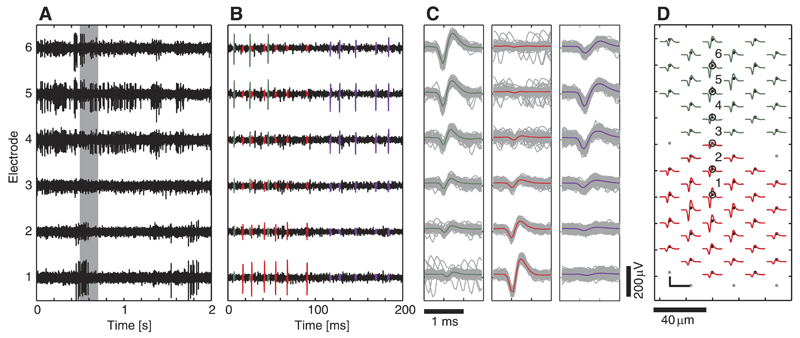
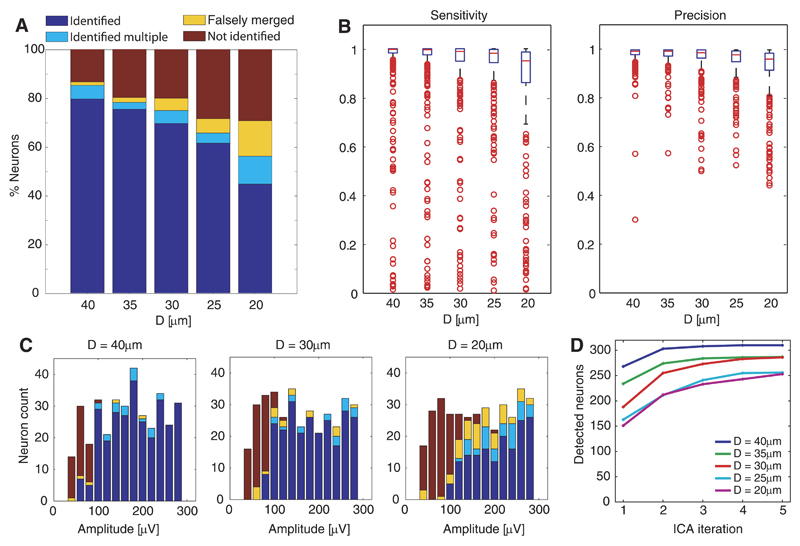
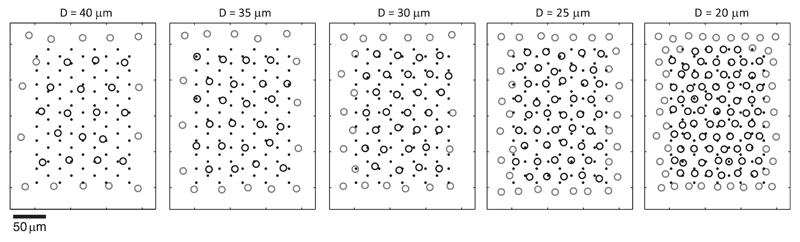
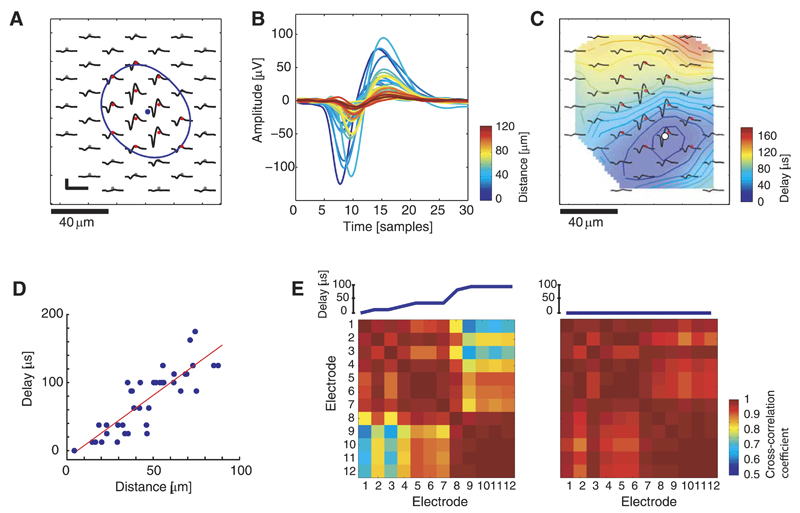
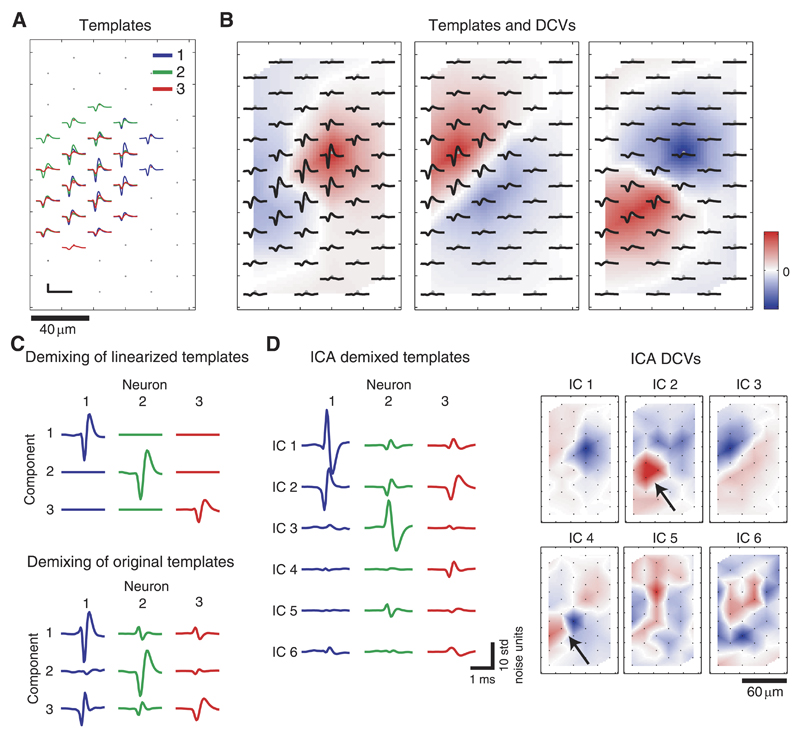
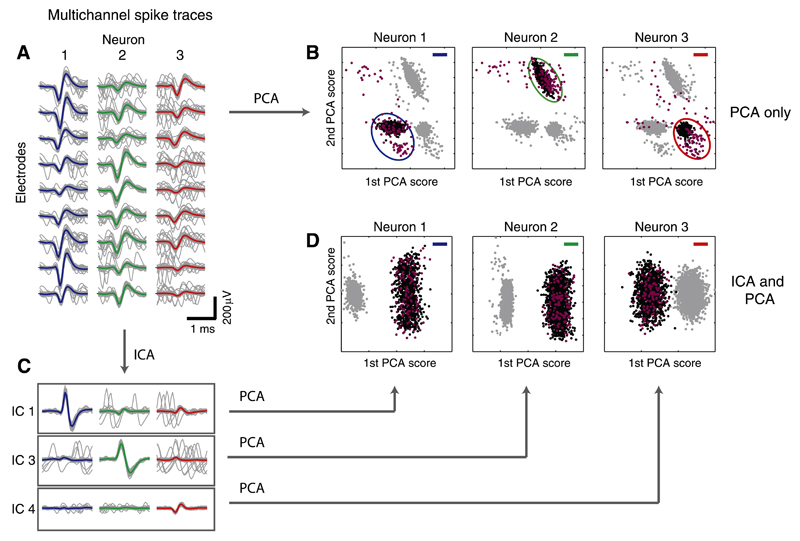
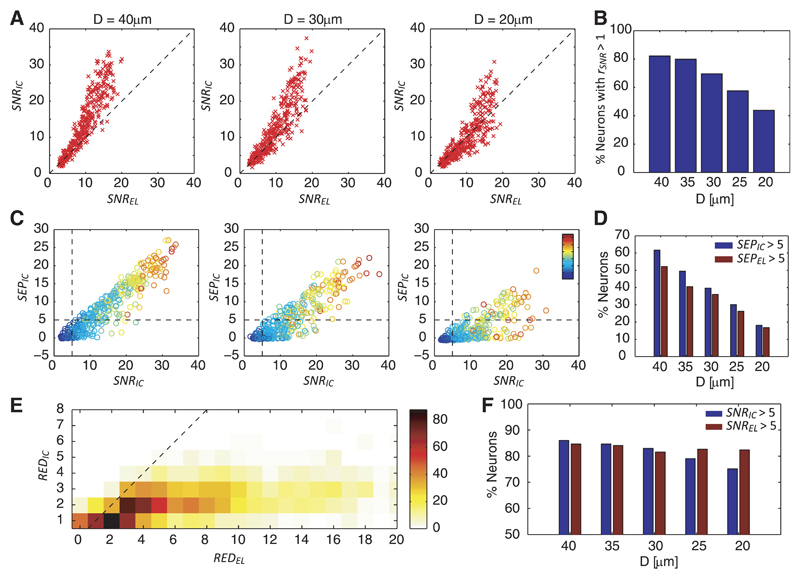
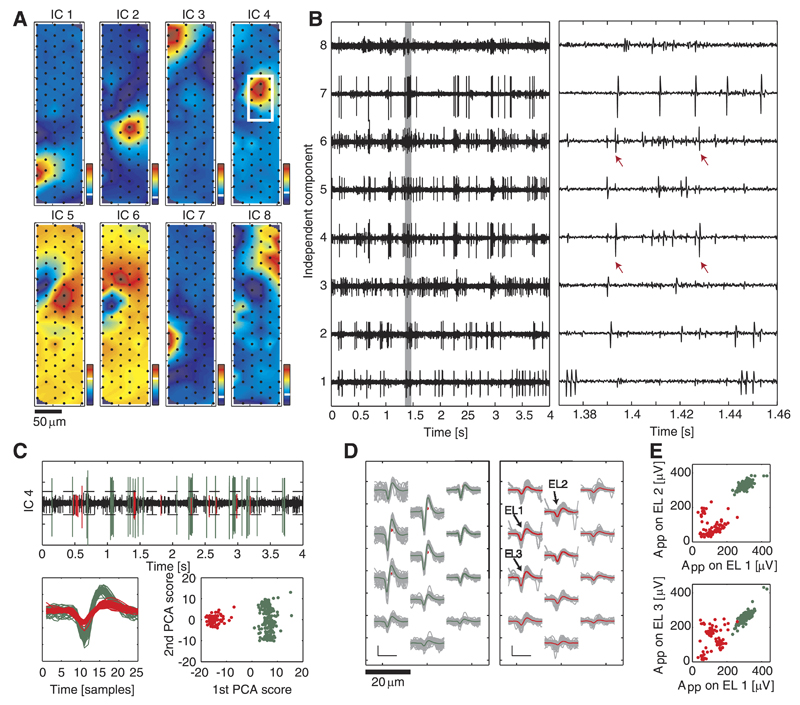
Emerging complementary metal oxide semiconductor (CMOS)-based, high-density microelectrode array (HD-MEA) devices provide high spatial resolution at subcellular level and a large number of readout channels. These devices allow for simultaneous recording of extracellular activity of a large number of neurons with every neuron being detected by multiple electrodes. To analyze the recorded signals, spiking events have to be assigned to individual neurons, a process referred to as "spike sorting." For a set of observed signals, which constitute a linear mixture of a set of source signals, independent component (IC) analysis (ICA) can be used to demix blindly the data and extract the individual source signals. This technique offers great potential to alleviate the problem of spike sorting in HD-MEA recordings, as it represents an unsupervised method to separate the neuronal sources. The separated sources or ICs then constitute estimates of single-neuron signals, and threshold detection on the ICs yields the sorted spike times. However, it is unknown to what extent extracellular neuronal recordings meet the requirements of ICA. In this paper, we evaluate the applicability of ICA to spike sorting of HD-MEA recordings. The analysis of extracellular neuronal signals, recorded at high spatiotemporal resolution, reveals that the recorded data cannot be modeled as a purely linear mixture. As a consequence, ICA fails to separate completely the neuronal signals and cannot be used as a stand-alone method for spike sorting in HD-MEA recordings. We assessed the demixing performance of ICA using simulated data sets and found that the performance strongly depends on neuronal density and spike amplitude. Furthermore, we show how postprocessing techniques can be used to overcome the most severe limitations of ICA. In combination with these postprocessing techniques, ICA represents a viable method to facilitate rapid spike sorting of multidimensional neuronal recordings.
新兴的互补金属氧化物半导体(CMOS)高密度微电极阵列(HD-MEA)设备在亚细胞水平上提供高空间分辨率和大量读取通道。这些设备允许同时记录大量神经元的细胞外活动,每个神经元都由多个电极检测。为了分析记录的信号,必须将尖峰事件分配给单个神经元,这一过程称为“尖峰分类”。对于一组观察到的信号,这些信号构成了一组源信号的线性混合,可以使用独立成分分析(ICA)对数据进行盲分离并提取单个源信号。这项技术为缓解 HD-MEA 记录中的尖峰分类问题提供了巨大的潜力,因为它代表了一种分离神经元源的无监督方法。分离的源或独立成分(IC)然后构成单神经元信号的估计,对 IC 进行阈值检测可得出分类的尖峰时间。然而,尚不清楚细胞外神经元记录在多大程度上符合 ICA 的要求。在本文中,我们评估了 ICA 对 HD-MEA 记录中尖峰分类的适用性。对高时空分辨率记录的细胞外神经元信号的分析表明,记录的数据不能被建模为纯粹的线性混合。因此,ICA 无法完全分离神经元信号,不能作为 HD-MEA 记录中尖峰分类的独立方法使用。我们使用模拟数据集评估了 ICA 的去混合性能,发现性能强烈依赖于神经元密度和尖峰幅度。此外,我们展示了如何使用后处理技术来克服 ICA 的最严重限制。与这些后处理技术相结合,ICA 代表了一种可行的方法,可以促进多维神经元记录的快速尖峰分类。