Reproductive Genomics Group, Temasek Life Sciences Laboratory, Singapore, Singapore.
PLoS One. 2012;7(4):e34397. doi: 10.1371/journal.pone.0034397. Epub 2012 Apr 10.
Despite the popularity of zebrafish as a research model, its sex determination (SD) mechanism is still unknown. Most cytogenetic studies failed to find dimorphic sex chromosomes and no primary sex determining switch has been identified even though the assembly of zebrafish genome sequence is near to completion and a high resolution genetic map is available. Recent publications suggest that environmental factors within the natural range have minimal impact on sex ratios of zebrafish populations. The primary aim of this study is to find out more about how sex is determined in zebrafish.
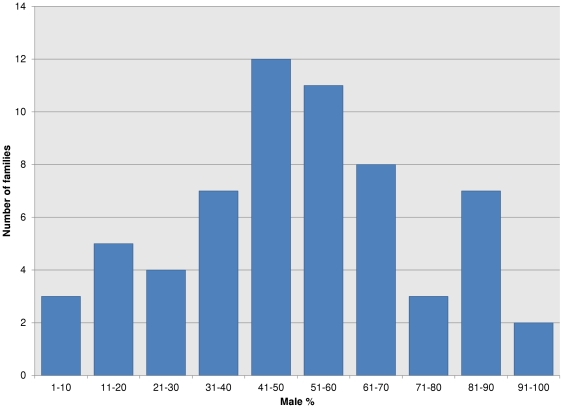
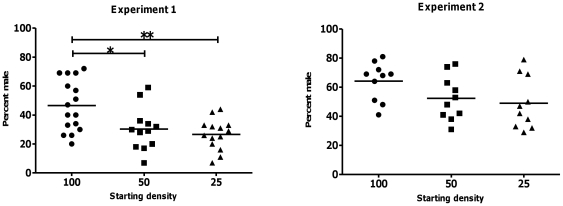
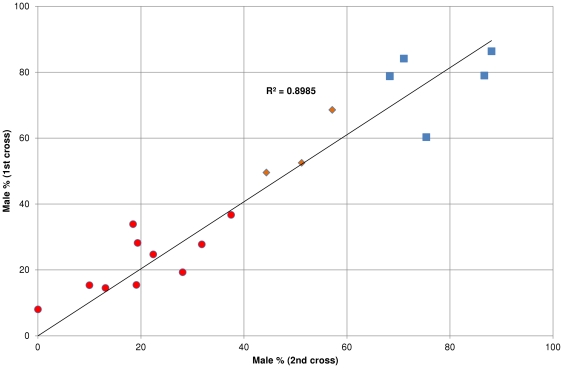
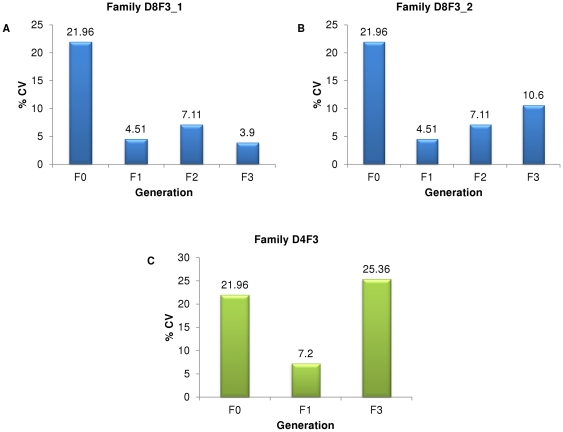
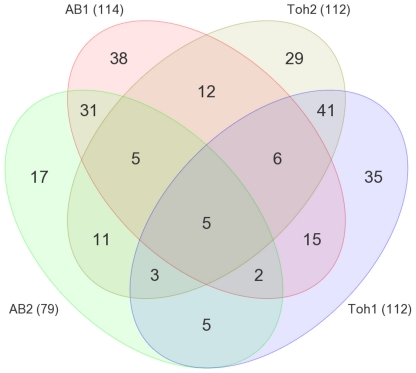
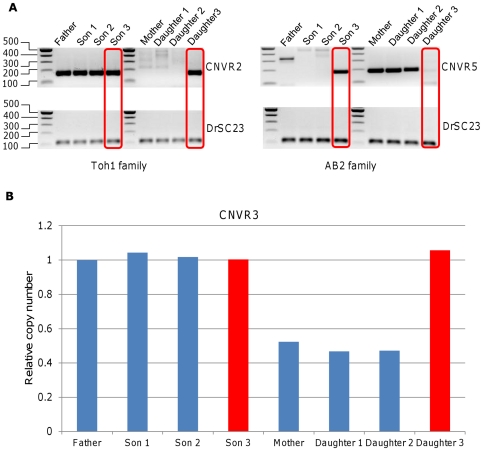
METHODOLOGY/PRINCIPAL FINDINGS: Using classical breeding experiments, we found that sex ratios across families were wide ranging (4.8% to 97.3% males). On the other hand, repeated single pair crossings produced broods of very similar sex ratios, indicating that parental genotypes have a role in the sex ratio of the offspring. Variation among family sex ratios was reduced after selection for breeding pairs with predominantly male or female offspring, another indication that zebrafish sex is regulated genetically. Further examinations by a PCR-based "blind assay" and array comparative genomic hybridization both failed to find universal sex-linked differences between the male and female genomes. Together with the ability to increase the sex bias of lines by selective breeding, these data suggest that zebrafish is unlikely to utilize a chromosomal sex determination (CSD) system.
CONCLUSIONS/SIGNIFICANCE: Taken together, our study suggests that zebrafish sex is genetically determined with limited, secondary influences from the environment. As we have not found any sign for CSD in the species, we propose that the zebrafish has a polygenic sex determination system.
尽管斑马鱼作为一种研究模型很受欢迎,但它的性别决定(SD)机制仍不清楚。大多数细胞遗传学研究未能发现二态性性染色体,即使完成了斑马鱼基因组序列的组装,并且有了高分辨率的遗传图谱,也没有确定主要的性别决定开关。最近的出版物表明,自然范围内的环境因素对斑马鱼种群的性别比例影响很小。本研究的主要目的是了解更多关于斑马鱼性别决定的情况。
方法/主要发现:使用经典的繁殖实验,我们发现不同家系的性别比例范围很广(4.8%到 97.3%为雄性)。另一方面,重复的单对交配产生了非常相似性别比例的后代,这表明亲本体型在后代的性别比例中起作用。经过选择具有主要雄性或雌性后代的繁殖对后,家系性别比例的变化减少了,这再次表明斑马鱼的性别是由遗传调控的。基于 PCR 的“盲测”和阵列比较基因组杂交的进一步检查都未能发现雌雄基因组之间普遍存在的性连锁差异。与通过选择性繁殖增加系的性别偏差的能力相结合,这些数据表明,斑马鱼不太可能利用染色体性别决定(CSD)系统。
结论/意义:总之,我们的研究表明,斑马鱼的性别是由遗传决定的,环境的影响有限且次要。由于我们在该物种中没有发现任何 CSD 的迹象,我们提出斑马鱼具有多基因性别决定系统。