Rotman Research Institute of Baycrest, Toronto, Ontario, Canada.
PLoS One. 2012;7(4):e34856. doi: 10.1371/journal.pone.0034856. Epub 2012 Apr 19.
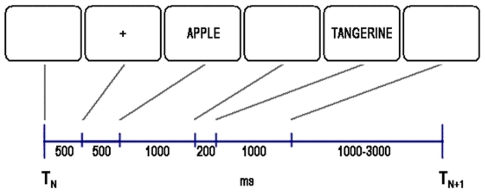
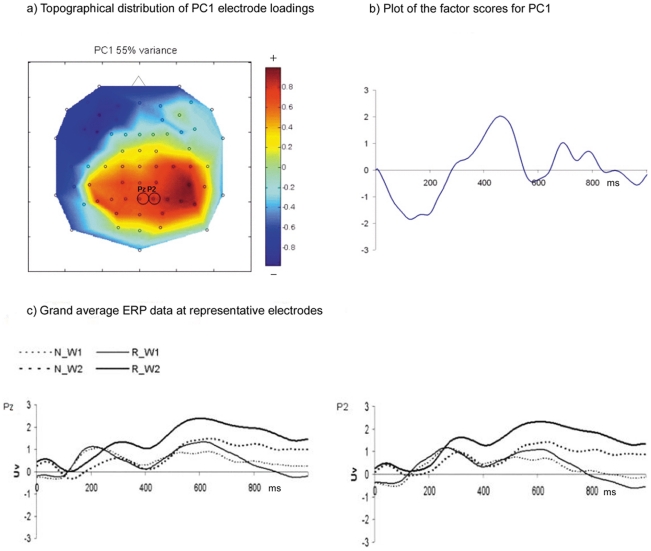
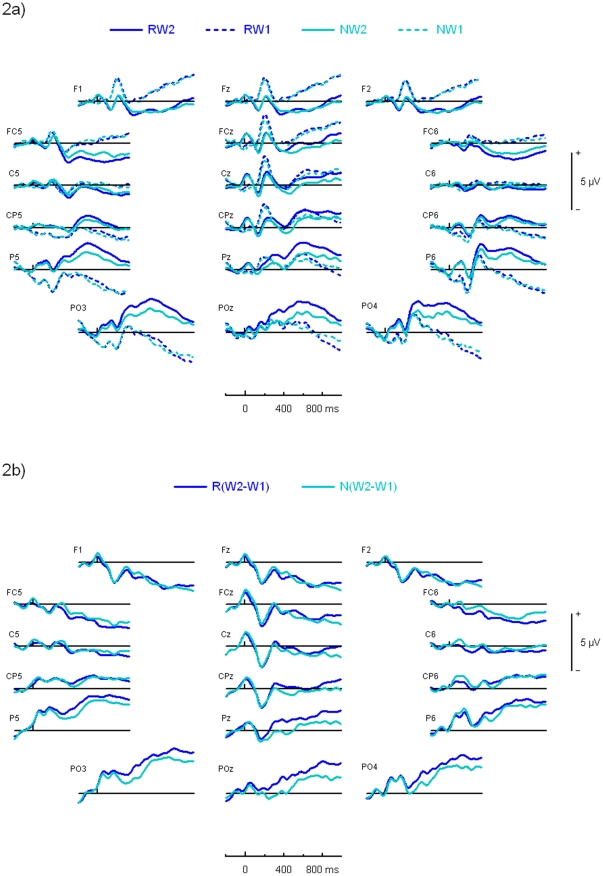
Although many types of learning require associations to be formed, little is known about the brain mechanisms engaged in association formation. In the present study, we measured event-related potentials (ERPs) while participants studied pairs of semantically related words, with each word of a pair presented sequentially. To narrow in on the associative component of the signal, the ERP difference between the first and second words of a pair (Word2-Word1) was derived separately for subsequently recalled and subsequently not-recalled pairs. When the resulting difference waveforms were contrasted, a parietal positivity was observed for subsequently recalled pairs around 460 ms after the word presentation onset, followed by a positive slow wave that lasted until around 845 ms. Together these results suggest that associations formed between semantically related words are correlated with a specific neural signature that is reflected in scalp recordings over the parietal region.
虽然许多类型的学习都需要形成联想,但对于参与联想形成的大脑机制知之甚少。在本研究中,我们在参与者学习语义相关的单词对时测量了事件相关电位(ERP),每个单词对中的单词依次呈现。为了缩小信号的联想成分,分别为随后回忆和随后未回忆的单词对计算单词对中第一个和第二个单词(Word2-Word1)之间的 ERP 差异。当对比得到的差异波形时,在单词呈现开始后约 460 毫秒观察到随后回忆的单词对出现顶区正波,随后是持续到约 845 毫秒的正慢波。这些结果表明,语义相关的单词之间形成的联想与头皮记录中反映的特定神经特征相关,该特征位于顶区。