Kenya Medical Research Institute, Wellcome Trust Research Programme, Kilifi, Kenya.
Int J Epidemiol. 2012 Jun;41(3):650-7. doi: 10.1093/ije/dys062. Epub 2012 Apr 28.
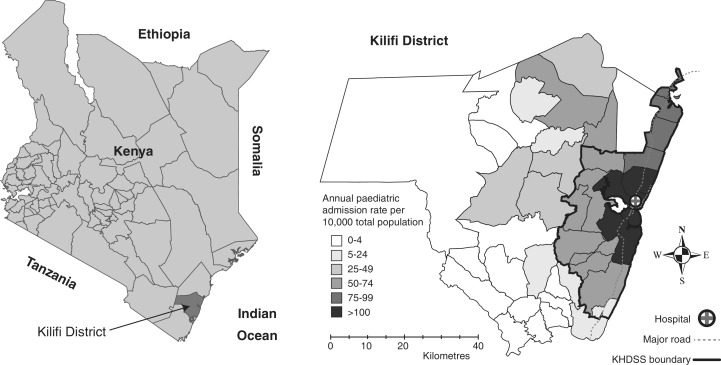
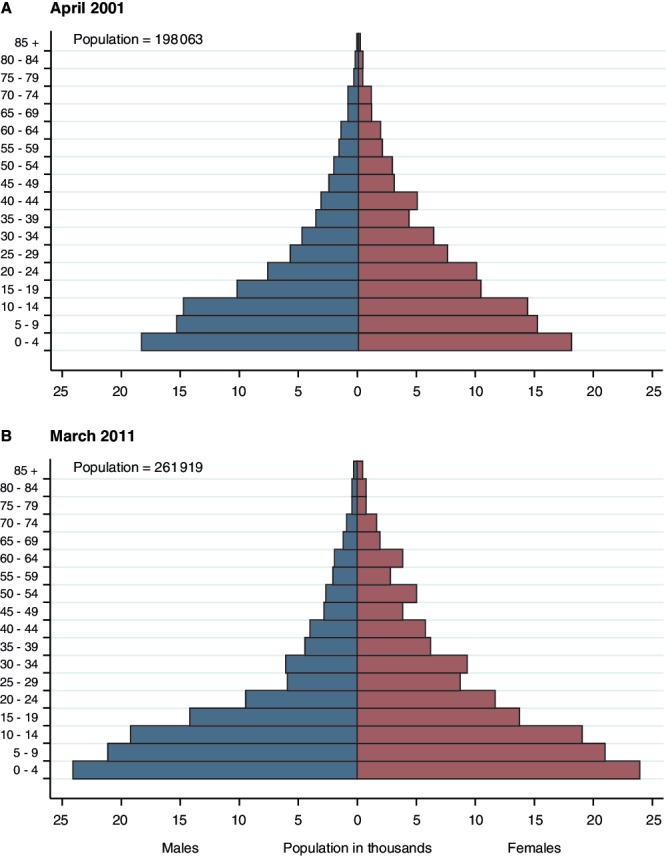
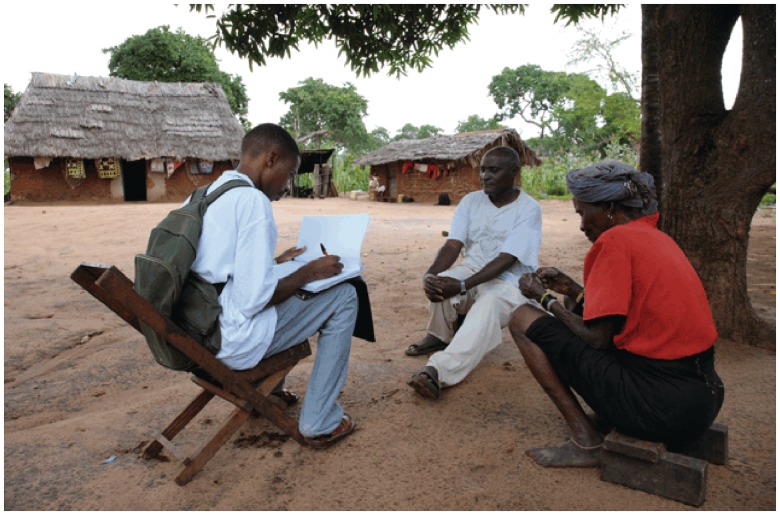
The Kilifi Health and Demographic Surveillance System (KHDSS), located on the Indian Ocean coast of Kenya, was established in 2000 as a record of births, pregnancies, migration events and deaths and is maintained by 4-monthly household visits. The study area was selected to capture the majority of patients admitted to Kilifi District Hospital. The KHDSS has 260 000 residents and the hospital admits 4400 paediatric patients and 3400 adult patients per year. At the hospital, morbidity events are linked in real time by a computer search of the population register. Linked surveillance was extended to KHDSS vaccine clinics in 2008. KHDSS data have been used to define the incidence of hospital presentation with childhood infectious diseases (e.g. rotavirus diarrhoea, pneumococcal disease), to test the association between genetic risk factors (e.g. thalassaemia and sickle cell disease) and infectious diseases, to define the community prevalence of chronic diseases (e.g. epilepsy), to evaluate access to health care and to calculate the operational effectiveness of major public health interventions (e.g. conjugate Haemophilus influenzae type b vaccine). Rapport with residents is maintained through an active programme of community engagement. A system of collaborative engagement exists for sharing data on survival, morbidity, socio-economic status and vaccine coverage.
基利菲健康和人口监测系统(KHDSS)位于肯尼亚印度洋沿岸,于 2000 年成立,用于记录出生、怀孕、迁移事件和死亡情况,并通过每四个月一次的家访进行维护。研究区域的选择旨在涵盖大多数送往基利菲地区医院的患者。KHDSS 拥有 26 万居民,医院每年收治 4400 名儿科患者和 3400 名成年患者。在医院,通过计算机搜索人口登记册,实时关联发病事件。2008 年,关联监测扩展到 KHDSS 疫苗接种诊所。KHDSS 数据已用于定义儿童传染病(如轮状病毒腹泻、肺炎球菌病)在医院就诊的发病率,检验遗传风险因素(如地中海贫血和镰状细胞病)与传染病之间的关联,定义慢性病(如癫痫)的社区流行率,评估获得医疗保健的机会,并计算重大公共卫生干预措施(如结合型流感嗜血杆菌 b 疫苗)的运营效果。通过积极的社区参与计划与居民保持联系。还存在一个协作参与系统,用于共享关于生存、发病率、社会经济地位和疫苗接种覆盖率的数据。