Department of Pathology, University of Washington, Box 357470, 1959 NE Pacific Street, Seattle, WA, USA.
Malar J. 2012 May 3;11:150. doi: 10.1186/1475-2875-11-150.
Data on efficacy of artemisinin-based combination therapy (ACT) to treat Plasmodium falciparum during pregnancy in sub-Saharan Africa is scarce. A recent open label, randomized controlled trial in Mbarara, Uganda demonstrated that artemether-lumefantrine (AL) is not inferior to quinine to treat uncomplicated malaria in pregnancy. Haemozoin can persist in the placenta following clearance of parasites, however there is no data whether ACT can influence the amount of haemozoin or the dynamics of haemozoin clearance.
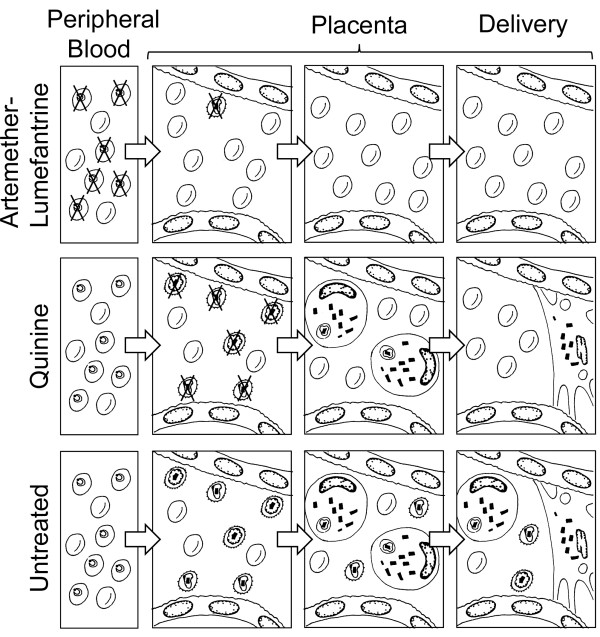
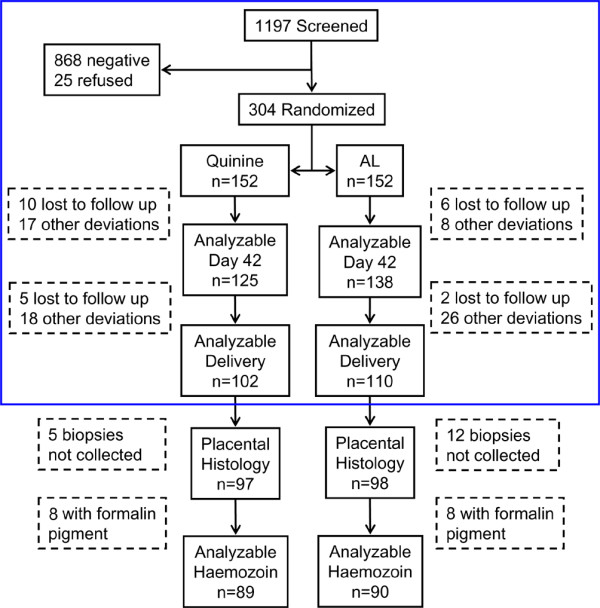
Women attending antenatal clinics with weekly screening and positive blood smears by microscopy were eligible to participate in the trial and were followed to delivery. Placental haemozoin deposition and inflammation were assessed by histology. To determine whether AL was associated with increased haemozoin clearance, population haemozoin clearance curves were calculated based on the longitudinal data.
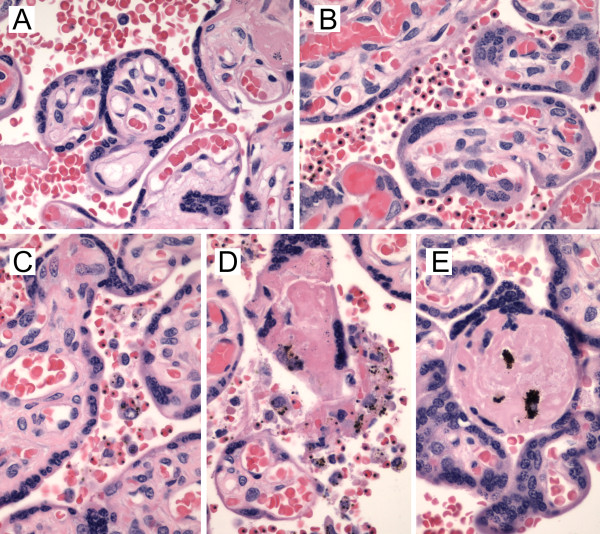
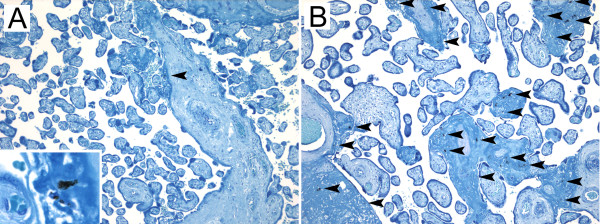
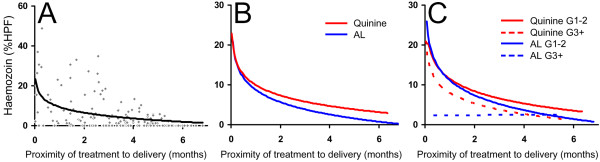
Of 152 women enrolled in each arm, there were 97 and 98 placental biopsies obtained in the AL and quinine arms, respectively. AL was associated with decreased rates of moderate to high grade haemozoin deposition (13.3% versus 25.8%), which remained significant after correcting for gravidity, time of infection, re-infection, and parasitaemia. The amount of haemozoin proportionately decreased with the duration of time between treatment and delivery and this decline was greater in the AL arm. Haemozoin was not detected in one third of biopsies and the prevalence of inflammation was low, reflecting the efficacy of antenatal care with early detection and prompt treatment of malaria.
Placental haemozoin deposition was decreased in the AL arm demonstrating a relationship between pharmacological properties of drug to treat antenatal malaria and placental pathology at delivery. Histology may be considered an informative outcome for clinical trials to evaluate malaria control in pregnancy.
在撒哈拉以南非洲,有关青蒿素为基础的联合疗法(ACT)治疗妊娠期间恶性疟原虫的疗效的数据很少。最近在乌干达姆巴拉拉进行的一项开放性标签、随机对照试验表明,青蒿琥酯-咯萘啶(AL)在治疗妊娠合并疟疾时并不逊于奎宁。然而,尚无数据表明 ACT 是否能影响疟原虫清除后血红素的含量或血红素清除的动力学。
在每周筛查并通过显微镜检查发现阳性血涂片的孕妇参加了这项试验,并一直随访到分娩。通过组织学评估胎盘血红素沉积和炎症。为了确定 AL 是否与血红素清除增加有关,基于纵向数据计算了人群血红素清除曲线。
在每个治疗组中,有 152 名孕妇参加,其中 AL 组和奎宁组分别获得了 97 和 98 例胎盘活检。AL 组中,中重度血红素沉积的发生率降低(13.3%比 25.8%),校正妊娠次数、感染时间、再感染和寄生虫血症后仍然显著。血红素的含量与从治疗到分娩的时间呈比例下降,且在 AL 组中下降更大。三分之一的活检中未检测到血红素,炎症的发生率较低,这反映了产前保健的效果,能及早发现并及时治疗疟疾。
AL 组的胎盘血红素沉积减少,这表明治疗产前疟疾的药物的药理学特性与分娩时的胎盘病理之间存在关系。组织学可能被认为是评估妊娠期间疟疾控制的临床试验的一个有价值的结局。