Department of Psychiatry & Behavioral Sciences, Stanford University, Stanford, California, United States of America.
PLoS One. 2012;7(4):e33069. doi: 10.1371/journal.pone.0033069. Epub 2012 Apr 25.
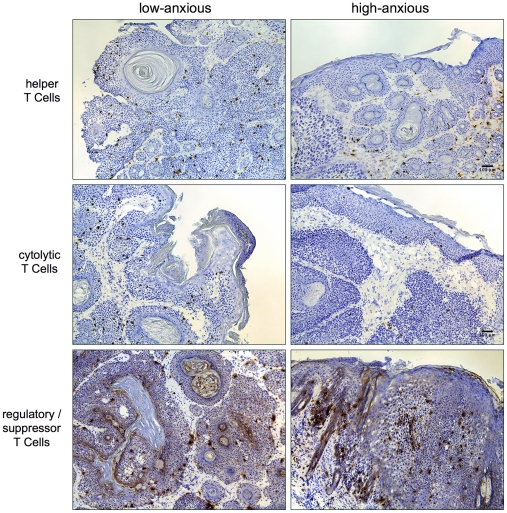
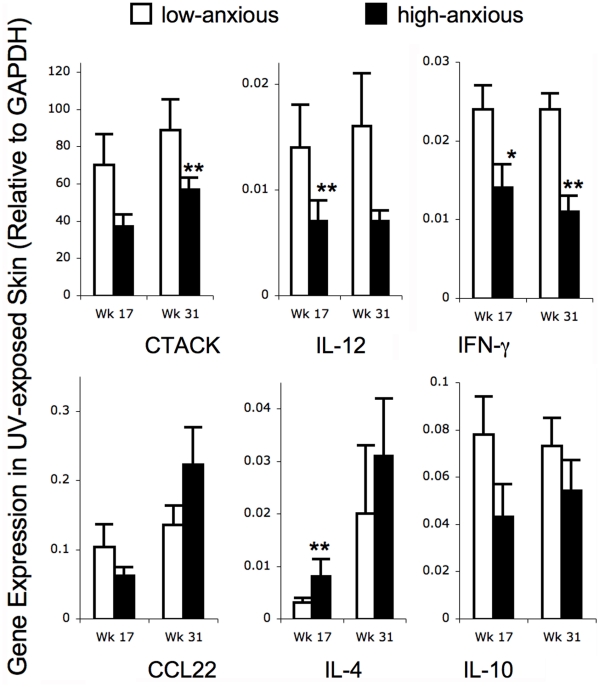
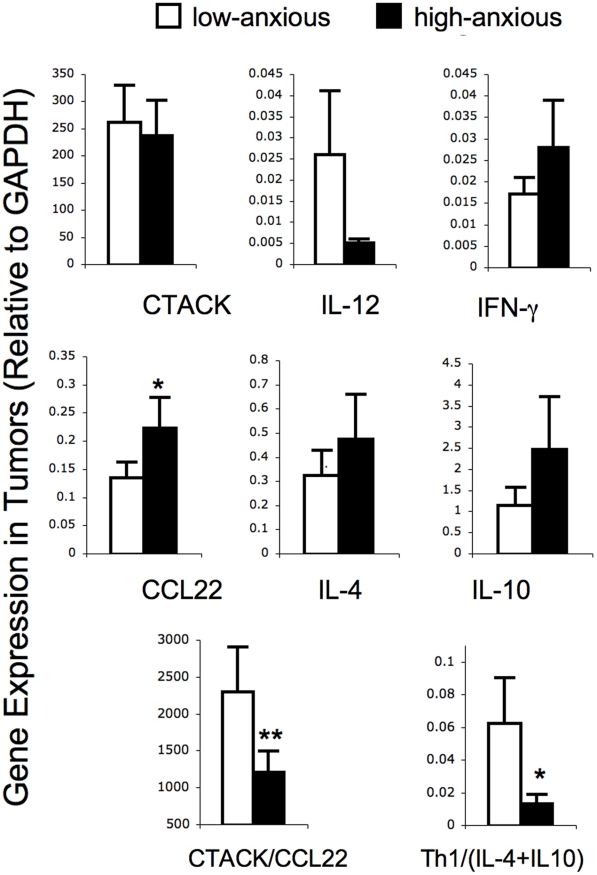
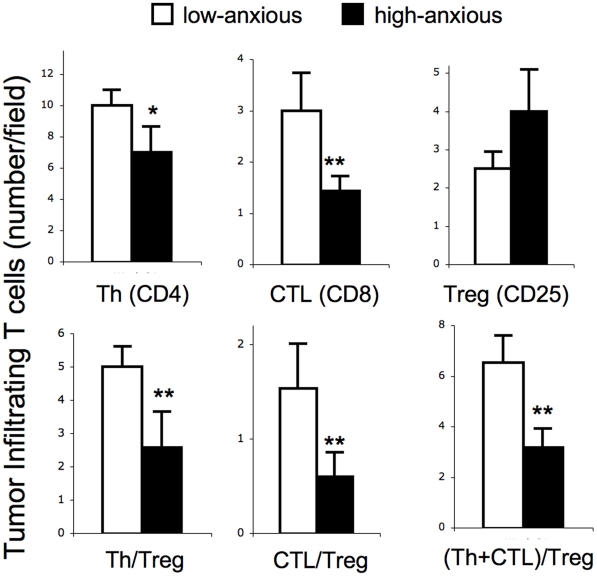
In spite of widespread anecdotal and scientific evidence much remains to be understood about the long-suspected connection between psychological factors and susceptibility to cancer. The skin is the most common site of cancer, accounting for nearly half of all cancers in the US, with approximately 2-3 million cases of non-melanoma cancers occurring each year worldwide. We hypothesized that a high-anxious, stress-prone behavioral phenotype would result in a higher chronic stress burden, lower protective-immunity, and increased progression of the immuno-responsive skin cancer, squamous cell carcinoma. SKH1 mice were phenotyped as high- or low-anxious at baseline, and subsequently exposed to ultraviolet-B light (1 minimal erythemal dose (MED), 3 times/week, 10-weeks). The significant strengths of this cancer model are that it uses a normal, immunocompetent, outbred strain, without surgery/injection of exogenous tumor cells/cell lines, and produces lesions that resemble human tumors. Tumors were counted weekly (primary outcome), and tissues collected during early and late phases of tumor development. Chemokine/cytokine gene-expression was quantified by PCR, tumor-infiltrating helper (Th), cytolytic (CTL), and regulatory (Treg) T cells by immunohistochemistry, lymph node T and B cells by flow cytometry, adrenal and plasma corticosterone and tissue vascular-endothelial-growth-factor (VEGF) by ELISA. High-anxious mice showed a higher tumor burden during all phases of tumor development. They also showed: higher corticosterone levels (indicating greater chronic stress burden), increased CCL22 expression and Treg infiltration (increased tumor-recruited immuno-suppression), lower CTACK/CCL27, IL-12, and IFN-γ gene-expression and lower numbers of tumor infiltrating Th and CTLs (suppressed protective immunity), and higher VEGF concentrations (increased tumor angiogenesis/invasion/metastasis). These results suggest that the deleterious effects of high trait anxiety could be: exacerbated by life-stressors, accentuated by the stress of cancer diagnosis/treatment, and mediate increased tumor progression and/or metastasis. Therefore, it may be beneficial to investigate the use of chemotherapy-compatible anxiolytic treatments immediately following cancer diagnosis, and during cancer treatment/survivorship.
尽管有大量传闻和科学证据表明,心理因素与癌症易感性之间的长期可疑联系还有待了解。皮肤是最常见的癌症部位,占美国所有癌症的近一半,全球每年约有 2-300 万例非黑素瘤癌症。我们假设,高焦虑、易紧张的行为表型会导致更高的慢性应激负担、更低的保护性免疫和增加免疫反应性皮肤癌(鳞状细胞癌)的进展。SKH1 小鼠在基线时被表型化为高焦虑或低焦虑,然后暴露于紫外线-B 光(1 个最小红斑剂量(MED),每周 3 次,持续 10 周)。该癌症模型的显著优势在于它使用正常的、免疫功能正常的、杂交的品系,无需手术/注射外源性肿瘤细胞/细胞系,并且产生的病变类似于人类肿瘤。每周计数肿瘤(主要结局),并在肿瘤发展的早期和晚期收集组织。通过 PCR 定量趋化因子/细胞因子基因表达,通过免疫组织化学定量肿瘤浸润辅助(Th)、细胞毒性(CTL)和调节(Treg)T 细胞,通过流式细胞术定量淋巴结 T 和 B 细胞,通过 ELISA 定量肾上腺和血浆皮质酮和组织血管内皮生长因子(VEGF)。高焦虑小鼠在肿瘤发展的所有阶段都表现出更高的肿瘤负担。他们还表现出:更高的皮质酮水平(表明更大的慢性应激负担)、CCL22 表达和 Treg 浸润增加(增加肿瘤募集的免疫抑制)、CCL27、IL-12 和 IFN-γ 基因表达降低和肿瘤浸润 Th 和 CTL 数量减少(抑制保护性免疫)以及 VEGF 浓度升高(增加肿瘤血管生成/浸润/转移)。这些结果表明,高特质焦虑的有害影响可能是:生活应激源加剧,癌症诊断/治疗的应激加重,并介导肿瘤进展和/或转移增加。因此,在癌症诊断后和癌症治疗/生存期间,立即使用与化疗兼容的抗焦虑治疗进行研究可能是有益的。