Section of Behavioural Pharmacology, Institute of Psychiatry P048, King's College London, De Crespigny Park, London, SE5 8AF, UK.
Psychopharmacology (Berl). 2012 Oct;223(4):401-15. doi: 10.1007/s00213-012-2728-7. Epub 2012 May 5.
Prenatal exposure to nicotine has been linked to accelerated risk for different psychiatric disorders, including conduct disorder, attention deficit hyperactivity disorder (ADHD) and drug abuse. We examine a potential link between prenatal nicotine exposure, hyperactivity, anxiety, nicotine consumption, and cognitive performance in rats.
Adolescent offspring of females exposed during pregnancy to 0.06 mg/ml nicotine solution as the only source of water and of a group of pair-fed females, used as a control for anorexic effects of nicotine, were evaluated in a battery of tests, including locomotor activity, the elevated plus maze, two-bottle free-choice nicotine solution consumption, the five-choice serial reaction time test (5-CSRTT) and a delay-discounting test. All tests were conducted between postnatal day (PND) 25 and PND 50.
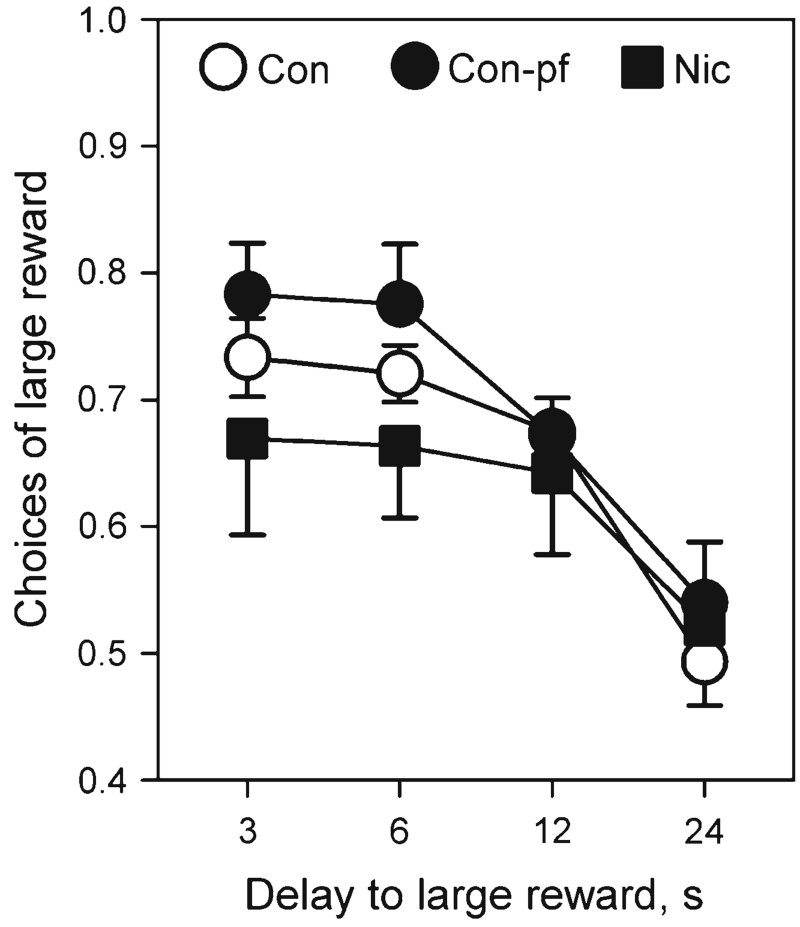
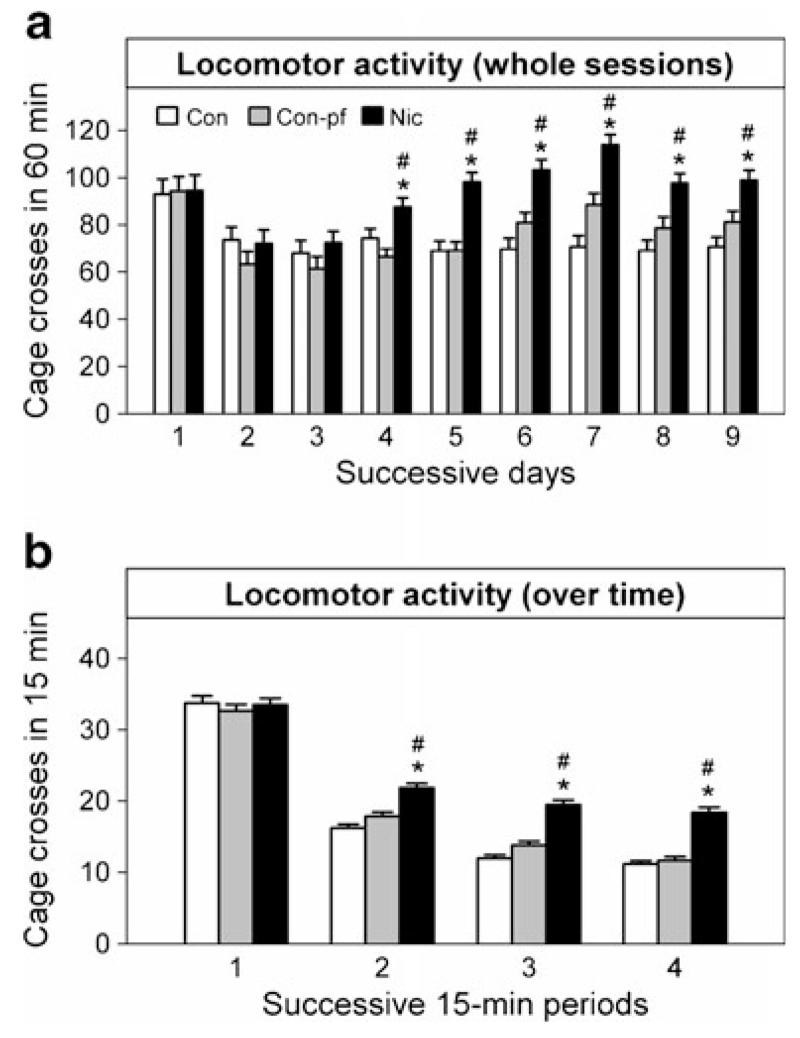
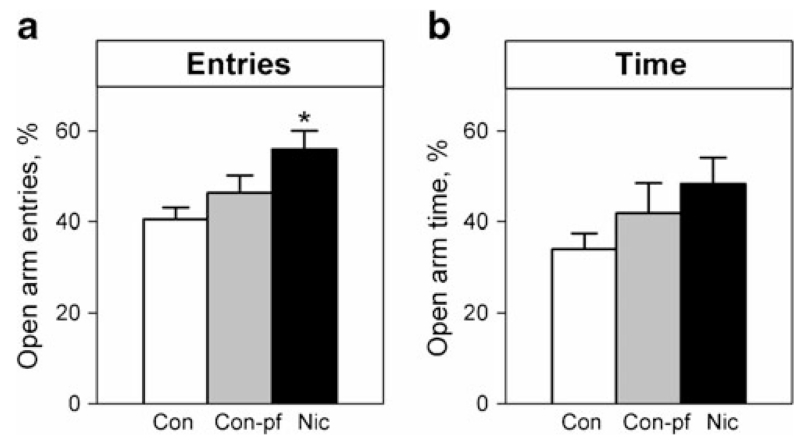
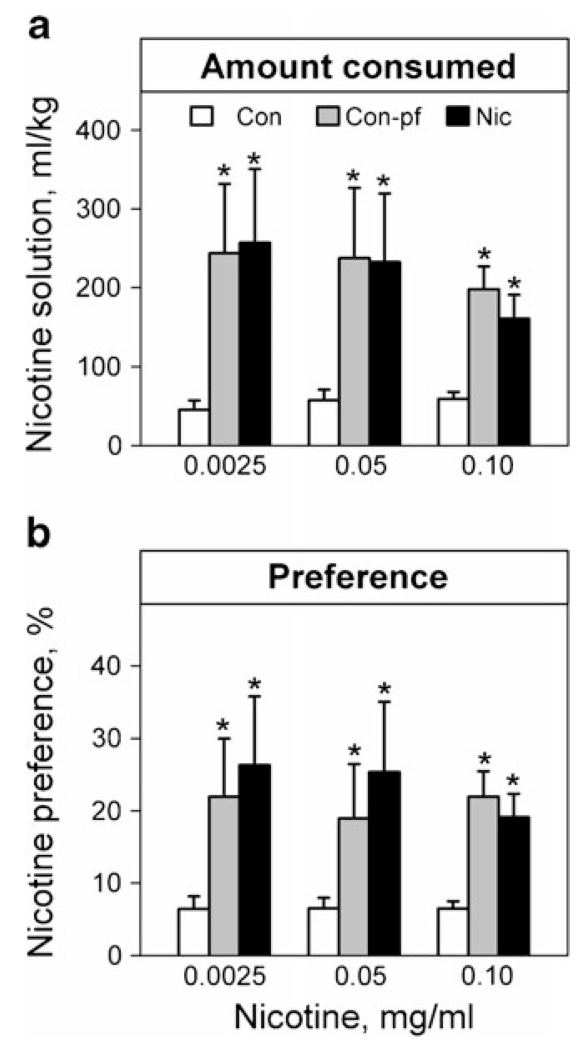
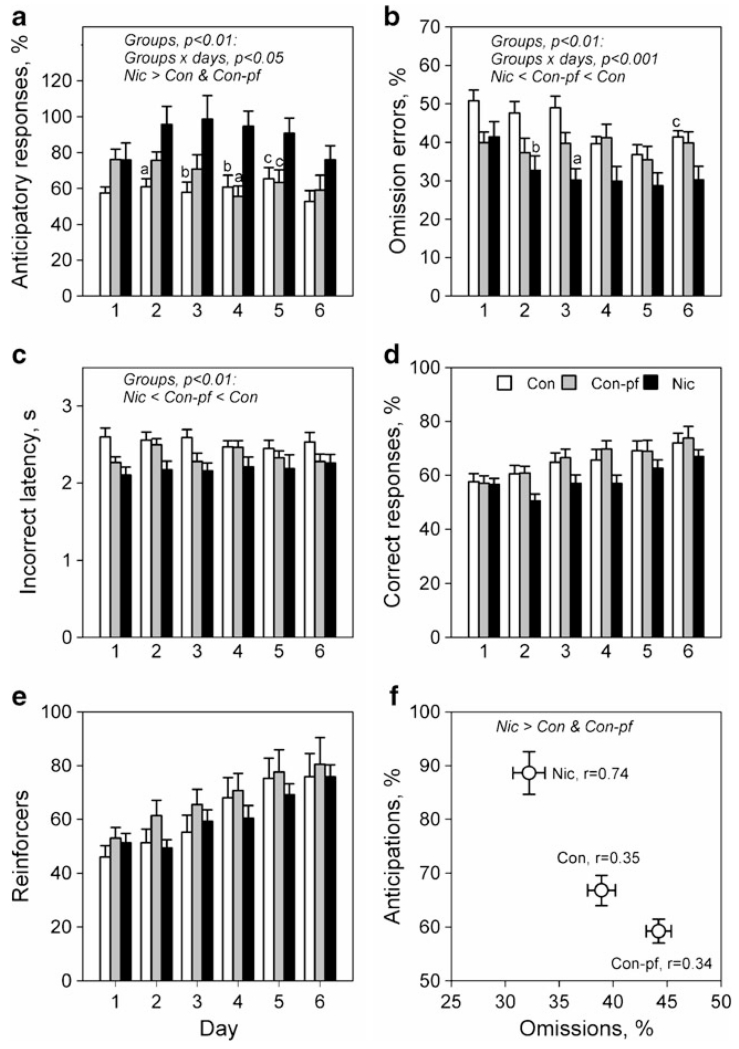
Nicotine-exposed animals expressed hyperactivity, increased number of open arms entries in the elevated plus maze and increased numbers of anticipatory responses in the 5-CSRTT. Decreased aversion for nicotine solution in the free-choice test and decreased numbers of omission errors in the 5-CSRTT were observed both in nicotine-exposed and pair-fed offspring. Neither nicotine exposure nor pair-feeding had an effect on impulsive choice in a delay-discounting test.
Our study confirms deleterious effects of prenatal nicotine exposure on important aspects of behaviour and inhibitory control in adolescent rats and supports epidemiological findings that show increased levels of symptoms of ADHD and related disorders among those whose mothers smoked during their pregnancy. It also suggests a link between food restriction during pregnancy and addiction-related behaviours in offspring.
产前接触尼古丁与多种精神疾病的风险加速有关,包括品行障碍、注意缺陷多动障碍(ADHD)和药物滥用。我们研究了产前尼古丁暴露与大鼠多动、焦虑、尼古丁消耗和认知表现之间的潜在联系。
在怀孕期间暴露于 0.06mg/ml 尼古丁溶液中的雌性的青少年后代,以及一组作为尼古丁厌食作用对照的配对喂养雌性的后代,在一系列测试中进行评估,包括运动活动、高架十字迷宫、双瓶自由选择尼古丁溶液消耗、五选择连续反应时间测试(5-CSRTT)和延迟折扣测试。所有测试均在产后第 25 天至第 50 天之间进行。
尼古丁暴露的动物表现出多动、高架十字迷宫中进入开放臂的次数增加,5-CSRTT 中预期反应的次数增加。在自由选择测试中,尼古丁暴露和配对喂养的后代都观察到对尼古丁溶液的厌恶程度降低,5-CSRTT 中的遗漏错误数量减少。延迟折扣测试中,尼古丁暴露或配对喂养都没有对冲动选择产生影响。
我们的研究证实了产前尼古丁暴露对青少年大鼠行为和抑制控制的重要方面产生了有害影响,并支持了流行病学研究结果,即母亲在怀孕期间吸烟的人群中,ADHD 及相关障碍的症状水平增加。它还表明,怀孕期间的食物限制与后代的成瘾行为之间存在联系。