National Research Institute of Aquaculture, Fisheries Research Agency, Minamiise 519-0423, Japan.
Viruses. 2012 Apr;4(4):521-38. doi: 10.3390/v4040521. Epub 2012 Apr 10.
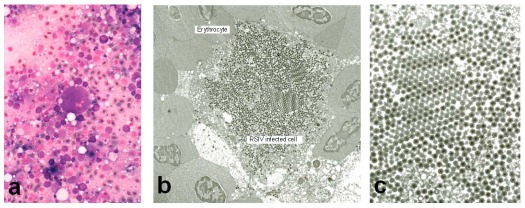
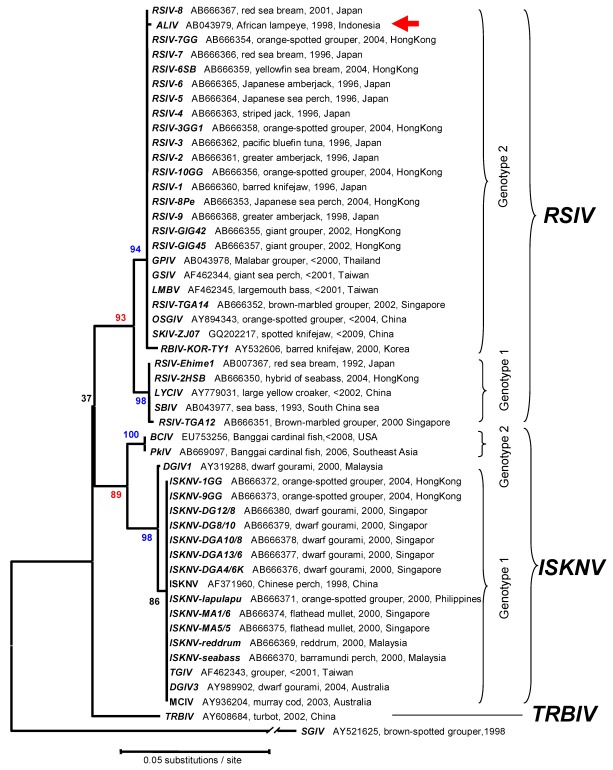
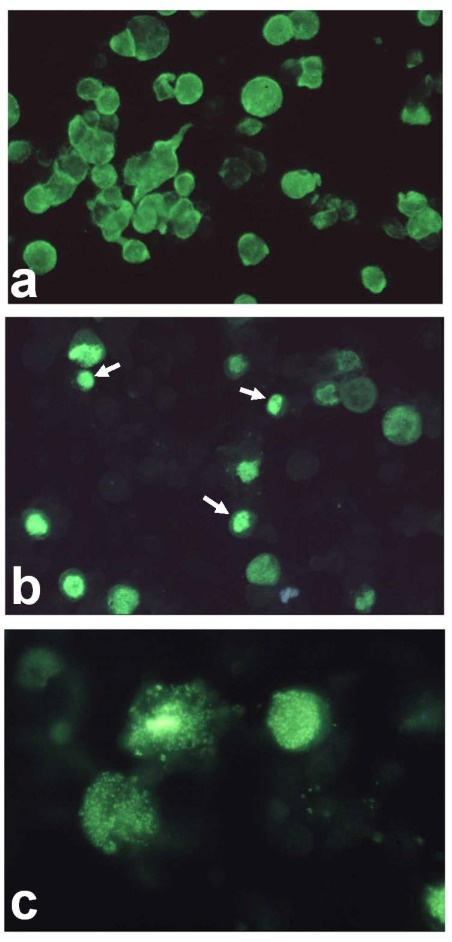
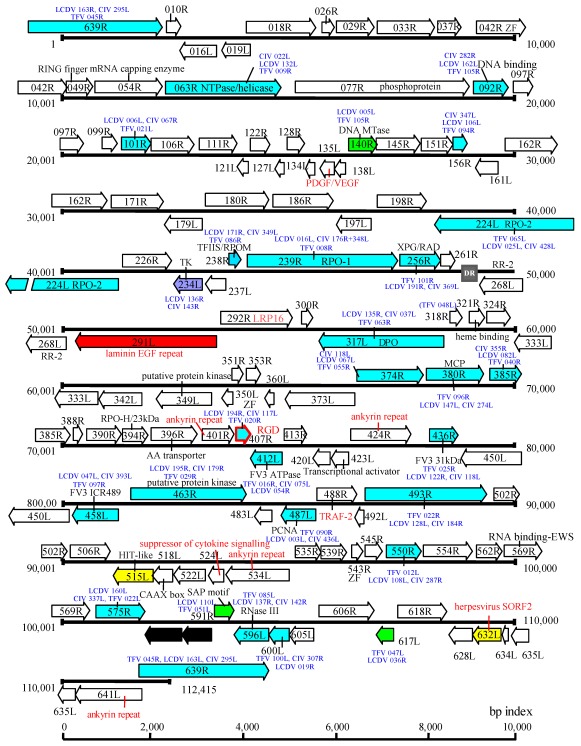
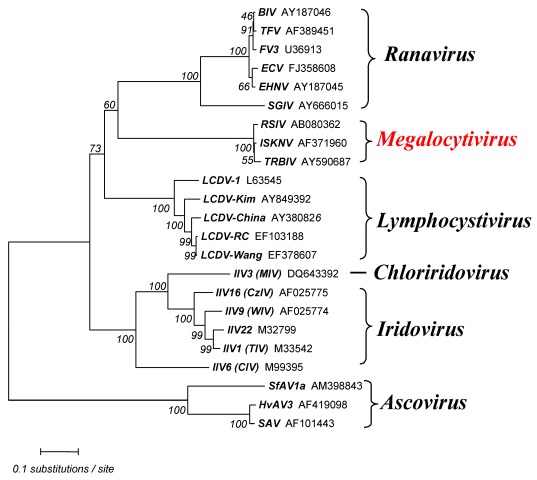
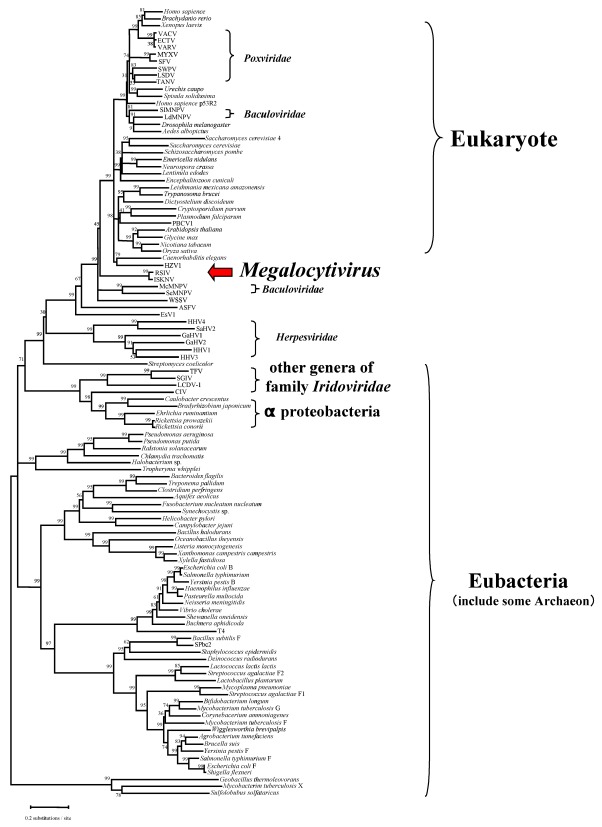
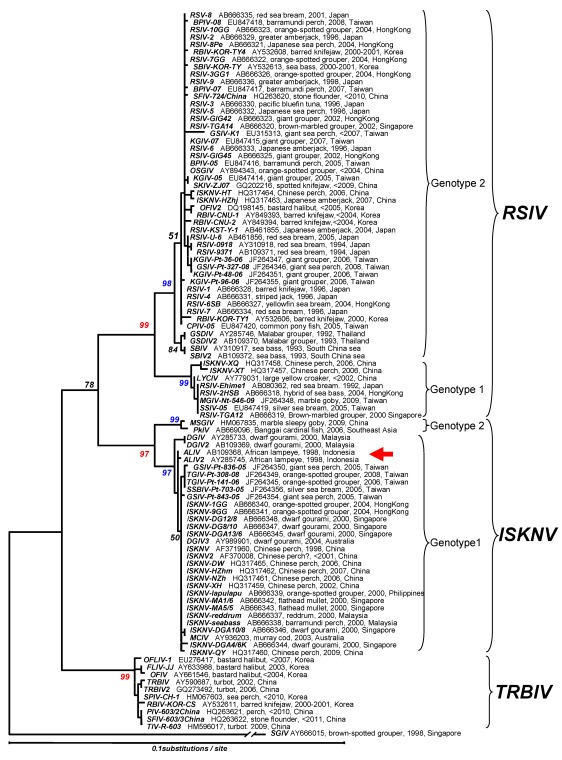
The genus Megalocytivirus, represented by red sea bream iridovirus (RSIV), the first identified and one of the best characterized megalocytiviruses, Infectious spleen and kidney necrosis virus (ISKNV), the type species of the genus, and numerous other isolates, is the newest genus within the family Iridoviridae. Viruses within this genus are causative agents of severe disease accompanied by high mortality in multiple species of marine and freshwater fish. To date outbreaks of megalocytivirus-induced disease have occurred primarily in south-east Asia and Japan, but infections have been detected in Australia and North America following the importation of infected ornamental fish. The first outbreak of megalocytiviral disease was recorded in cultured red sea bream (Pagrus major) in Japan in 1990 and was designated red sea bream iridovirus disease (RSIVD). Following infection fish became lethargic and exhibited severe anemia, petechiae of the gills, and enlargement of the spleen. Although RSIV was identified as an iridovirus, sequence analyses of RSIV genes revealed that the virus did not belong to any of the four known genera within the family Iridoviridae. Thus a new, fifth genus was established and designated Megalocytivirus to reflect the characteristic presence of enlarged basophilic cells within infected organs. Indirect immunofluorescence tests employing recently generated monoclonal antibodies and PCR assays are currently used in the rapid diagnosis of RSIVD. For disease control, a formalin-killed vaccine was developed and is now commercially available in Japan for several fish species. Following the identification of RSIV, markedly similar viruses such as infectious spleen and kidney necrosis virus (ISKNV), dwarf gourami iridovirus (DGIV), turbot reddish body iridovirus (TRBIV), Taiwan grouper iridovirus (TGIV), and rock bream iridovirus (RBIV) were isolated in East and Southeast Asia. Phylogenetic analyses of the major capsid protein (MCP) and ATPase genes indicated that although these viruses shared considerable sequence identity, they could be divided into three tentative species, represented by RSIV, ISKNV and TRBIV, respectively. Whole genome analyses have been reported for several of these viruses. Sequence analysis detected a characteristic difference in the genetic composition of megalocytiviruses and other members of the family in reference to the large and small subunits of ribonucleotide reductase (RR-1, RR‑2). Megalocytiviruses contain only the RR-2 gene, which is of eukaryotic origin; whereas the other genera encode both the RR-1 and RR-2 genes which are thought to originate from Rickettsia-like α-proteobacteria.
该属 Megalocytivirus,以真鲷虹彩病毒 (RSIV) 为代表,是第一个被鉴定和研究最充分的巨型病毒之一,传染性脾坏死病毒 (ISKNV) 是该属的模式种,以及许多其他分离株,是虹彩病毒科的最新属。该属中的病毒是多种海洋和淡水鱼类严重疾病的病原体,伴有高死亡率。迄今为止,巨细胞病毒引起的疾病爆发主要发生在东南亚和日本,但在进口受感染的观赏鱼后,在澳大利亚和北美也检测到了感染。1990 年,日本养殖真鲷(Pagrus major)中首次记录到巨细胞病毒病暴发,被命名为真鲷虹彩病毒病 (RSIVD)。感染后,鱼变得昏昏欲睡,表现出严重贫血、鳃上瘀点和脾脏肿大。尽管 RSIV 被鉴定为虹彩病毒,但 RSIV 基因的序列分析表明,该病毒不属于虹彩病毒科的四个已知属之一。因此,建立了一个新的第五个属,并命名为 Megalocytivirus,以反映感染器官中存在特征性的增大嗜碱性细胞。最近生成的单克隆抗体的间接免疫荧光试验和 PCR 检测目前用于 RSIVD 的快速诊断。为了控制疾病,已开发出福尔马林灭活疫苗,目前在日本几种鱼类中商业使用。在鉴定出 RSIV 之后,在东亚和东南亚也分离出了非常相似的病毒,如传染性脾坏死病毒 (ISKNV)、 dwarf gourami 虹彩病毒 (DGIV)、牙鲆虹彩病毒 (TRBIV)、台湾石斑鱼虹彩病毒 (TGIV) 和赤点石斑鱼虹彩病毒 (RBIV)。主要衣壳蛋白 (MCP) 和 ATP 酶基因的系统发育分析表明,尽管这些病毒具有相当高的序列同一性,但它们可以分为三个暂定种,分别代表 RSIV、ISKNV 和 TRBIV。已报道了其中几种病毒的全基因组分析。序列分析检测到巨细胞病毒和家族其他成员在核苷酸还原酶 (RR-1、RR-2) 的大、小亚基的遗传组成上存在特征差异。巨细胞病毒仅包含 RR-2 基因,该基因具有真核起源;而其他属则编码 RR-1 和 RR-2 基因,据认为这些基因起源于立克次体样 α-变形菌。