Department of Neurology, University of Pennsylvania, Philadelphia, PA 19104-4283, USA.
Lancet Neurol. 2012 Jun;11(6):545-55. doi: 10.1016/S1474-4422(12)70099-6. Epub 2012 May 16.
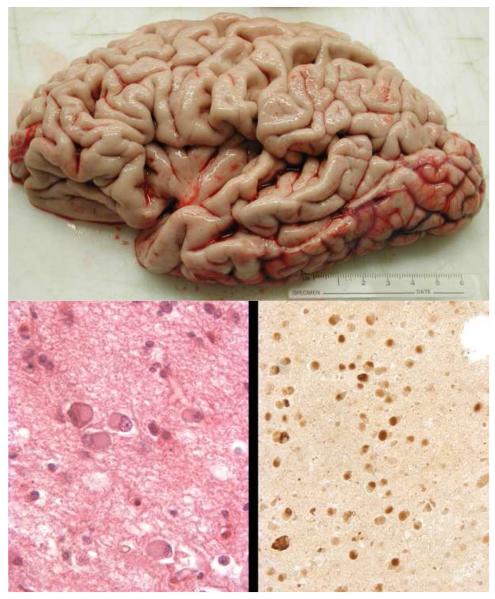
The non-fluent/agrammatic variant of primary progressive aphasia (naPPA) is a young-onset neurodegenerative disorder characterised by poor grammatical comprehension and expression and a disorder of speech sound production. In an era of disease-modifying treatments, the identification of naPPA might be an important step in establishing a specific cause of neurodegenerative disease. However, difficulties in defining the characteristic language deficits and heterogeneity in the anatomical distribution of disease in naPPA have led to controversy. Findings from imaging studies have linked an impairment of this uniquely human language capacity with disruption of large-scale neural networks centred in left inferior frontal and anterior superior temporal regions. Accordingly, the pathological burden of disease in naPPA is anatomically focused in these regions. Most cases of naPPA are associated with the spectrum of pathological changes found in frontotemporal lobar degeneration involving the microtubule-associated protein tau. Knowledge of these unique clinical-pathological associations should advance care for patients with this important class of neurodegenerative diseases while supplementing our knowledge of human cognitive neuroscience.
原发性进行性失语非流利/语法障碍型(naPPA)是一种年轻起病的神经退行性疾病,其特征为语法理解和表达能力差,以及语音产生障碍。在疾病修饰治疗的时代,确定 naPPA 可能是确定神经退行性疾病特定病因的重要步骤。然而,由于定义特征性语言缺陷的困难以及 naPPA 中疾病的解剖分布异质性,导致了争议。影像学研究的结果将这种独特的人类语言能力的损伤与以左侧下额和前上颞区为中心的大规模神经网络的破坏联系起来。因此,naPPA 的疾病病理负担在这些区域具有解剖学上的重点。大多数 naPPA 病例与额颞叶变性中发现的与微管相关蛋白 tau 相关的病理变化谱相关。这些独特的临床病理关联的知识应该在为这些重要类别的神经退行性疾病患者提供护理的同时,补充我们对人类认知神经科学的认识。