Fred Hutchinson Cancer Research Center, 1100 Fairview Avenue N. M3-B232, Seattle, WA, 98109, USA,
Int J Behav Med. 2013 Sep;20(3):450-60. doi: 10.1007/s12529-012-9243-4.
Although the impact of stigma has been highlighted for epileptic populations, the experiences of people living with other neurological conditions have been less studied.
In order to promote research on stigma among people with neurological conditions, we sought to develop and psychometrically validate an eight-item questionnaire measuring internalised and enacted stigma experienced by people with epilepsy, multiple sclerosis (MS), Parkinson's disease (PD), stroke and amyotrophic lateral sclerosis (ALS).
We used item response theory methodologies to select items and field tested our items with 587 participants from eight academic medical centres across the USA.
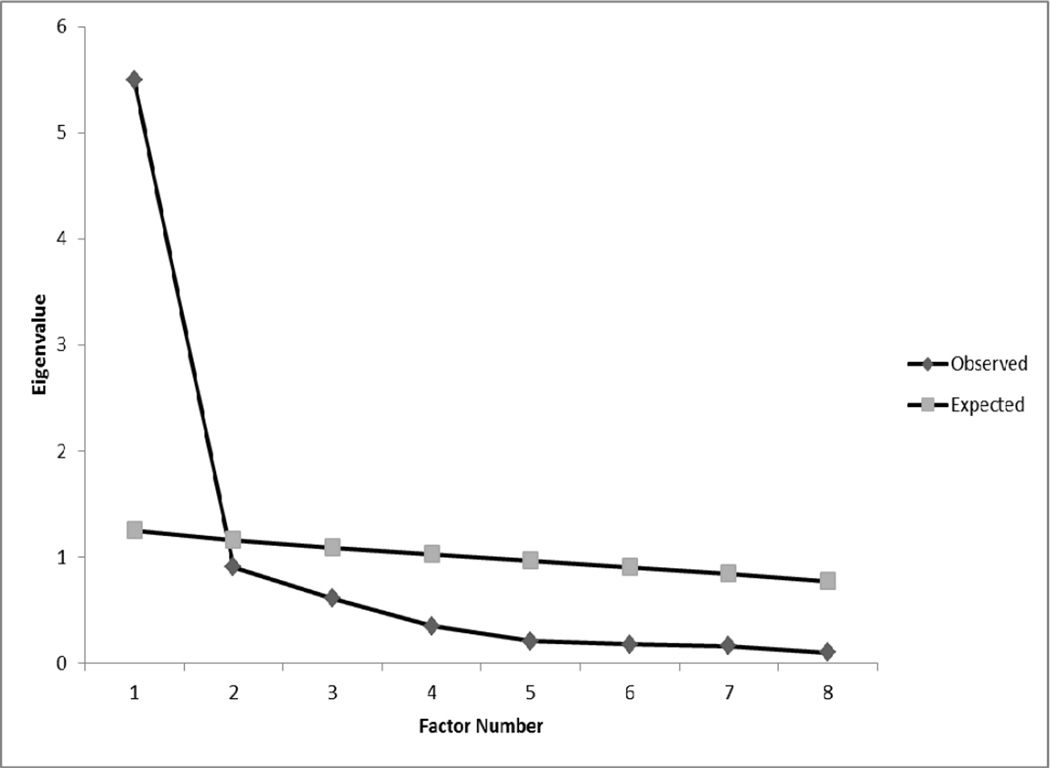
We conducted exploratory and confirmatory factor analysis as well as examined the scale's reliability and validity. In addition, we conducted an analysis of variance test to examine mean total score differences across the five neurological conditions. Data from people across conditions revealed that the shortened instrument conformed to an essentially unidimensional model of multifaceted stigma as a one-factor questionnaire with correlated residuals on a pair of items that distinctly measured internalised stigma.
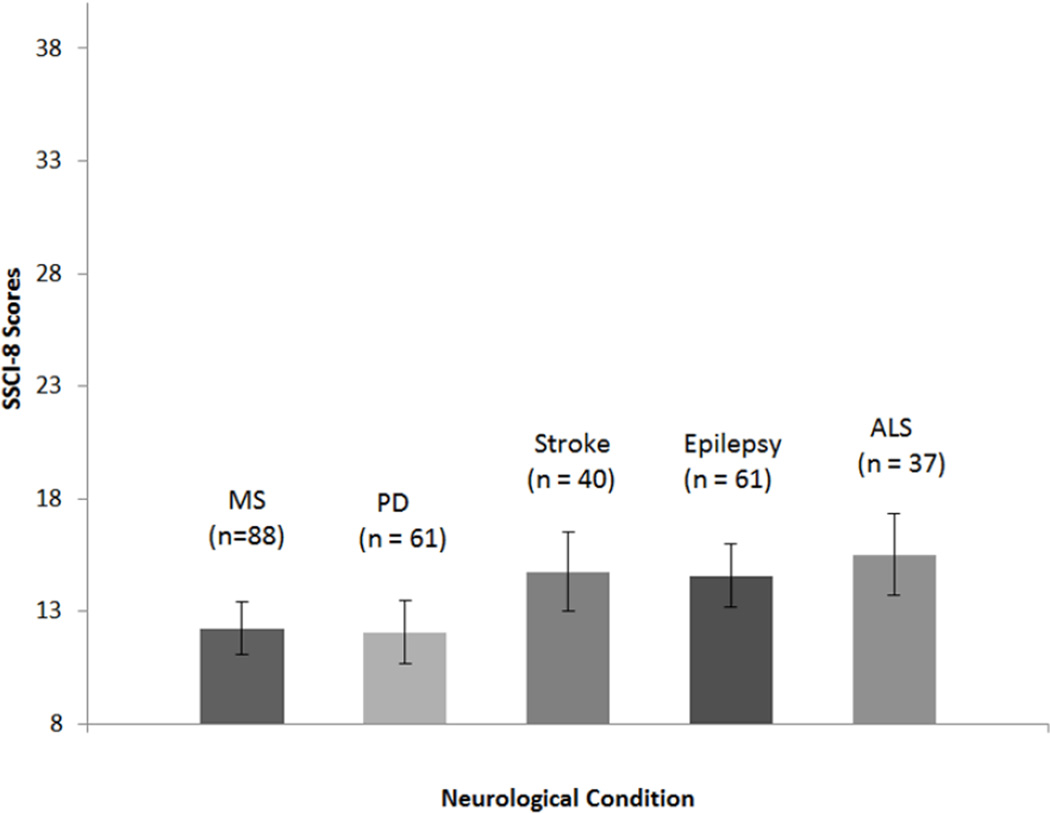
Preliminary evidence suggests that the Stigma Scale for Chronic Illness 8-item version fits a unidimensional model, which assesses enacted and internalised stigma, and has adequate internal consistency/reliability and validity in relation to psychological distress and patient performance. Our results suggest fairly low stigma for neurological populations. In addition, our results suggest that stigma may be more severe for patients with ALS relative to those with MS and PD. In the future, the SSCI-8 scale could be used practically in clinic settings to examine stigma without the patient burden associated with lengthier scales.
尽管癫痫患者群体的污名问题已得到强调,但其他神经疾病患者的相关经历却研究较少。
为了促进神经疾病患者污名问题的研究,我们旨在开发并对 8 项用于测量癫痫、多发性硬化症(MS)、帕金森病(PD)、中风和肌萎缩侧索硬化症(ALS)患者内化和外显污名的问卷进行心理测量学验证。
我们使用项目反应理论方法选择项目,并在美国 8 个学术医疗中心对 587 名参与者进行了现场测试。
我们进行了探索性和验证性因子分析,以及对该量表的信度和效度进行了检验。此外,我们还进行了方差分析,以检验五种神经疾病的总平均得分差异。来自各种疾病患者的数据表明,该简化量表符合多维污名的基本单维模型,作为一个具有相关残差的单因素问卷,一对明显测量内化污名的项目。
初步证据表明,慢性疾病污名量表 8 项版本适合于评估外显和内化污名的单维模型,并且与心理困扰和患者表现相关,具有足够的内部一致性/信度和效度。我们的研究结果表明,神经疾病患者的污名程度较低。此外,我们的研究结果表明,与 MS 和 PD 患者相比,ALS 患者的污名可能更为严重。未来,SSCI-8 量表可以在临床环境中实际使用,而不会因冗长的量表而给患者带来负担,从而评估污名问题。