Gamaleya Research Institute of Epidemiology and Microbiology, Russian Academy of Medical Sciences.
Acta Naturae. 2010 Jul;2(3):21-9.
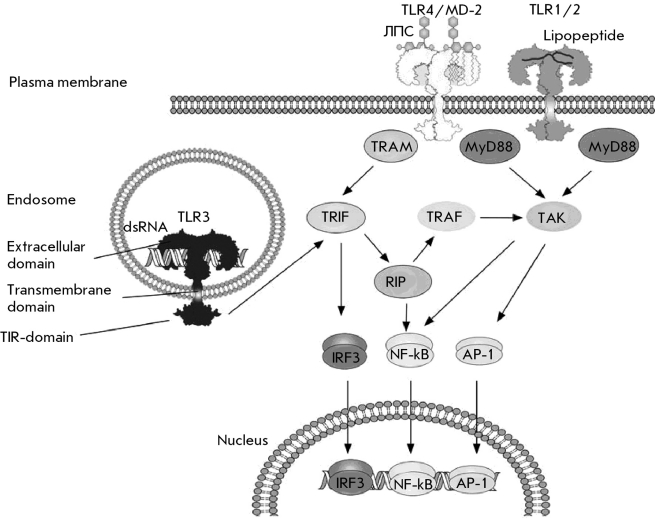
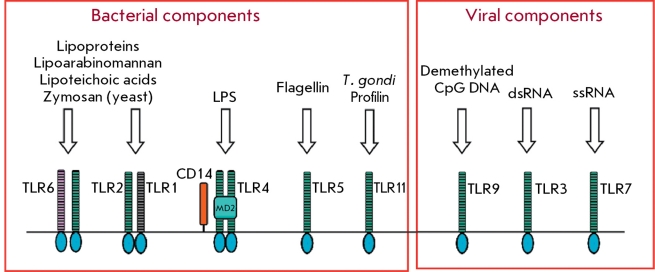
Toll-like receptors (TLRs) are major components of the innate immune system that recognize the conserved molecular structures of pathogens (pathogen-associated molecular patterns; PAMPs). TLRs are found in many different cell types, ranging from epithelial to immunocompetent cells. TLR binding triggers the expression of several adapter proteins and downstream kinases, leading to the induction of key pro-inflammatory mediators. This results in the activation of both the innate immune response (elevated expression of antiapoptotic proteins, proinflammatory cytokines, and antibacterial proteins), as well as the adaptive immune response (maturation of the dendritic cells, antigen presentation, etc.). In consequence of their ability to enhance the specific and nonspecific immune reactions of an organism, TLR agonists are widely used in the therapy of infectious diseases and, as adjuvants, in the therapy of malignant neoplasia. However, to date, TLRs have had the opposite effects on tumor progression. On the one hand, TLR ligands can suppress tumor growth. On the other hand, TLR agonists can promote the survival of malignant cells and increase their resistance to chemotherapy. The purpose of this review is to summarize the available data on the effects of TLRs and their agonists on tumor progression, as well as the mechanisms underlying the differences in the effects of TLRs on tumor growth.
toll 样受体(TLRs)是先天免疫系统的主要组成部分,可识别病原体的保守分子结构(病原体相关分子模式;PAMPs)。TLRs 存在于许多不同的细胞类型中,从上皮细胞到免疫细胞。TLR 结合触发几种衔接蛋白和下游激酶的表达,导致关键促炎介质的诱导。这导致先天免疫反应(抗凋亡蛋白、促炎细胞因子和抗菌蛋白的表达升高)和适应性免疫反应(树突状细胞的成熟、抗原呈递等)的激活。由于其增强生物体特异性和非特异性免疫反应的能力,TLR 激动剂广泛用于传染病的治疗,并作为佐剂用于恶性肿瘤的治疗。然而,迄今为止,TLRs 对肿瘤进展的影响恰恰相反。一方面,TLR 配体可以抑制肿瘤生长。另一方面,TLR 激动剂可以促进恶性细胞的存活并增加它们对化疗的抵抗力。本综述的目的是总结 TLRs 及其激动剂对肿瘤进展的影响以及 TLR 对肿瘤生长影响差异的潜在机制的现有数据。