Rostamizadeh Leila, Molavi Ommoleila, Rashid Mohsen, Ramazani Fatemeh, Baradaran Behzad, Lavasanaifar Afsaneh, Lai Raymond
Department of Molecular Medicine, Faculty of Advanced Medical Science, Tabriz University of Medical Sciences, Tabriz, Iran.
Biotechnology Research Centre, Tabriz University of Medical Sciences, Tabriz, Iran.
Bioimpacts. 2022;12(3):261-290. doi: 10.34172/bi.2022.23896. Epub 2022 Mar 26.
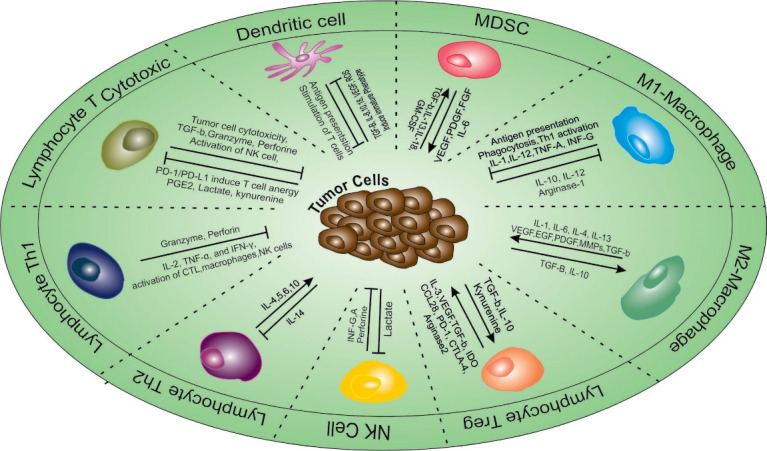
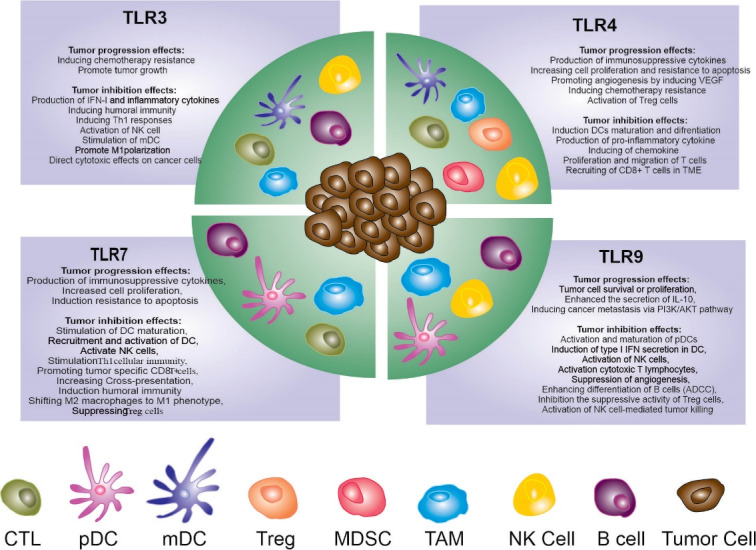
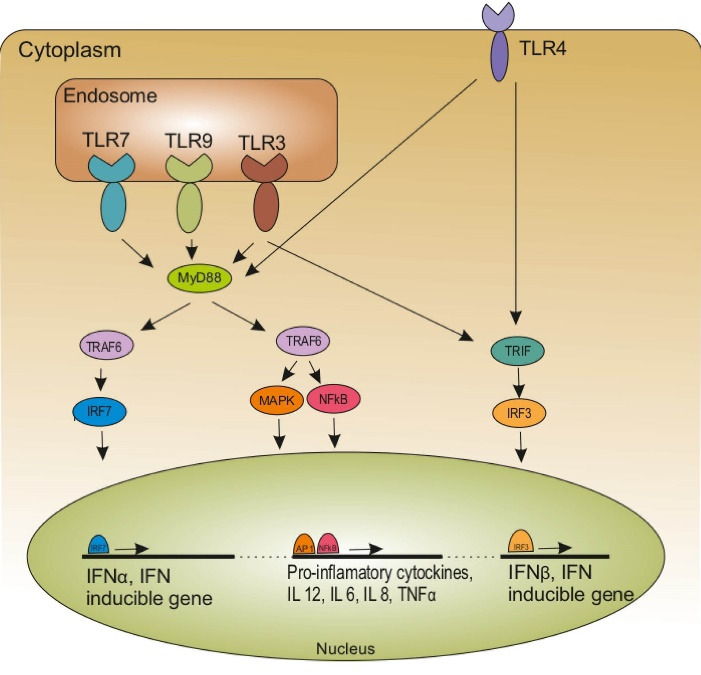
Immunotherapy is considered a promising approach for cancer treatment. An important strategy for cancer immunotherapy is the use of cancer vaccines, which have been widely used for cancer treatment. Despite the great potential of cancer vaccines for cancer treatment, their therapeutic effects in clinical settings have been limited. The main reason behind the lack of significant therapeutic outcomes for cancer vaccines is believed to be the immunosuppressive tumor microenvironment (TME). The TME counteracts the therapeutic effects of immunotherapy and provides a favorable environment for tumor growth and progression. Therefore, overcoming the immunosuppressive TME can potentially augment the therapeutic effects of cancer immunotherapy in general and therapeutic cancer vaccines in particular. Among the strategies developed for overcoming immunosuppression in TME, the use of toll-like receptor (TLR) agonists has been suggested as a promising approach to reverse immunosuppression. In this paper, we will review the application of the four most widely studied TLR agonists including agonists of TLR3, 4, 7, and 9 in cancer immunotherapy.
免疫疗法被认为是一种很有前景的癌症治疗方法。癌症免疫疗法的一个重要策略是使用癌症疫苗,其已被广泛用于癌症治疗。尽管癌症疫苗在癌症治疗方面具有巨大潜力,但其在临床环境中的治疗效果一直有限。癌症疫苗缺乏显著治疗效果的主要原因被认为是免疫抑制性肿瘤微环境(TME)。TME会抵消免疫疗法的治疗效果,并为肿瘤生长和进展提供有利环境。因此,克服免疫抑制性TME可能总体上增强癌症免疫疗法的治疗效果,尤其是治疗性癌症疫苗的效果。在为克服TME中的免疫抑制而开发的策略中,使用 toll样受体(TLR)激动剂已被认为是一种有前景的逆转免疫抑制的方法。在本文中,我们将综述四种研究最广泛的TLR激动剂,即TLR3、4、7和9的激动剂在癌症免疫疗法中的应用。