Department of Computer Science, University of Oxford, Oxford, United Kingdom.
PLoS Comput Biol. 2012;8(5):e1002515. doi: 10.1371/journal.pcbi.1002515. Epub 2012 May 24.
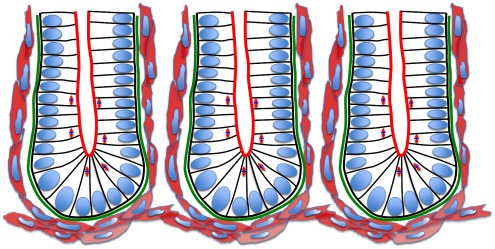
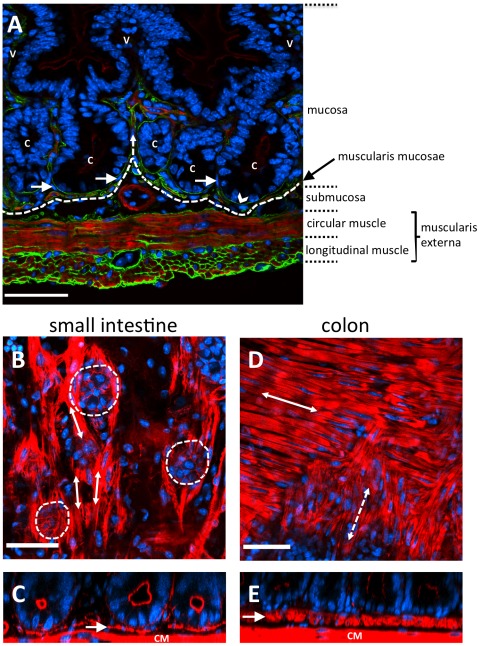
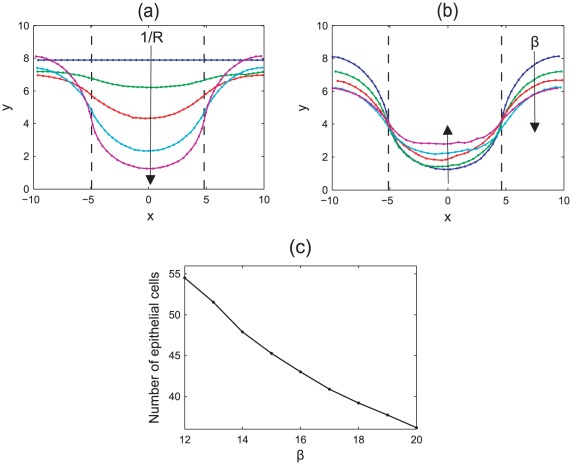
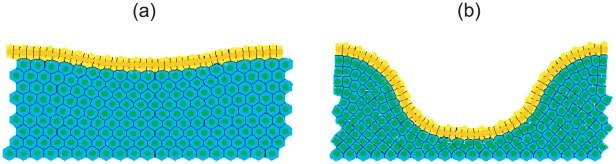
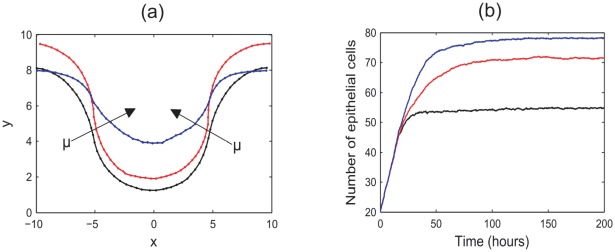
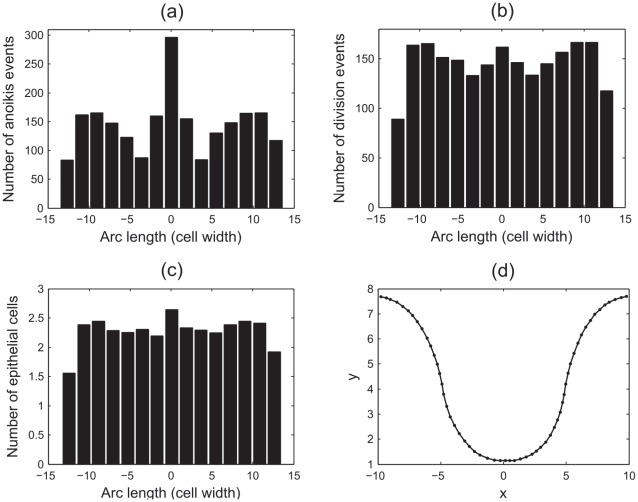
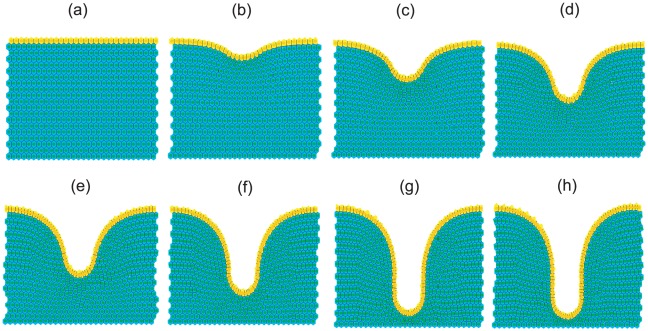
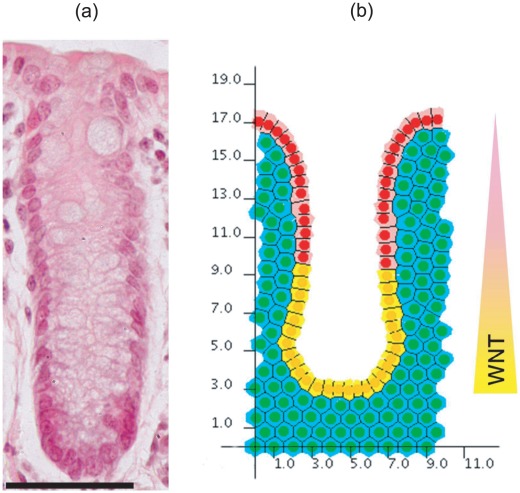
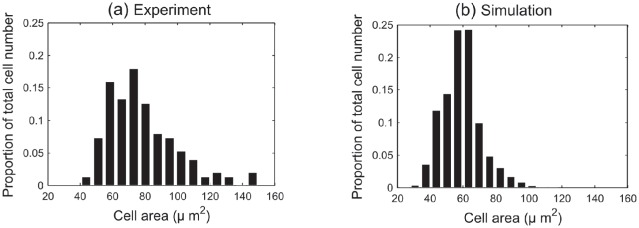
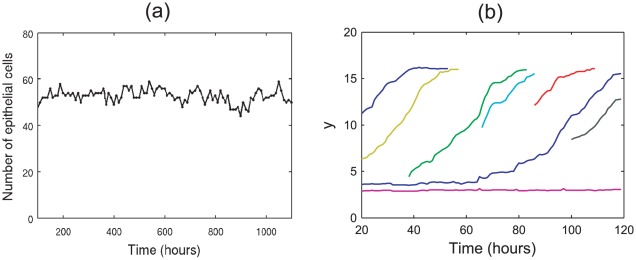
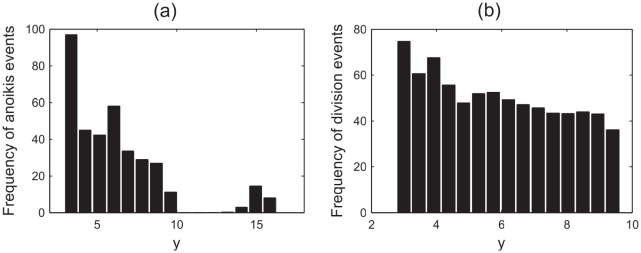
The role of the basement membrane is vital in maintaining the integrity and structure of an epithelial layer, acting as both a mechanical support and forming the physical interface between epithelial cells and the surrounding connective tissue. The function of this membrane is explored here in the context of the epithelial monolayer that lines the colonic crypt, test-tube shaped invaginations that punctuate the lining of the intestine and coordinate a regular turnover of cells to replenish the epithelial layer every few days. To investigate the consequence of genetic mutations that perturb the system dynamics and can lead to colorectal cancer, it must be possible to track the emerging tissue level changes that arise in the crypt. To that end, a theoretical crypt model with a realistic, deformable geometry is required. A new discrete crypt model is presented, which focuses on the interaction between cell- and tissue-level behaviour, while incorporating key subcellular components. The model contains a novel description of the role of the surrounding tissue and musculature, based upon experimental observations of the tissue structure of the crypt, which are also reported. A two-dimensional (2D) cross-sectional geometry is considered, and the shape of the crypt is allowed to evolve and deform. Simulation results reveal how the shape of the crypt may contribute mechanically to the asymmetric division events typically associated with the stem cells at the base. The model predicts that epithelial cell migration may arise due to feedback between cell loss at the crypt collar and density-dependent cell division, an hypothesis which can be investigated in a wet lab. This work forms the basis for investigation of the deformation of the crypt structure that can occur due to proliferation of cells exhibiting mutant phenotypes, experiments that would not be possible in vivo or in vitro.
基膜的作用对于维持上皮层的完整性和结构至关重要,它既是机械支撑物,又是上皮细胞与周围结缔组织之间的物理界面。本文探讨了基膜在结肠隐窝上皮单层中的功能,隐窝是肠道衬里上的管状凹陷,协调着细胞的定期更替,每隔几天就会补充上皮层。为了研究扰乱系统动态并可能导致结直肠癌的基因突变的后果,必须能够追踪隐窝中出现的新兴组织水平变化。为此,需要一个具有现实、可变形几何形状的理论隐窝模型。本文提出了一种新的离散隐窝模型,重点关注细胞和组织水平行为之间的相互作用,同时纳入了关键的亚细胞成分。该模型包含了对周围组织和肌肉作用的新描述,基于对隐窝组织结构的实验观察,也报告了这些观察结果。考虑了二维(2D)横截面几何形状,并且允许隐窝的形状演变和变形。模拟结果揭示了隐窝的形状如何可能通过与基底部的干细胞相关的不对称分裂事件产生机械作用。该模型预测,上皮细胞迁移可能由于隐窝领细胞丢失和密度依赖性细胞分裂之间的反馈而产生,这一假设可以在湿实验室中进行研究。这项工作为研究由于表现出突变表型的细胞增殖而导致的隐窝结构变形奠定了基础,这些实验在体内或体外都是不可能进行的。