Brojde Chandra L, Ahmed Sabeen, Colunga Eliana
Department of Psychology and Neuroscience, University of Colorado Boulder, CO, USA.
Front Psychol. 2012 May 25;3:155. doi: 10.3389/fpsyg.2012.00155. eCollection 2012.
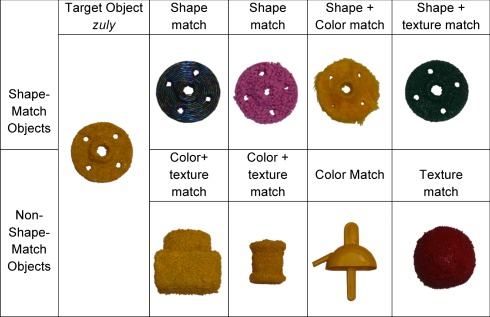
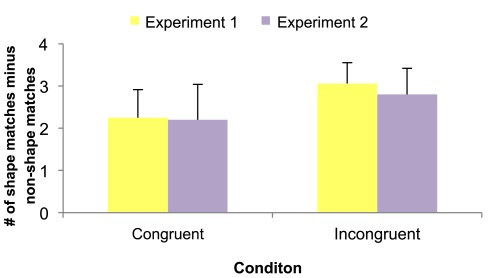
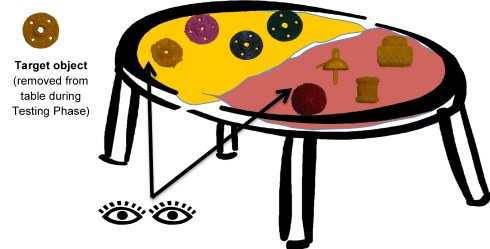
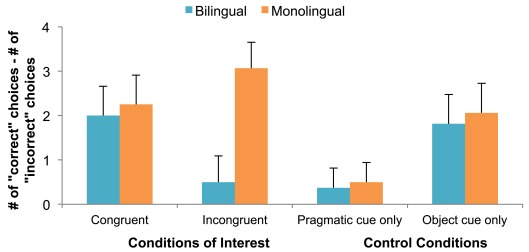
The way in which children learn language can vary depending on their language environment. Previous work suggests that bilingual children may be more sensitive to pragmatic cues from a speaker when learning new words than monolingual children are. On the other hand, monolingual children may rely more heavily on object properties than bilingual children do. In this study we manipulate these two sources of information within the same paradigm, using eye gaze as a pragmatic cue and similarity along different dimensions as an object cue. In the crucial condition, object and pragmatic cues were inconsistent with each other. Our results showed that in this ambiguous condition monolingual children attend more to object property cues whereas bilingual children attend more to pragmatic cues. Control conditions showed that monolingual children were sensitive to eye gaze and bilingual children were sensitive to similarity by shape; it was only when the cues were inconsistent that children's preference for one or the other cue was apparent. Our results suggest that children learn to weigh different cues depending on their relative informativeness in their environment.
儿童学习语言的方式可能因其语言环境而异。先前的研究表明,在学习新单词时,双语儿童可能比单语儿童对说话者的语用线索更敏感。另一方面,单语儿童可能比双语儿童更依赖物体属性。在本研究中,我们在同一范式内操纵这两种信息来源,将目光注视用作语用线索,将不同维度上的相似性用作物体线索。在关键条件下,物体线索和语用线索相互矛盾。我们的结果表明,在这种模糊条件下,单语儿童更关注物体属性线索,而双语儿童更关注语用线索。控制条件表明,单语儿童对目光注视敏感,双语儿童对形状相似性敏感;只有当线索不一致时,儿童对一种或另一种线索的偏好才会明显。我们的结果表明,儿童学会根据环境中不同线索的相对信息量来权衡它们。